THE CHALLENGE
Develop a broad selection of visual ideas appropriate for the project's needs, which encourage you to push ideas above and beyond the designated strategy.
CONCEPT DEVELOPMENT
In looking at research of Gen Z, I’ve decided to focus my project on a web-based app versus a native app. The thought process behind this is that with Gen Z being digital natives and spending 60% of their time on their mobile device in some sort of social platform (YouTube, Instagram, TikTock, etc.) that the experience would be far more seamless, and ultimately more in line with their user experience expectations vs. having to download a unique application to conduct their imposter syndrome exploration. Further, it seems unlikely that the survey would be taken more than once or twice hence having a stand alone app seems like overkill and less on target for this audience.
Progressive web apps (PWAs) are mobile websites that look and feel like apps — ensuring a smooth user experience — without requiring users to immediately take the extra step of downloading an app. PWAs can help increase conversions by simplifying the user experience.
Having a web-based application would be able to further engage the audience by providing additional resources such as articles, a forum, and links to additional information.
FIVE PERSONAS
Expert on imposter syndrome, Dr. Valerie Young, has categorized it into subgroups: the Perfectionist, the Superwoman/man, the Natural Genius, the Soloist, and the Expert. In her book, The Secret Thoughts of Successful Women: Why Capable People Suffer From the Imposter Syndrome and How to Thrive in Spite of It, Dr. Young builds on decades of research studying fraudulent feelings among high achievers. While imposter syndrome had initially been thought to solely impact female populations, it has been determined to impact all genders.
According to Dr. Young, “Impostors don’t all experience failure-related shame the same way. And the reason is that they don’t all define competence the same way.” Therefore, creating an app that can help the audience identify and align their unique feelings around imposter syndrome could help normalize the issue and create a path towards self-empathy and progression.
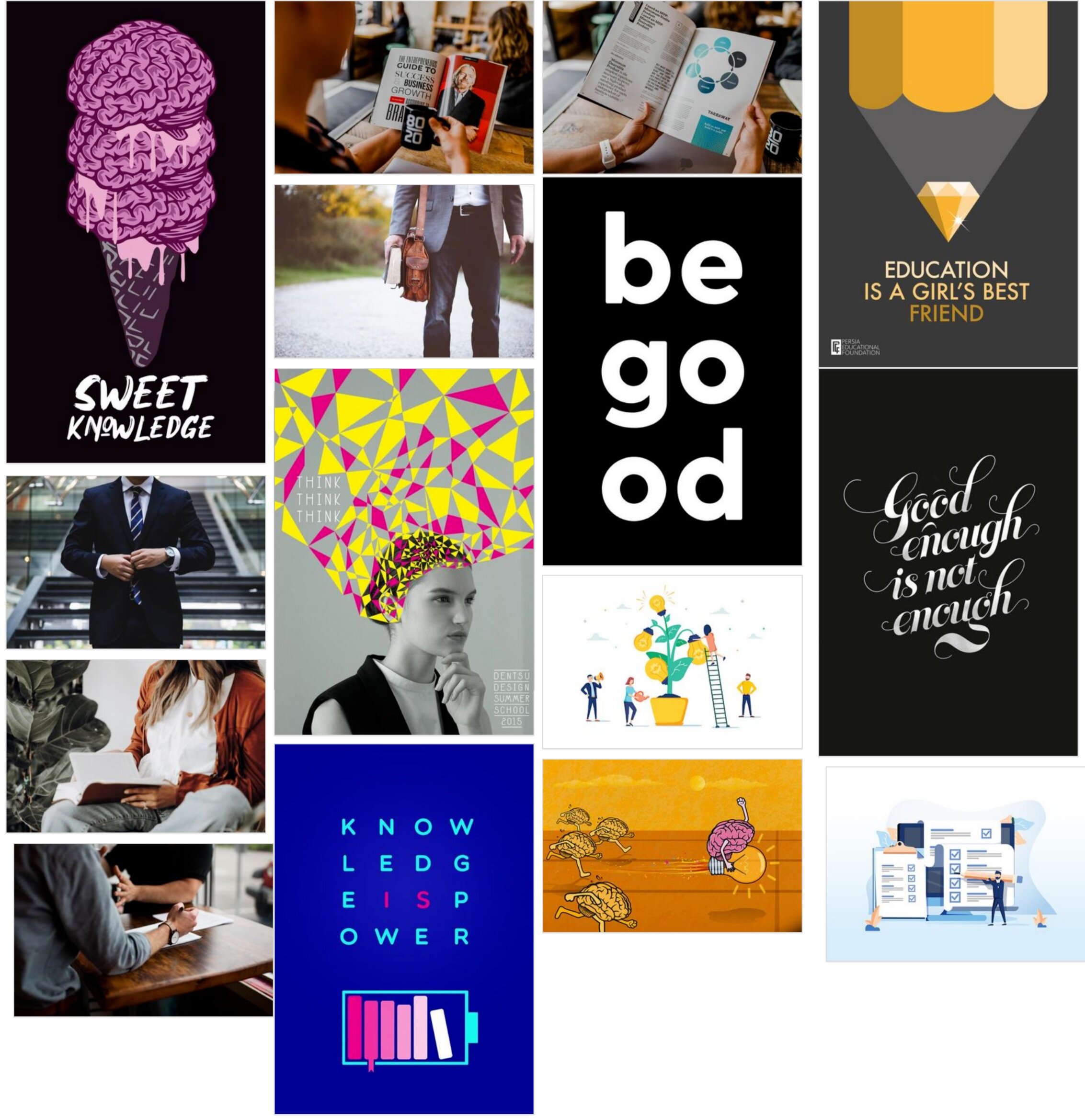
In addition to defining each persona, I felt it important to visualize aspects of each so as to help create a visual aesthetic and think about how each persona could be made to most resonate with the audience.
The Perfectionist: Someone who feels as if they need to do everything perfectly or else they’ve failed. And if they aren’t perfect, they have an overwhelming feeling of self-doubt. The perfectionist’s primary focus is on “how” something is done. This includes how the work is conducted and how it turns out. One minor flaw in an otherwise stellar performance or 99 out of 100 equals failure and thus shame.

The Perfectionist
The Superhero: measures competence based on “how many” roles they can both juggle and excel in. Falling short in any role — as a parent, partner, on the home-front, host/hostess, friend, volunteer — all evoke shame because they feel they should be able to handle it all — perfectly and easily. The superhero is someone who feels as if they’re a fraud, either at work or in a relationship, and so they work extra hard to hide their supposed inadequacy. Often, the overload in work or stress of not measuring up is damaging to their mental health.

The Superhero
The Expert: is someone who judges their worth by how much they know. They constantly feel as if they’re not smart enough, and fear being exposed as unknowledgeable. The expert is the knowledge version of the perfectionist. Here, the primary concern is on “what” and “how much” you know or can do. Because you expect to know everything, even a minor lack of knowledge denotes failure and shame.
The Expert
The Natural Genius: is someone who judges their worth by how easily something comes to them. If they need to work to master a task or to make a friend, they feel ashamed. They also cares about “how” and “when” accomplishments happen. But for you, competence is measured in terms of ease and speed. The fact that you have to struggle to master a subject or skill or that you’re not able to bang out your masterpiece on the first try equals failure which evokes shame.
Young says people with this competence type believe they need to be a natural “genius.” As such, they judge their competence based ease and speed as opposed to their efforts. In other words, if they take a long time to master something, they feel shame.
These types of impostors set their internal bar impossibly high, just like perfectionists. But natural genius types don’t just judge themselves based on ridiculous expectations, they also judge themselves based on getting things right on the first try. When they’re not able to do something quickly or fluently, their alarm sounds.

The Natural Genius
The Soloist: cares mostly about “who” completes the task. To make it on the achievement list, it has to be you and you alone. Because you think you need to do and figure out everything on your own, needing help is a sign of failure that evokes shame. They feel that they need to do everything themselves. If they need to ask for help, they feel incompetent.
Sufferers who feel as though asking for help reveals their phoniness are what Young calls Soloists. It’s okay to be independent, but not to the extent that you refuse assistance so that you can prove your worth.
The Soloist
I’ve decided to create a survey for participants to elicit which persona that is most resonant and ideally, most effective in finding a healthy way forward. This will be explored along with the web app design in Week Nine: Concept Development.
REFERENCE:
Calaby, L. (2018, August 14). The five different types of imposter syndrome. Retrieved from https://humanresults.co.uk/the-five-different-types-of-imposter-syndrome/.
Francis, T., & Hoefel, F. (2018, November). 'True Gen': Generation Z and its implications for companies. Retrieved from https://www.mckinsey.com/industries/consumer-packaged-goods/our-insights/true-gen-generation-z-and-its-implications-for-companies.
Gen Z: A look inside its mobile-first mindset -- Think With Google. (n.d.). Retrieved from https://www.thinkwithgoogle.com/interactive-report/gen-z-a-look-inside-its-mobile-first-mindset/.
Ilyin, M. (2019, August 23). M-commerce vs e-commerce. Retrieved from https://wiredelta.com/m-commerce-vs-e-commerce/.
Lebowitz, S. (2016, January 12). Men are suffering from a psychological phenomenon that can undermine their success, but they're too ashamed to talk about it. Retrieved from https://www.businessinsider.com/men-suffer-from-impostor-syndrome-2016-1?r=US&IR=T.
Mindtools Content Team. (n.d.). Impostor Syndrome: Facing Fears of Inadequacy and Self-Doubt. Retrieved from https://www.mindtools.com/pages/article/overcoming-impostor-syndrome.htm.
Scacca, S. (2019, March 29). Rundown Of Gen Z: What Does This Mean For Mobile Designers? Retrieved from https://www.smashingmagazine.com/2019/03/mobile-designers-generation-gen-z/.
Young, V., & Young, V. (2019, September 26). The 5 Types of Impostors: Retrieved from https://impostorsyndrome.com/5-types-of-impostors/.