GDE710 W8 | LECTURE REFLECTION & RESEARCH

SKILLS & MAKING

LECTURE REFLECTION

This week’s lecture proposes two essential questions to reflect and investigate:

  1. What would you like to be doing that you are not doing in your work?

  2. How important are side projects and are you working on them?

We hear from each of our studio professionals with regard to both of the aforementioned questions and it is quite clear they are all (Simon Manchimp, Sam Winston, Regular Practice, Sarah Boris, and Intro) doing what they want to be doing and are not lacking or longing for work they currently do not have. This may well be as they all loud side work as a necessary component to supporting and enhancing their daily practice.

Key takeaways from their common responses include:

  • Side projects encourage you to “think differently.” - Simon Manchimp

  • Give yourself space as a means to find solutions, new ideas, avenues, and creative projects. - Sam Winston

  • Authorship serves an important role within side projects not as often afforded in day-to-day work. You get to define who you are and what you want to present. - Regular Practice

  • Side projects can define how you and others see you as a designer. No compromises. -Sarah Boris

  • Side projects feed the day-to-day. Get to learn new crafts, be inspired, and are wholly owned. -Intro

RESEARCH

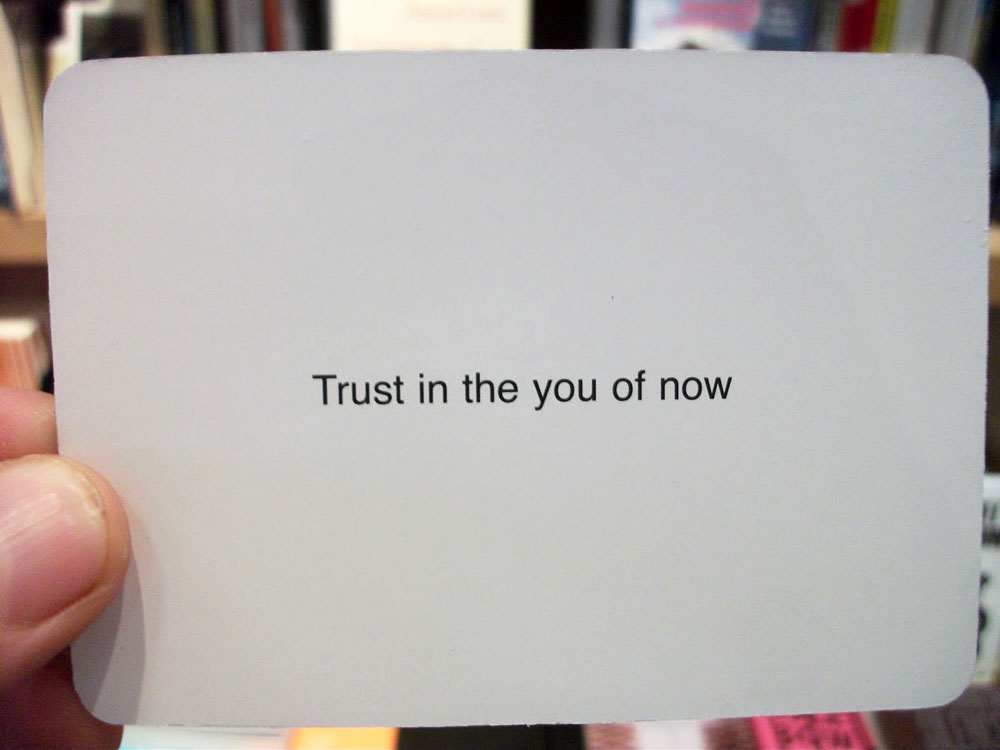
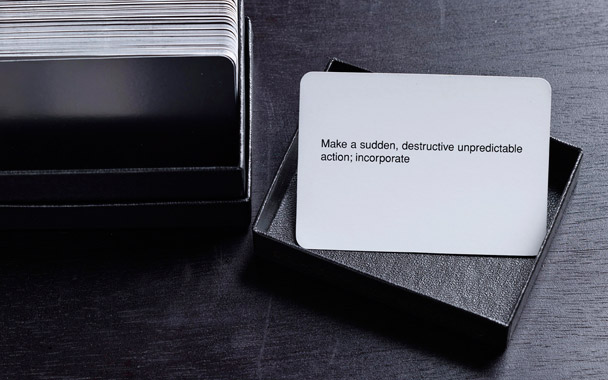
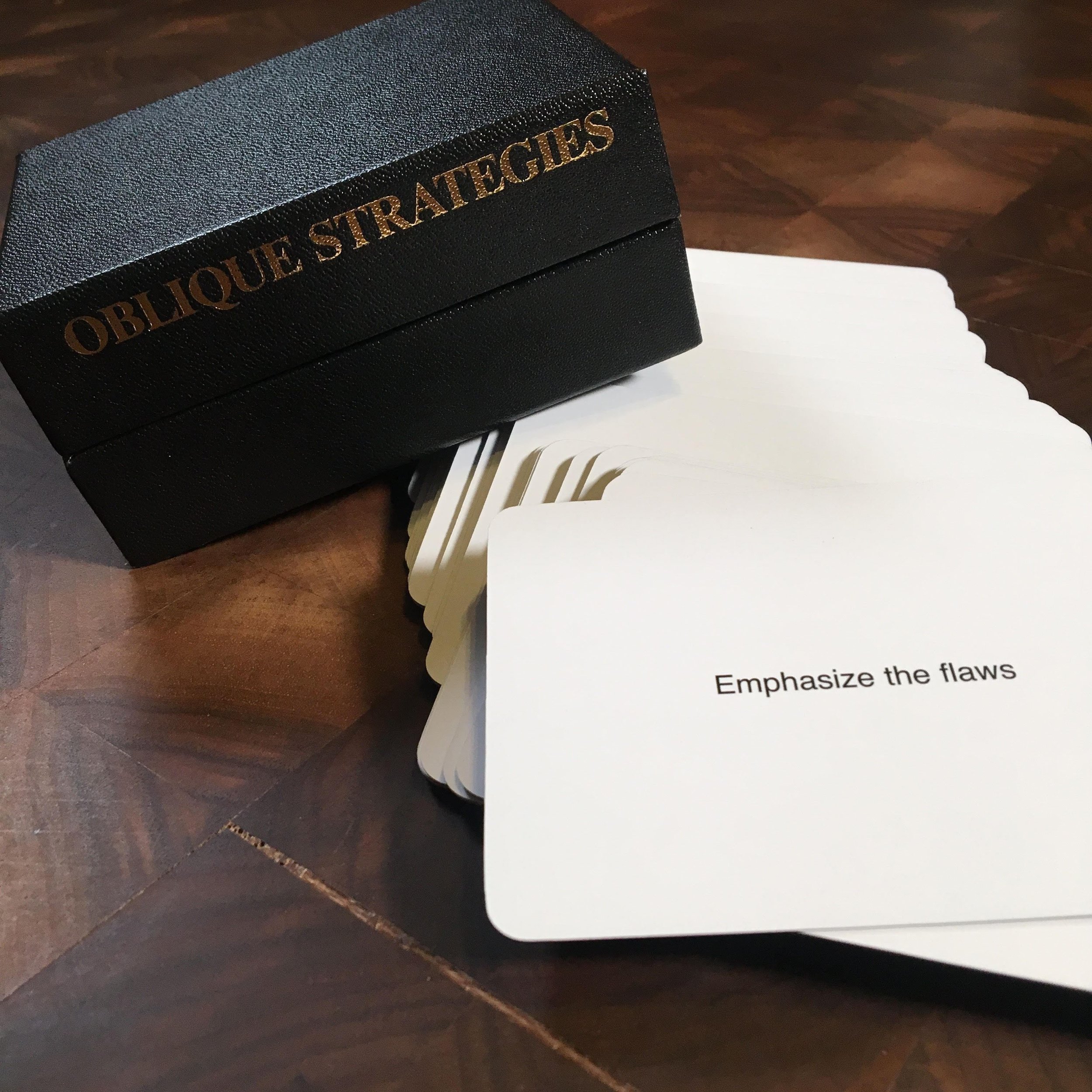
OBLIQUE STRATEGIES: Brian Eno develops card-based system for promoting creativity and pushing through creative thought.

The card is trusted even if its appropriateness is unclear.

-Brian Eno

”KEEP GOING” School of Life piece teaches thoughtful, empathetic, and practical approaches to creating:

  • Gap between what you wanted to make and what you’ve made

  • Forgive yourself for the horror of the first draft

  • Talents will come up to speed with your tastes

  • Work hard. Little by little you will improve

“THE IMPORTANCE OF VULNERABILITY” - School of Life explains the value and practicality of being vulnerable

  • offers connection and respect

  • exchange of sympathy and consolation

  • creates a safe place via the gift of risk given to someone else

ADDITIONAL RESEARCH:

JAMES VICTORE

I am deeply inspired by artist, designer, protagonist, and braveheart, James Victore. In exploring, investigating, and evaluating my skills during this week’s assignments, I came to a greater familiarity with Victore. I purchased and read his book, Who Died and Made You Boss, a reflection of his work as described by the author but also in service to other designers (and non-designers) to find their voice, to fail, to be brave, to not give a shit as to what others think of your work, and to press on.

His self directed works are some of the most inspiring to me. No one hired him to speak up, speak out, and find a place in this world for his message. He just did it because he felt it was important and needed to be done. One in particular that stands out to me is his work to counter former New York City Mayor, Rudy Giuliani’s MTA campaign to diminish the giving of money to panhandlers and the homeless.
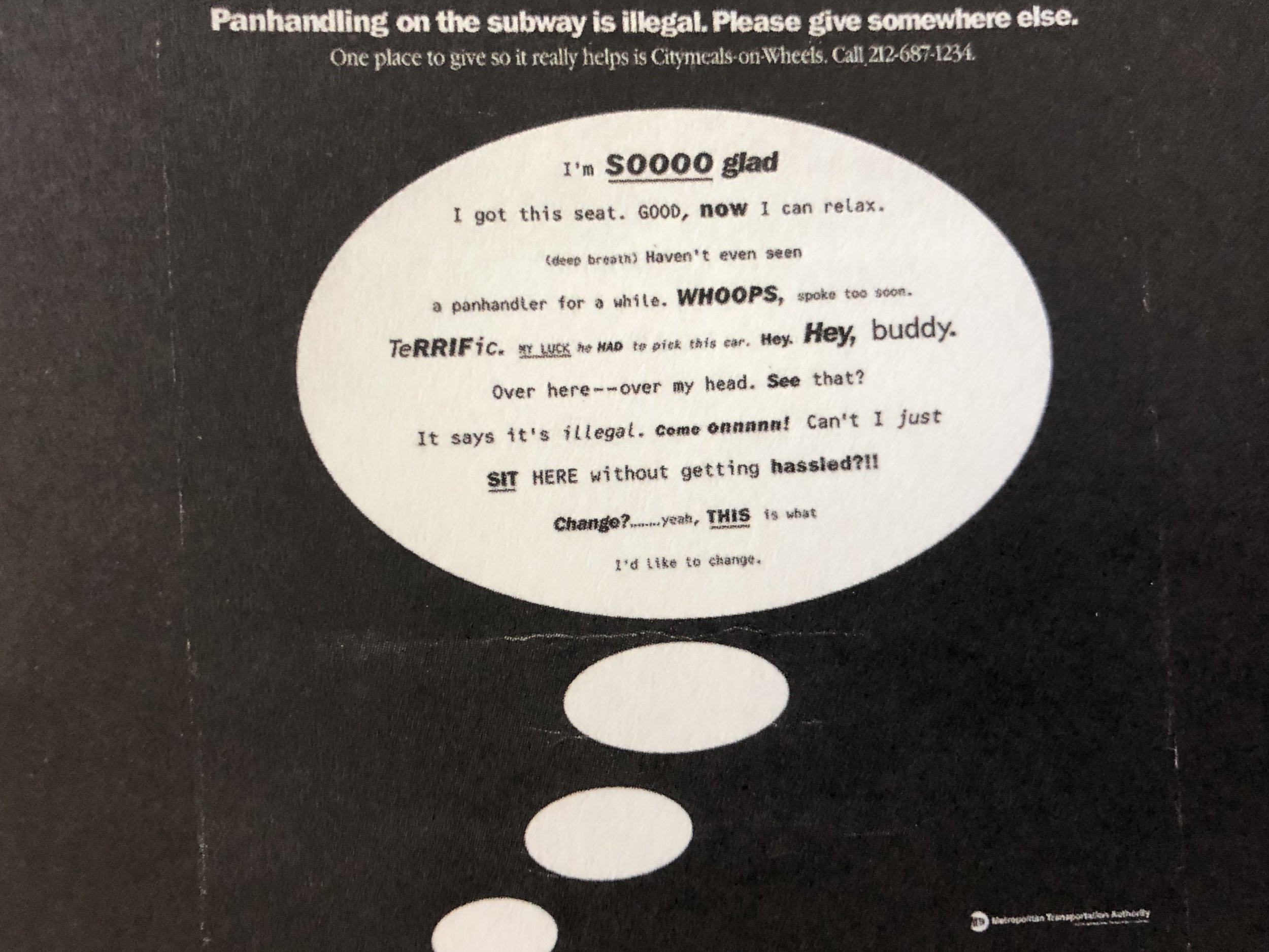
MTA poster for New York’s subway system discouraging the giving of monies to panhandlers and homeless.

MTA poster for New York’s subway system discouraging the giving of monies to panhandlers and homeless.

Victore’s self-published response to the MTA campaign.

Victore was bold enough to appropriate the MTA logo for his poster, and therefore it found its way hanging directly alongside the actual MTA-backed campaign. Brilliant.

REFERENCES

Rock, M. (2017) 2x4 Multiple Signatures on Designers, Authors, Readers and Users. New York: Rizzoli.

Brian Eno, Oblique Strategies (2018) Via https://en.wikipedia.org/wiki/Oblique_Strategies

Victore, James. (2010) Victore, or, Who Died and Made You Boss?Abrams.


GDE710 W7 | Research Object

COFFEE BRINGS PEOPLE TOGETHER

Growing up, coffee was a big part of my life. My Aunt Mary, my mom’s baby sister joined the Peace Corps out of college and was stationed in Colombia, South America. This is where she would meet and marry her husband and spend the rest of her life.

My Colombian family would visit the states almost every summer and we’d get to enjoy the rich coffee that they’d bring with them each trip. They’d explain to us that while Juan Valdez isn’t real, the coffee industry surely was a big part of Colombian culture, not only from an industrial and socio-economical standpoint, but from a social one. Coffee was what started and ended every day in my family. It brought people together in good times and those of sorrow.

cf434a68851501.Y3JvcCwyMDY4LDE2MTgsMjQwLDMxNw.jpg

So for this week’s challenge, I chose to pose a statement that coffee brings people together and choose the mighty coffee bean as my object to gather research around.

I looked to published works on the study of coffee and culture and learned that coffee was discovered in 800 AD in Ethiopia. As the story goes, a farmer noticed his goats were behaving a bit erratic and highly animated. He noticed that they were eating the fruits of what would be known as the coffee fruit. He took the fruit back to the village and shared with his friends. They used the coffee fruit as a drink to extend their energies as they prayed. (5)

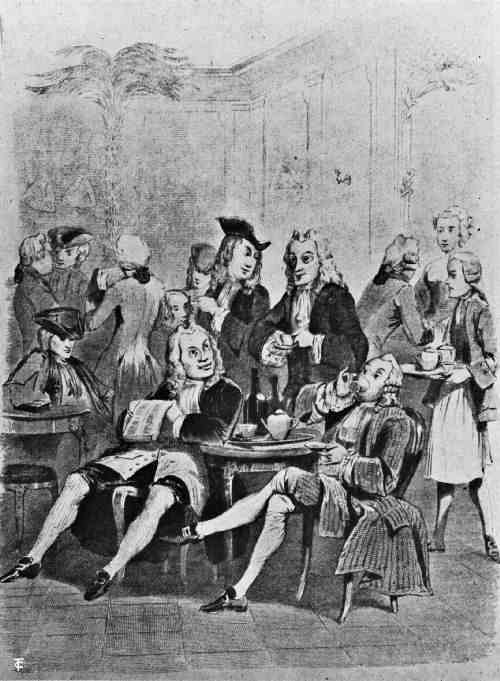
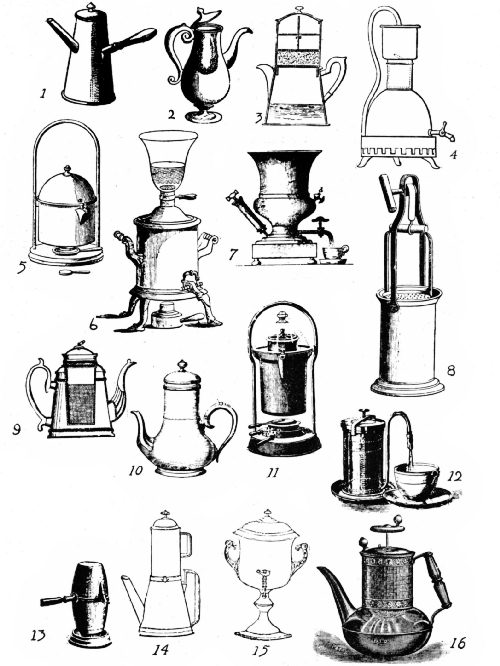
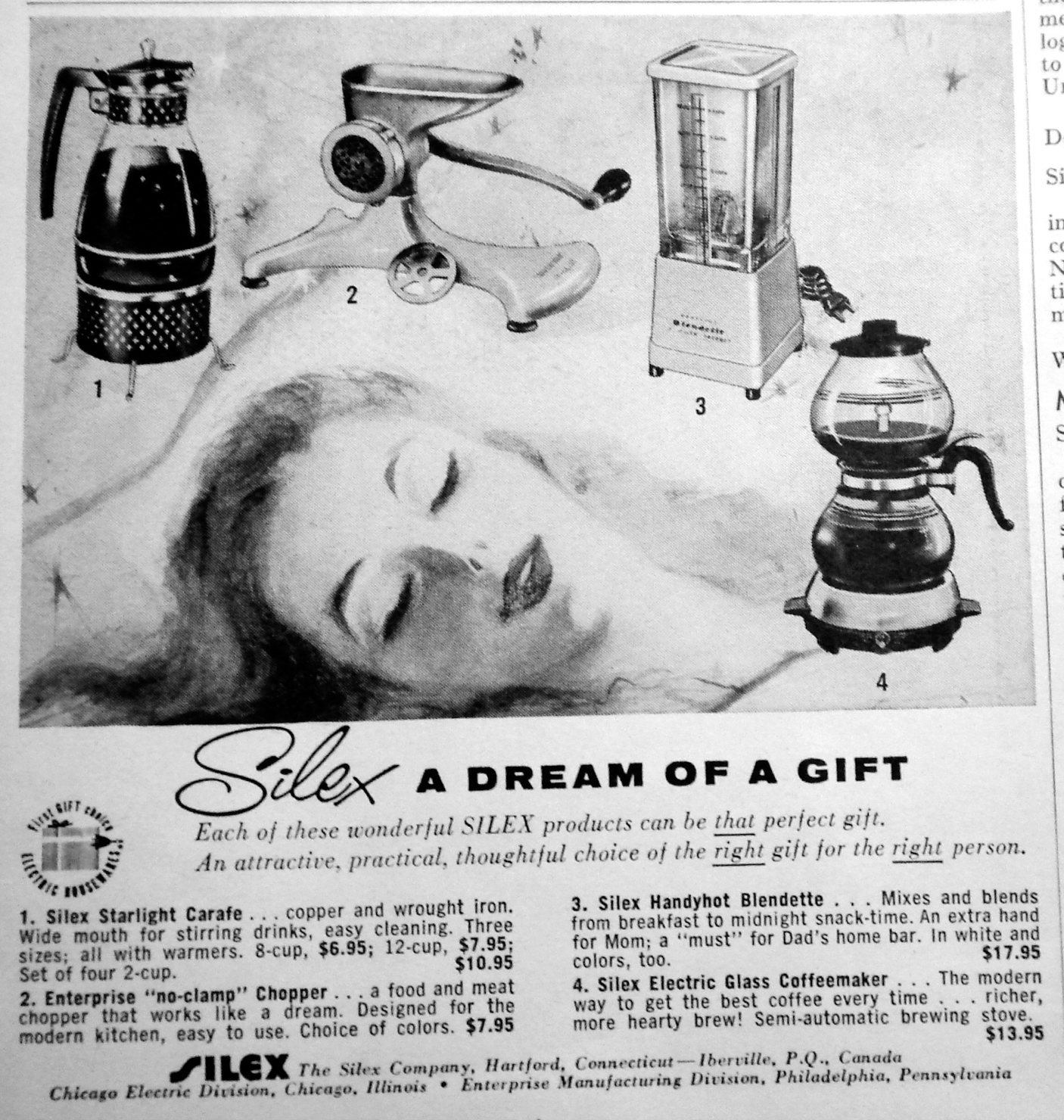
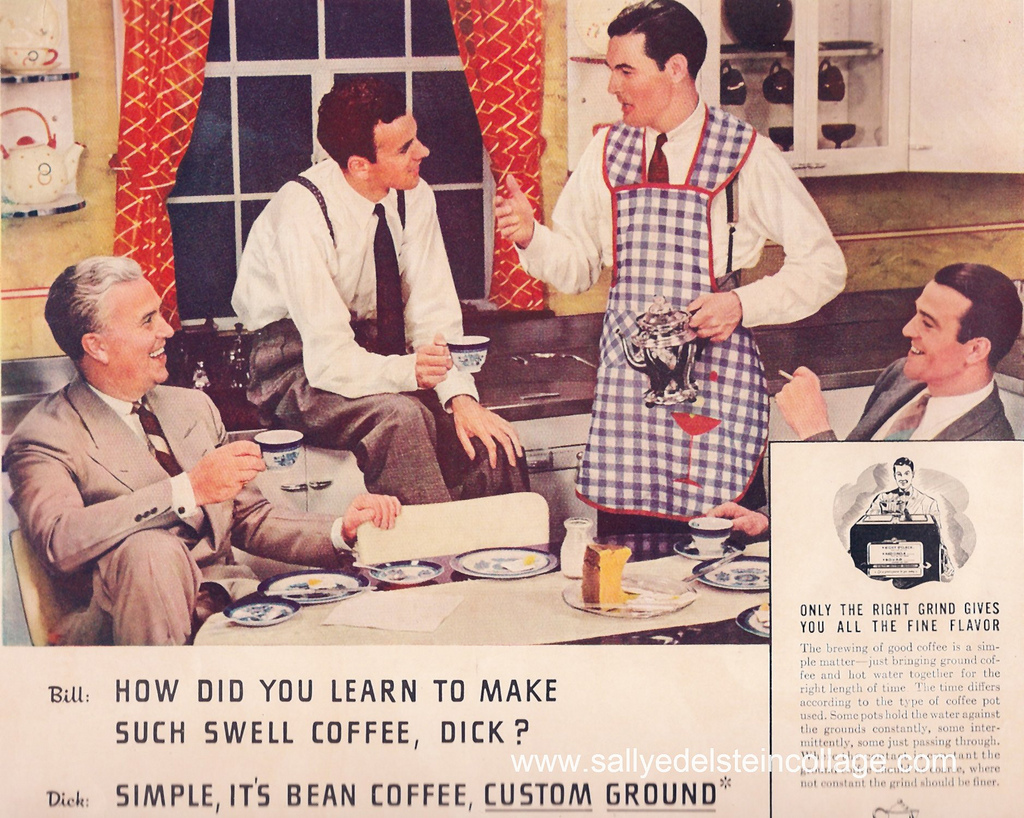
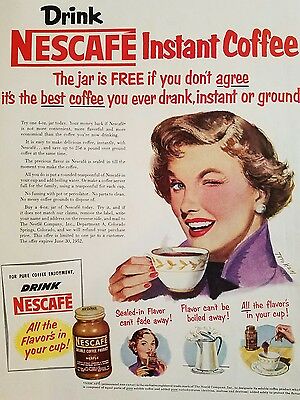
Between 1865 and 1970, machines are made to make coffee: taste even better, become more popular in homes, dehydrated to keep soldiers warm on the front lines and be made in an instant. (5)

In Sweden, people partake in Fika, which is a cultural morning and afternoon coffee break that's seemingly more about socializing than drinking coffee. Gevalia coffee brand capitalized on its country’s social culture to advertise its special blends of coffee to the world. (2)

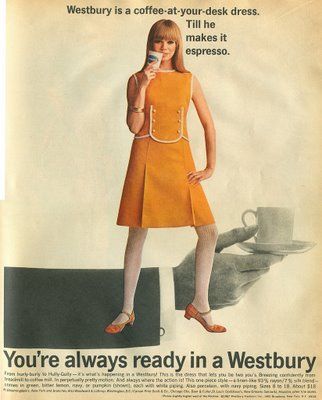
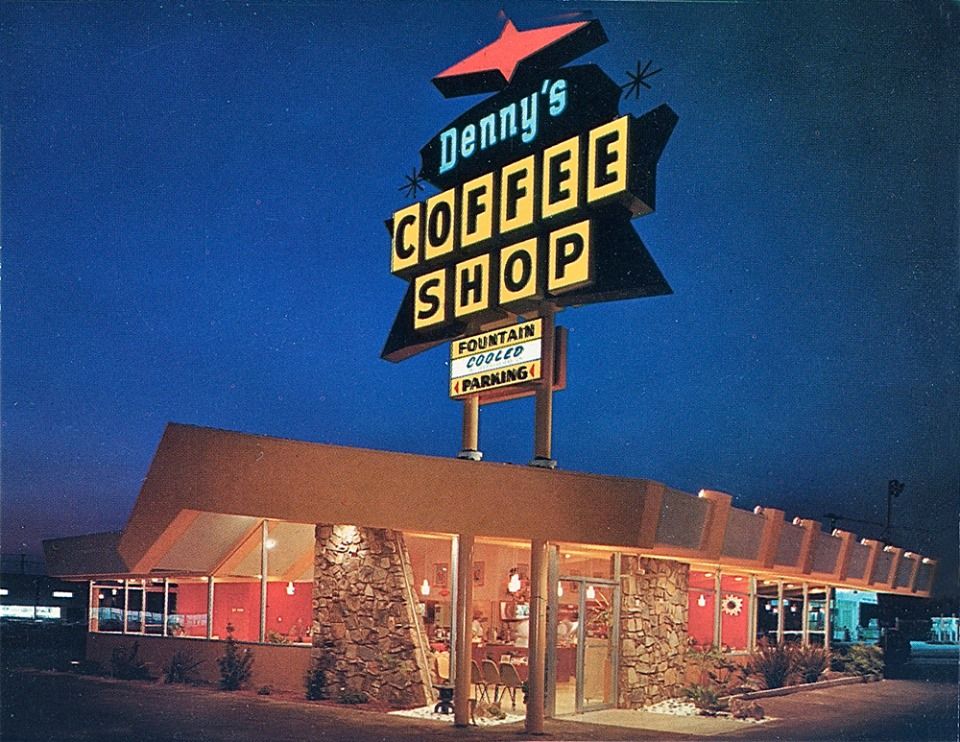
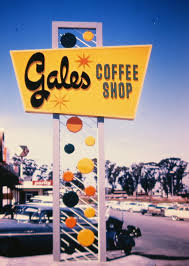
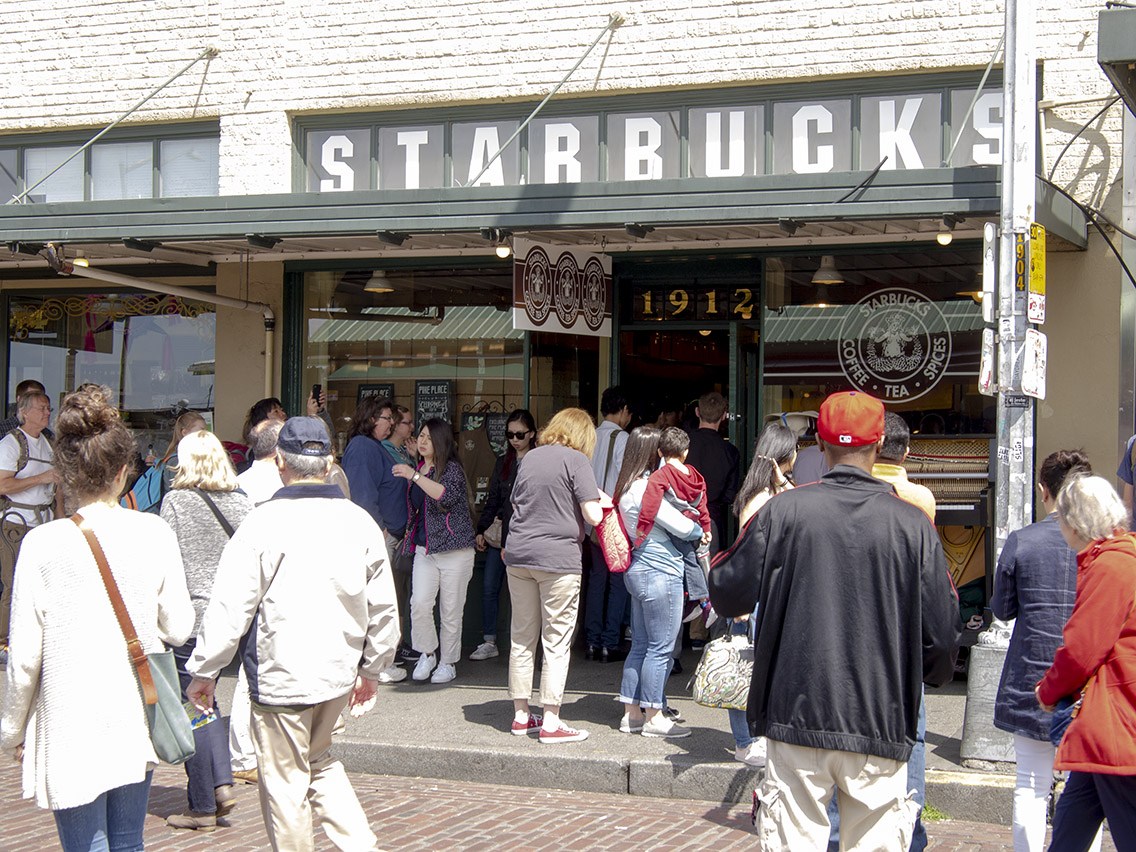
In 1971, coffee becomes a global phenomenon when the first of 17,000 Starbucks coffeehouses open. People gather often spending hours chatting, studying, and hatching the next big idea. The Starbucks generation rings in a new wave of coffee appreciation and social dynamics. People can project aspects of their identity based on how they take their coffee. (3,4)

By 2012, coffee becomes the 2nd most traded commodity in the world. (5)

Coffee-business-statistics.png

FINAL PIECE: PROCCESS

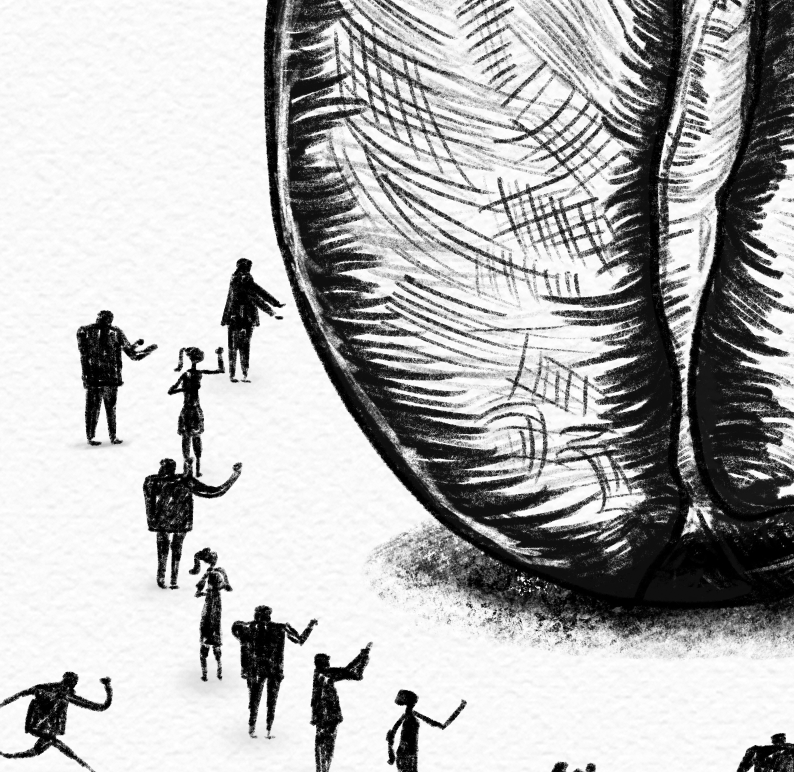
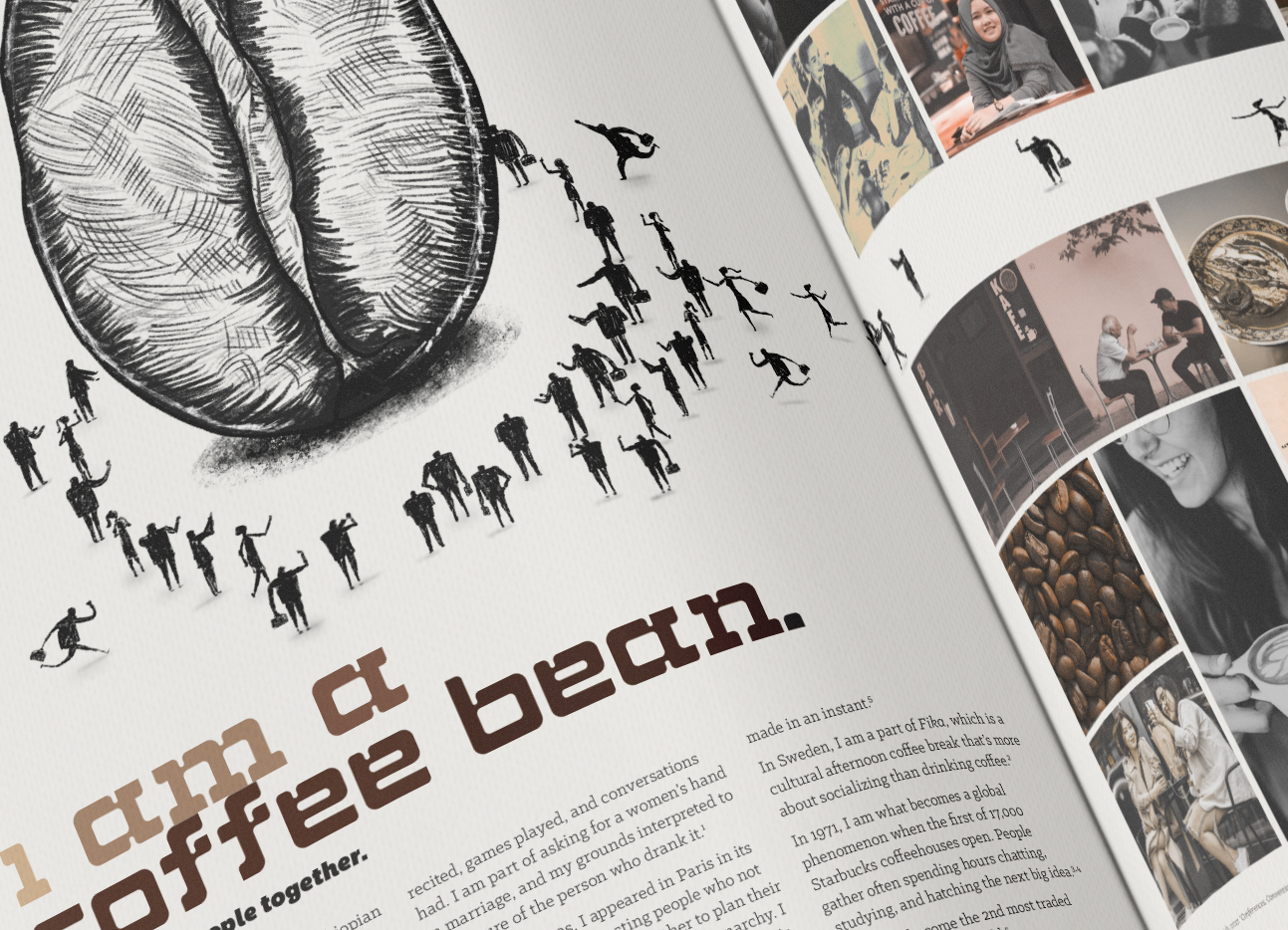
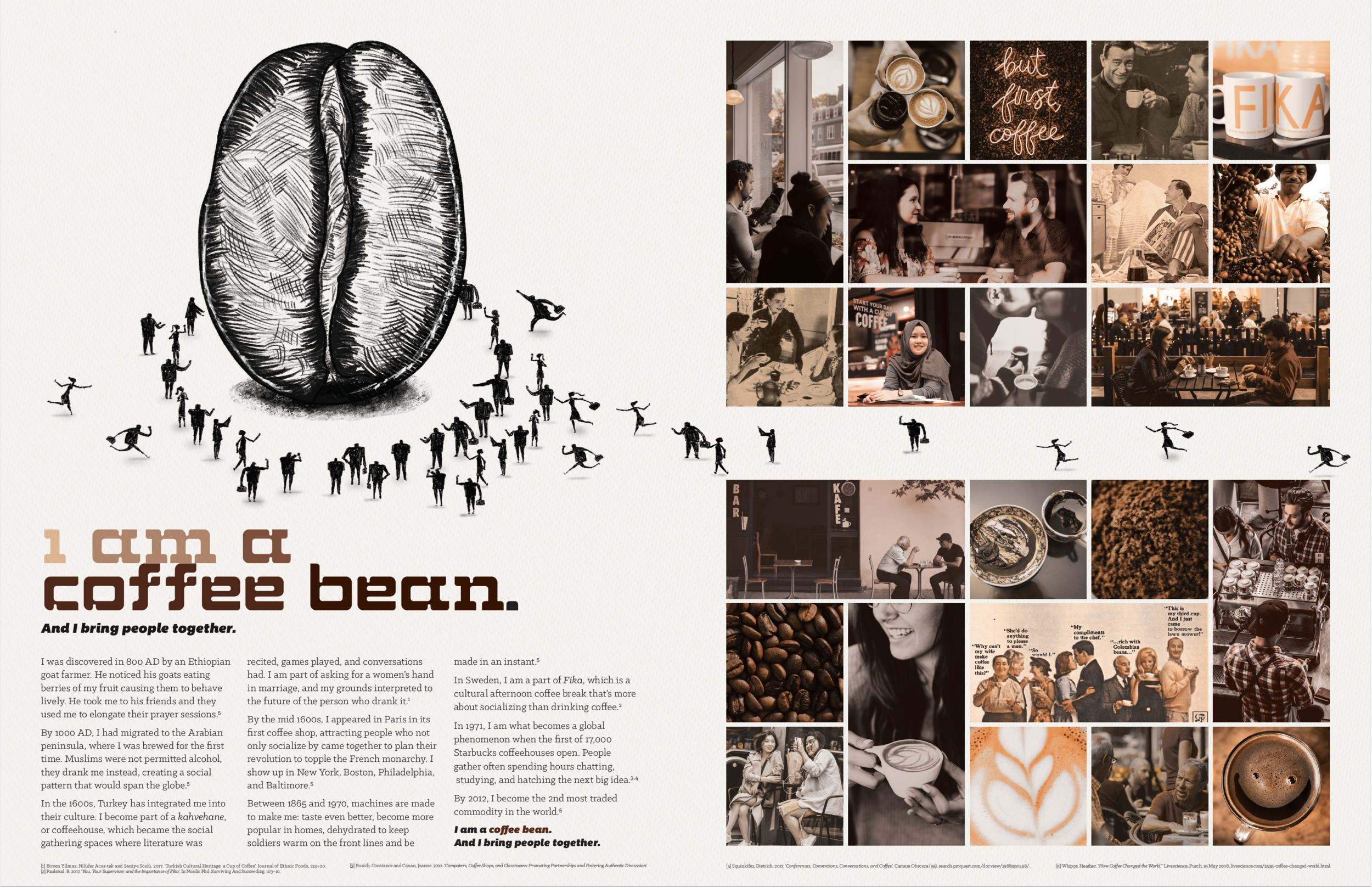
I chose to illustrate my object so I could show the power of the coffee bean. I wanted to capture the ritual and the social component. The illustration uses a giant coffee bean as a monolith similar to a Stonehenge or Devil’s Tower (shown in the cult classic, Close Encounters of the Third Kind). This was done with a 6B pencil.

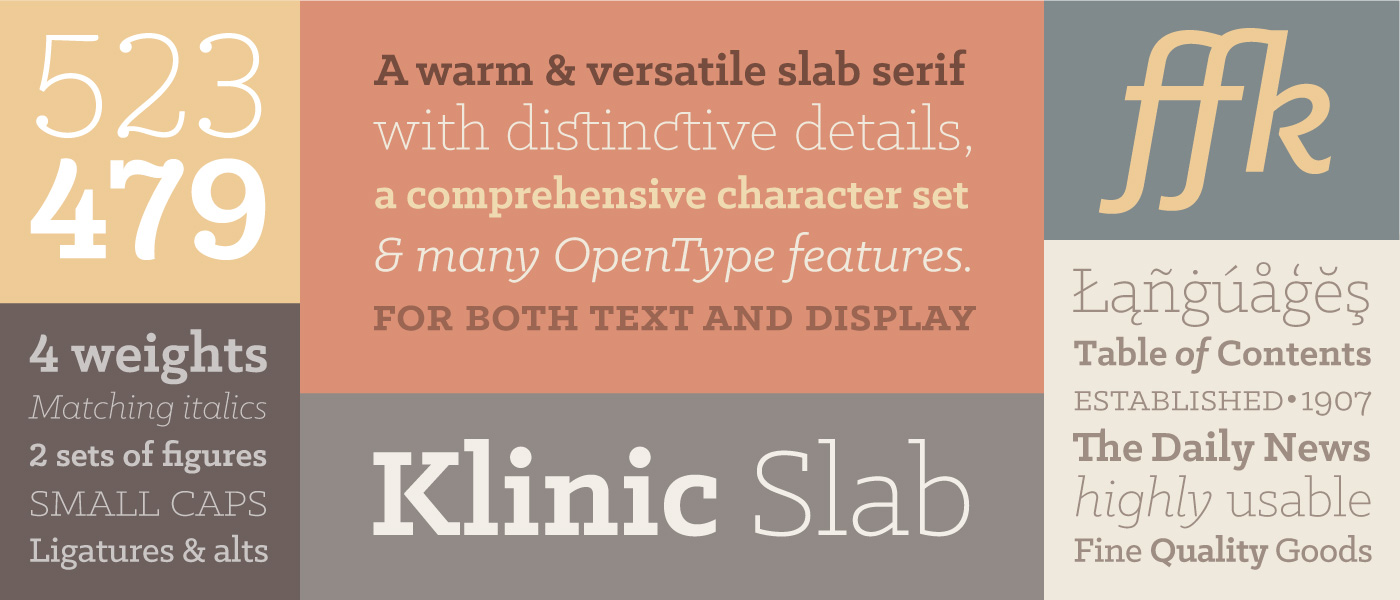
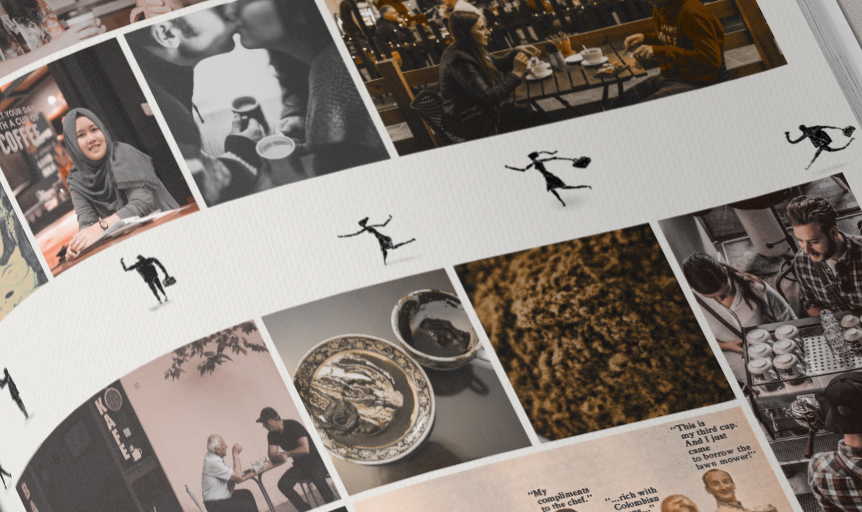
For my layout, I wanted to create a piece that leveraged my illustration as well as all of the great imagery I’d sourced during my research. I connected the two pages together using the illustrations of people running towards the giant coffee bean. The headline typography chosen is Saturn V, a face designed by Lost Type and inspired by the monumental Saturn V rocket that carried men from the earth to the moon. This was my way to honor the 50th anniversary of the Apollo 11 moon landing, to unique shape of the coffee bean, and to be playful with the physiological aspects of coffee as rocket fuel. The body type is also a Lost Type face called Klinic Slab. I felt is as a nice complement to the curves of the Saturn V headline as well as how its description was so similar to how I see coffee, “Klinic is a workhorse that marries personality and functionality.”

The color palette was chosen to reflect the various hues of not only coffee but the various skin colors of people.

Screen Shot 2019-07-20 at 2.38.04 PM.png

FINAL LAYOUT

Editorial Spread.jpg

REFERENCES

[1] Birsen Yilmaz, Nilüfer Acar-tek and Saniye Sözlü. 2017. ‘Turkish Cultural Heritage: a Cup of Coffee’. Journal of Ethnic Foods, 213–20.
[2] Paulsrud, B. 2017. ‘You, Your Supervisor, and the Importance of Fika’. In Nordic Phd: Surviving And Succeeding. 103–10.
[3] Ruzich, Constance and Canan, Joanne. 2010. ‘Computers, Coffee Shops, and Classrooms: Promoting Partnerships and Fostering Authentic Discussion’.
[4] Squinkifer, Dietrich. 2017. ‘Conferences, Conventions, Conversations, and Coffee’. Camera Obscura (95), search.proquest.com/docview/1968990458/.
[5] Whipps, Heather. “How Coffee Changed the World.” Livescience, Purch, 19 May 2008, livescience.com/2535-coffee-changed-world.html.

GDE710 W7 | Lecture Reflection: Research & Theory

METHODOLOGIES, MANAGEMENT, CATALYST, THEORIES

CURIOSITY

Martin Hoskin teaches us that curiosity reinvigorates our relationship with research and our approach to knowledge. He challenges us to arrive at our own definition of research:

To gain knowledge through exploration and study of the unknown or of curiosity.

-Kris Miller

ROOM STUDY

We’re asked to sketch a room and then evaluate it, study it to arrive at set of data that describes the space:

ETYMOLOGY: The study of words, their origin, and how their form and meaning have changed over time

PHILOSOPHY

How we categorize knowledge and how we reflect on that knowledge

IMPERICISIM vs. RATION/REASON:

  • Metaphysics: ultimate sense of reality. Man, God, nature of being, what’s it all about

  • Aesthetics: nature of beauty, perception, order, proportion

  • Ethics: how we should conduct ourselves, judgement, morality, individual vs. state

  • Epistemology: Engages the theory of knowledge itself. Methods validity, origin, scope, limits, justified belief vs. opinion

RESEARCH METHODOLOGIES

METHODOLOGY: Research the overall approach to studies. A body of shared procedures by those who work in a particular discipline. What genre of knowledge are you using to underpin your inquiry or approach?

METHOD: Process used for the collection of data for the purpose of analysis. The way you’re going to do what you’re going to do.

QUALITATIVE:

  • Language

  • Discourse

  • Interviews

  • Fluid

QUANTITATIVE:

  • Numbers

  • Facts about phenomena

  • Surveys

  • Recordings

  • Observations

  • Formulaic

  • Systematic

RESEARCH PRINCIPLES:

  1. Minimize unintended harm

  2. Obtain informed consent

  3. Protect anonymity and confidentiality

  4. Avoid deceptive practices

  5. Providing the right to withdraw

SOURCES:

  • Primary sources: first-hand evidence, legal documents, eyewitness accounts, results of experiments, creative writing, speeches, recordings, and art objects

  • Secondary sources: scholarly books, articles, magazines, reports, encyclopedias, handbooks, dictionaries, documentaries, and newspapers

ANALYSIS:

  • Formal: direct description of what an individual has done and how they’ve done it, a description

  • Contextual: wider context, item fits into or impacts the world around it. When, why, for whom.

WHAT MAKES A GOOD RESEARCH QUESTION?

  1. Relevant: must be of academic and intellectual interest, arises from issues raises in literature or practices

  2. Manageable: must be able to access your sources of data, objects, people, documents, give a full and nuanced answer to your question

  3. Substantial and original: must showcase imaginative abilities, no matter how far it may be couched in literature

  4. Fit for assessment: must be open for assessment

  5. Clear and simple

  6. Interesting: not too convenient

CRAAP TEST:

  • Currency: up to date, out of date, does it matter?

  • Relevance: does it relate well to research area?

  • Authority: who is the author or source?Are they credible?

  • Accuracy: is it reliable? Truthful? Correct?

  • Purpose: What is the reason it exists? Who is it aimed at?

REFERENCES

Laurel, B. (Ed) (2003) Design Research: Methods and Perspectives. Massachusetts: MIT Press.

Collins, H. (2010) Creative Research; The Theory & Practice of Research for the Creative Industries. Lausanne: AVA Publishing.

Bestley, R. Noble, I. (2016) Visual Research: An Introduction to Research Methods in Graphic Design. London: Bloomsbury.


GDE710 W6 | Studio Practice: Noticing the Ignored

CLEANERS

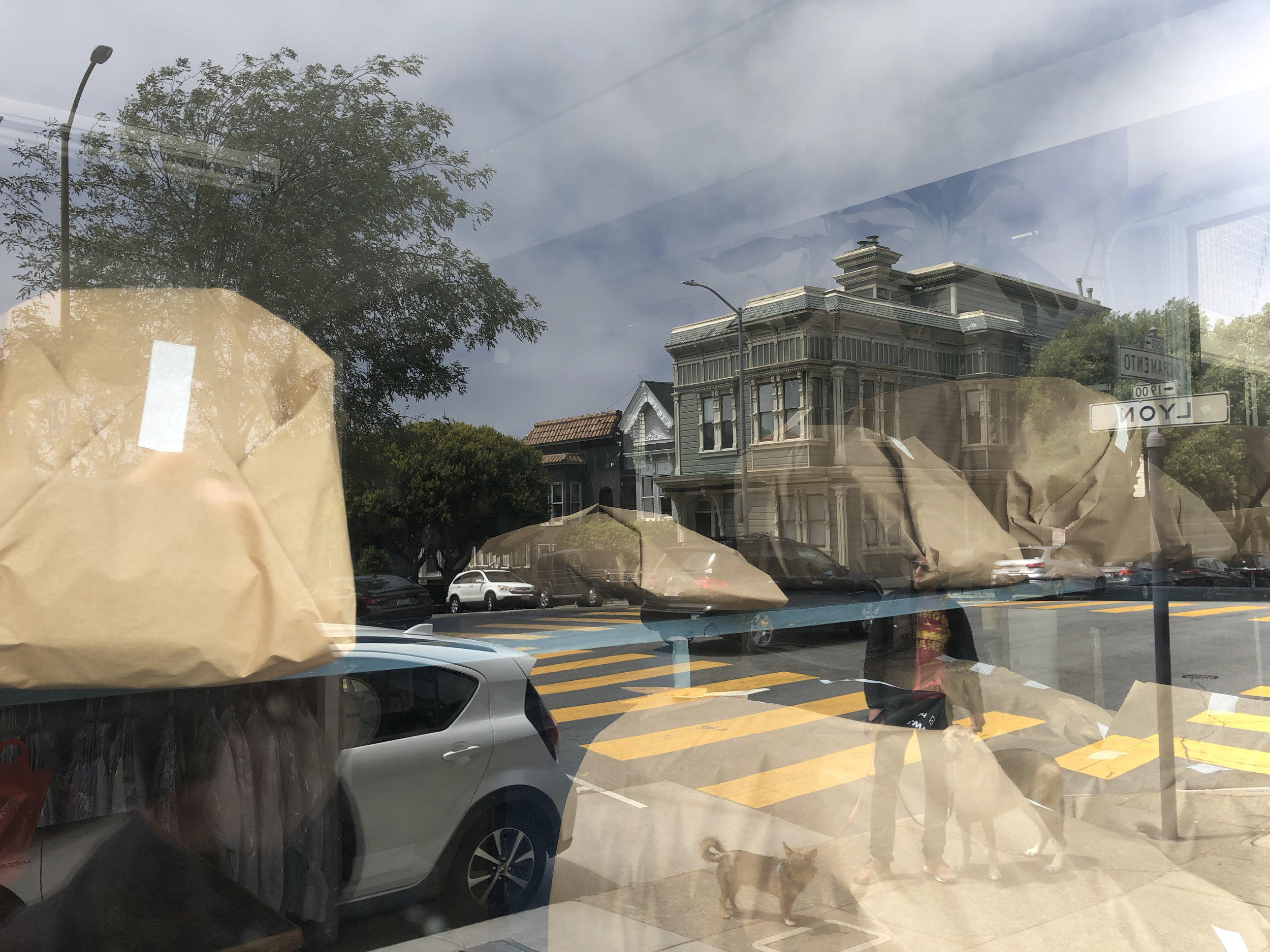
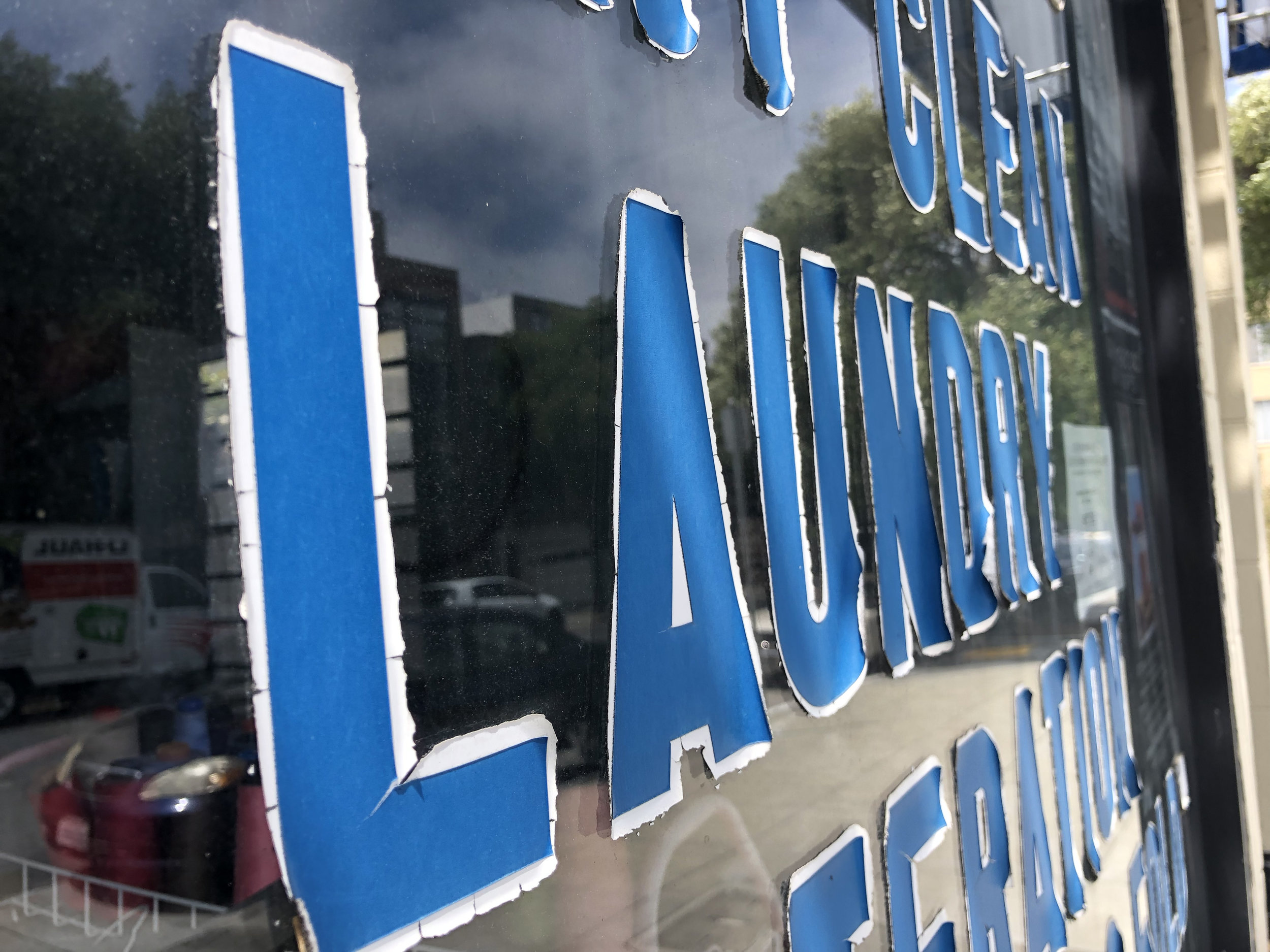
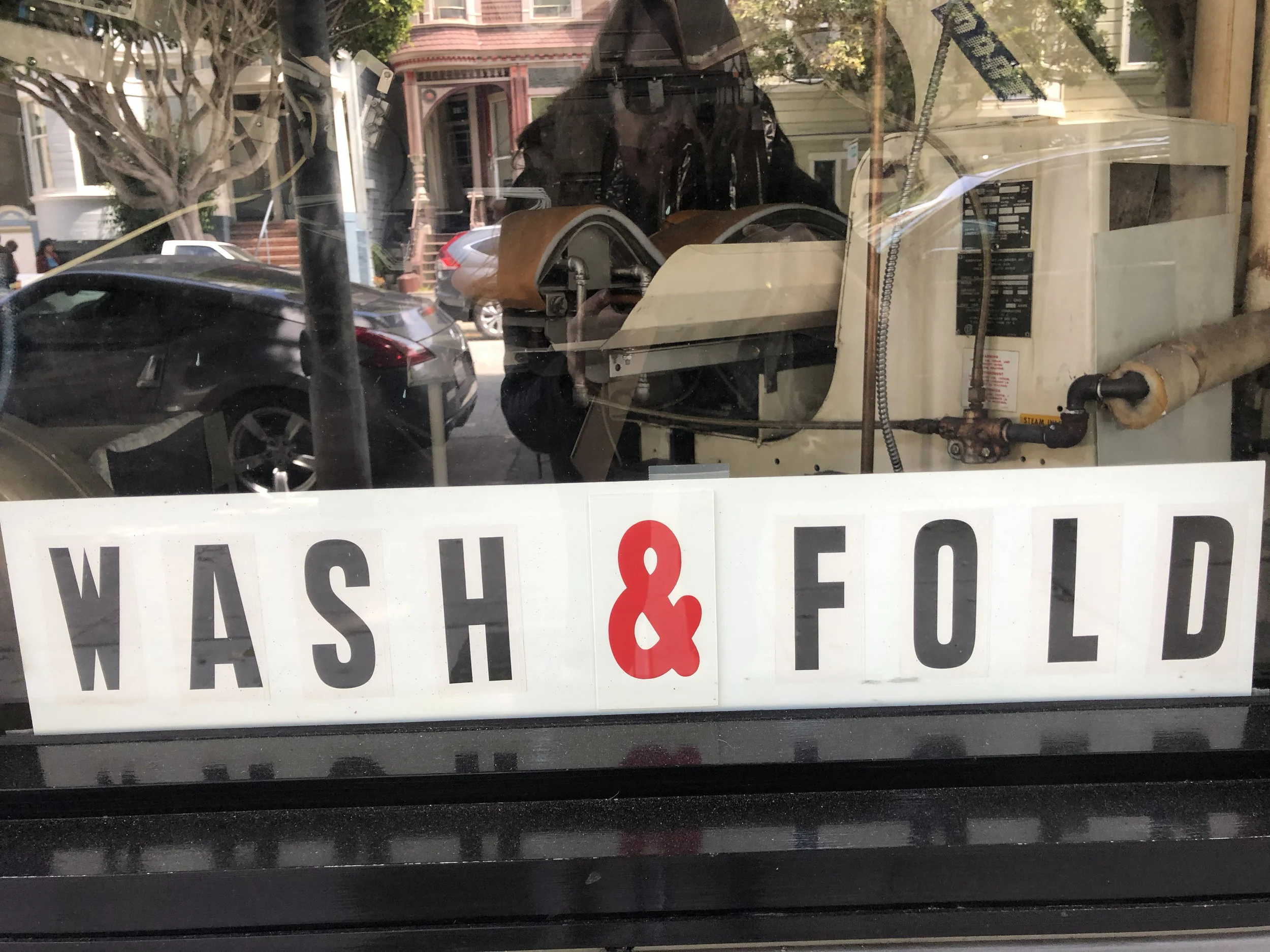
I chose to explore my neighborhood, Lower Pacific Heights during several walks over the last week. I've come to find that there are NINE cleaners in my little neighborhood.

Screen Shot 2019-07-13 at 4.33.13 PM.png

Lower Pacific Heights sits just below Pacific Heights, one of the wealthiest neighborhoods in San Francisco.

I spent the afternoon photographing the exteriors of these banal, unnoticed service providers of Lower Pacific Heights looking for connections...

I originally thought I'd draw a comparison from the number of cleaners in such a small area to the affluence. Given the vintage nature of many of the buildings, I thought to use commercial jingles to score my film.

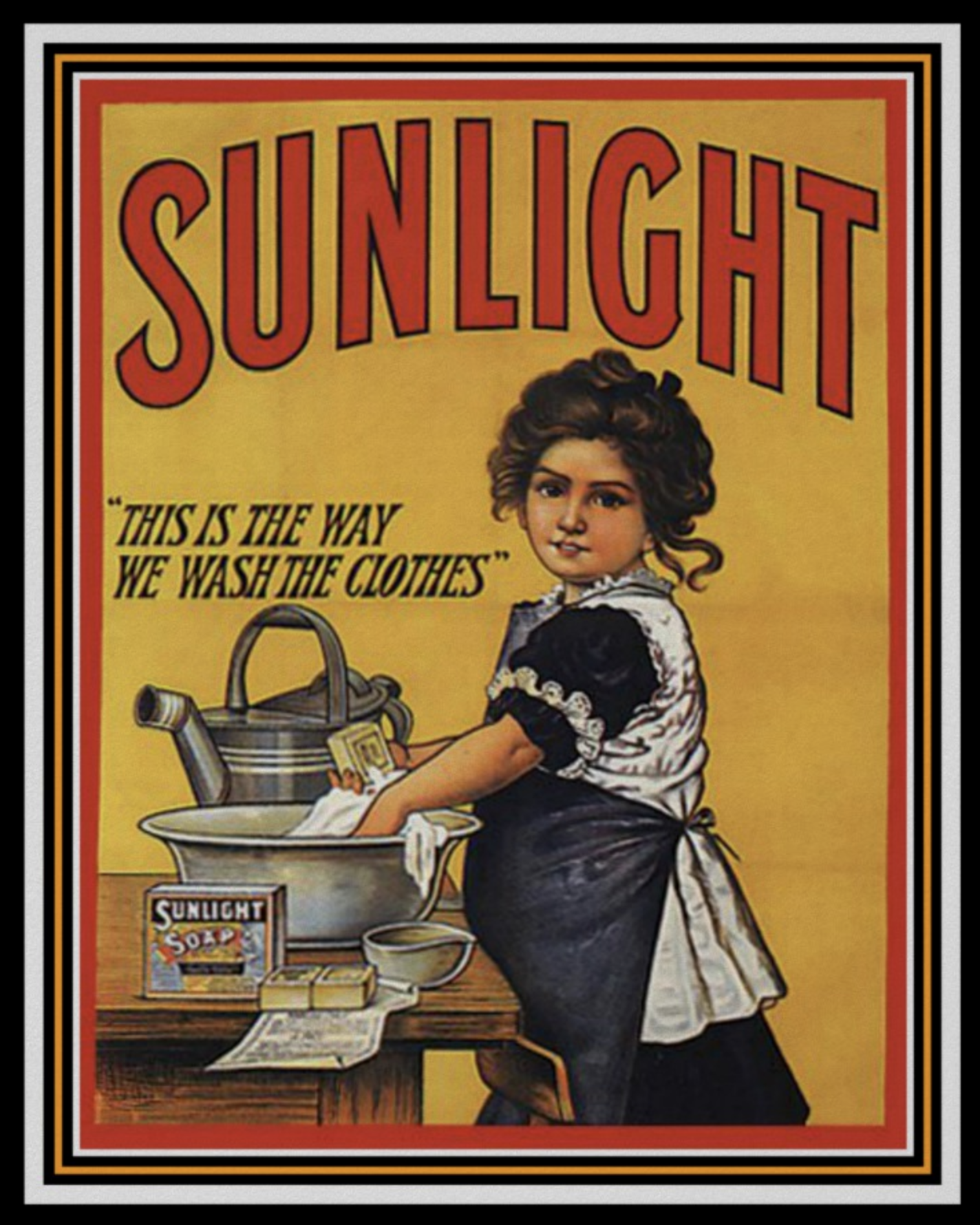
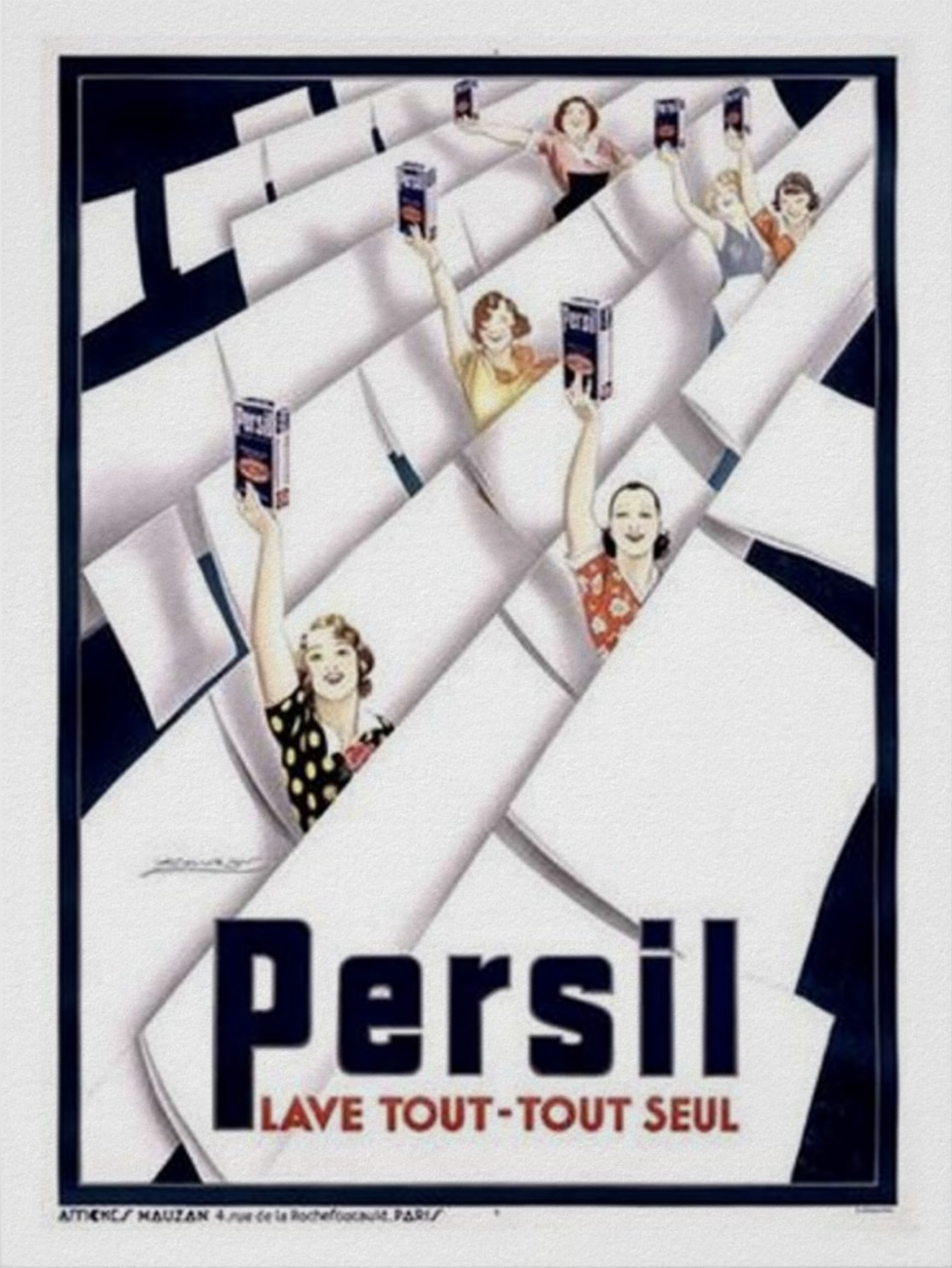
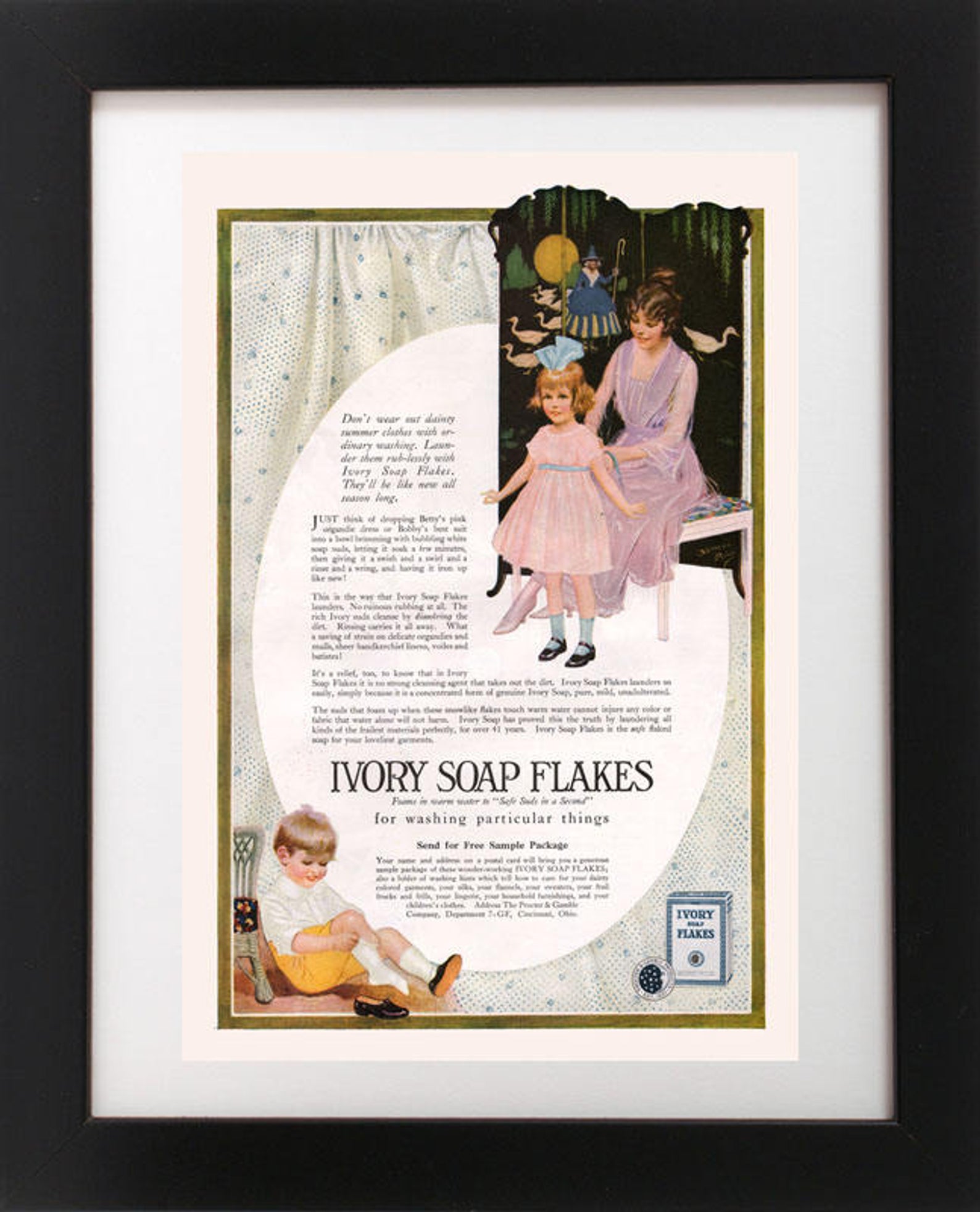
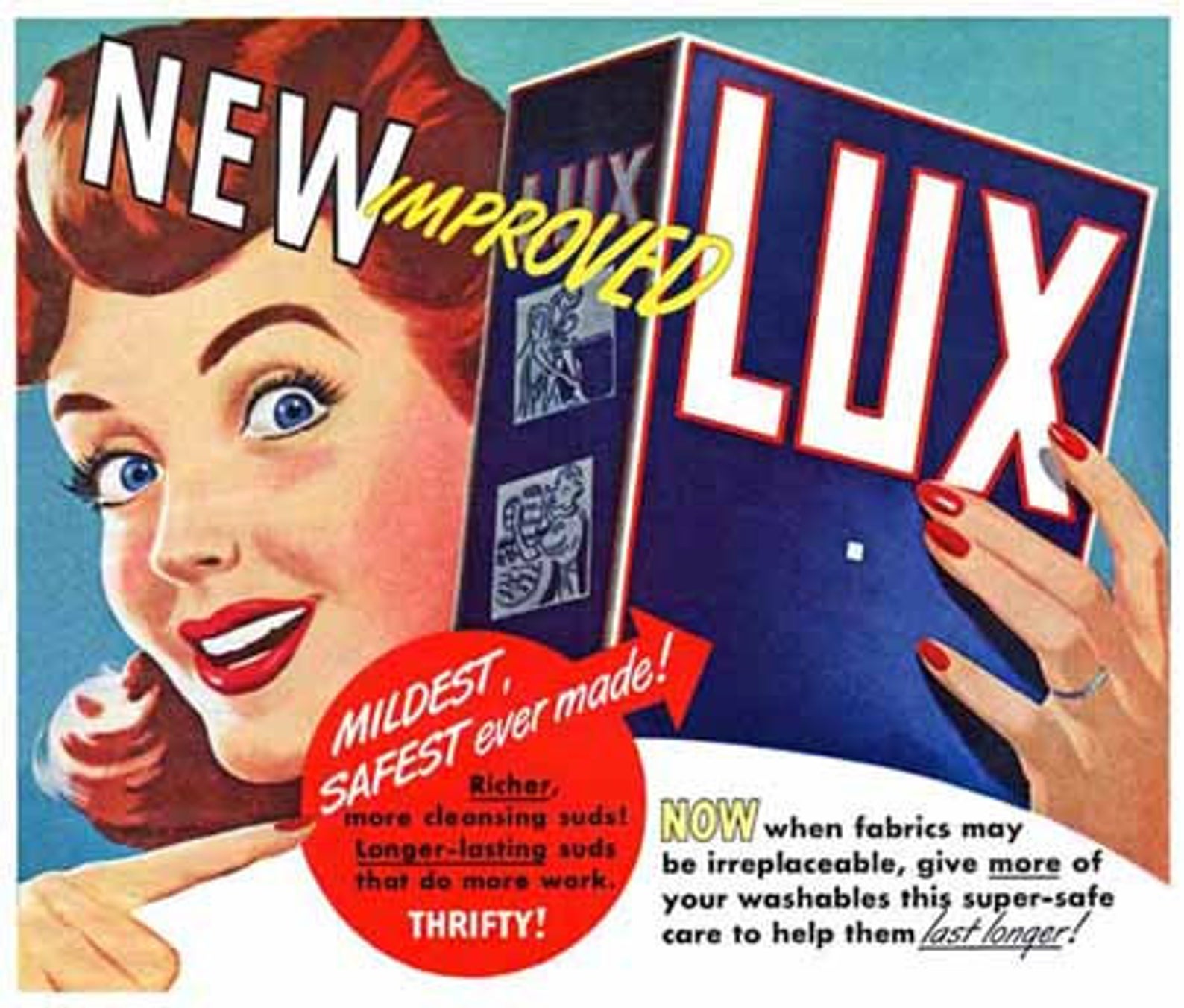
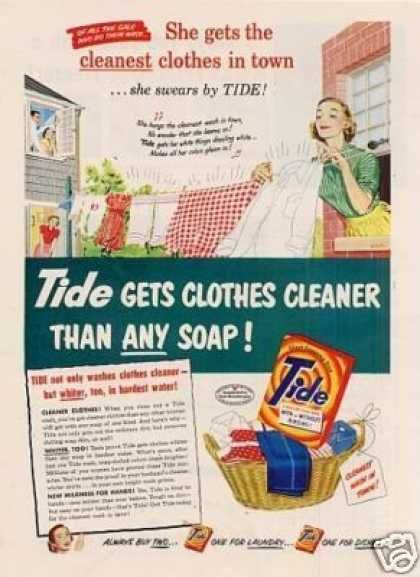
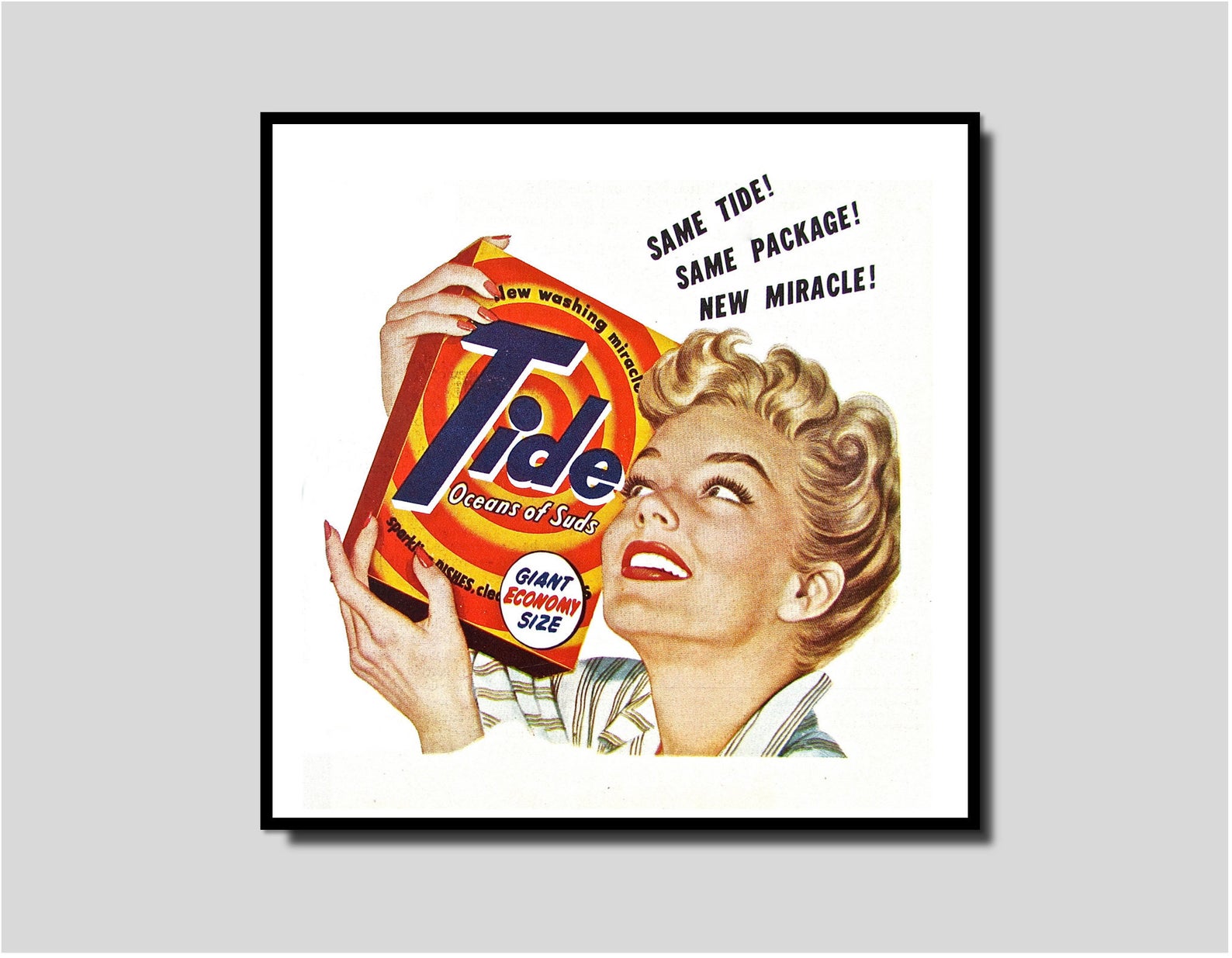
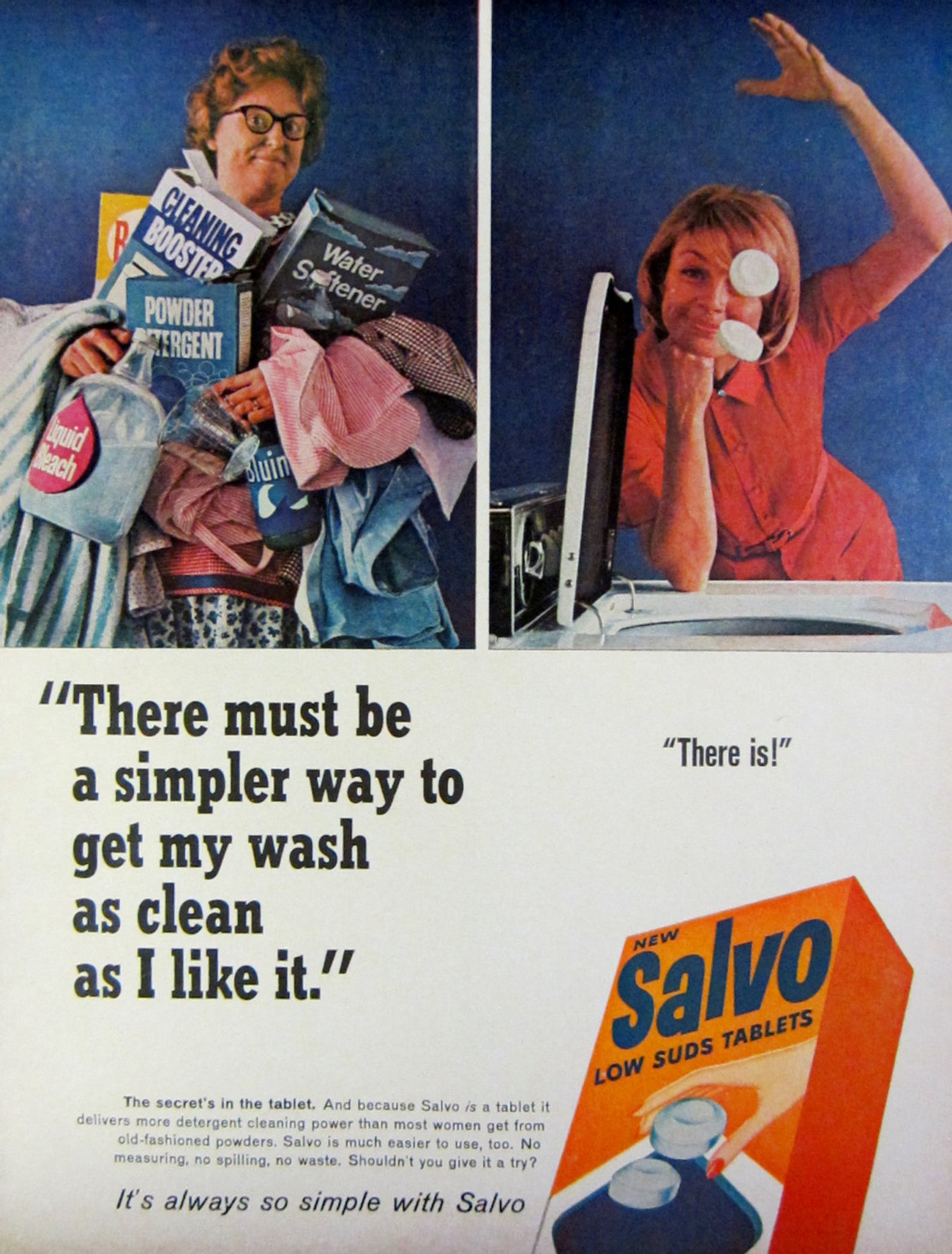
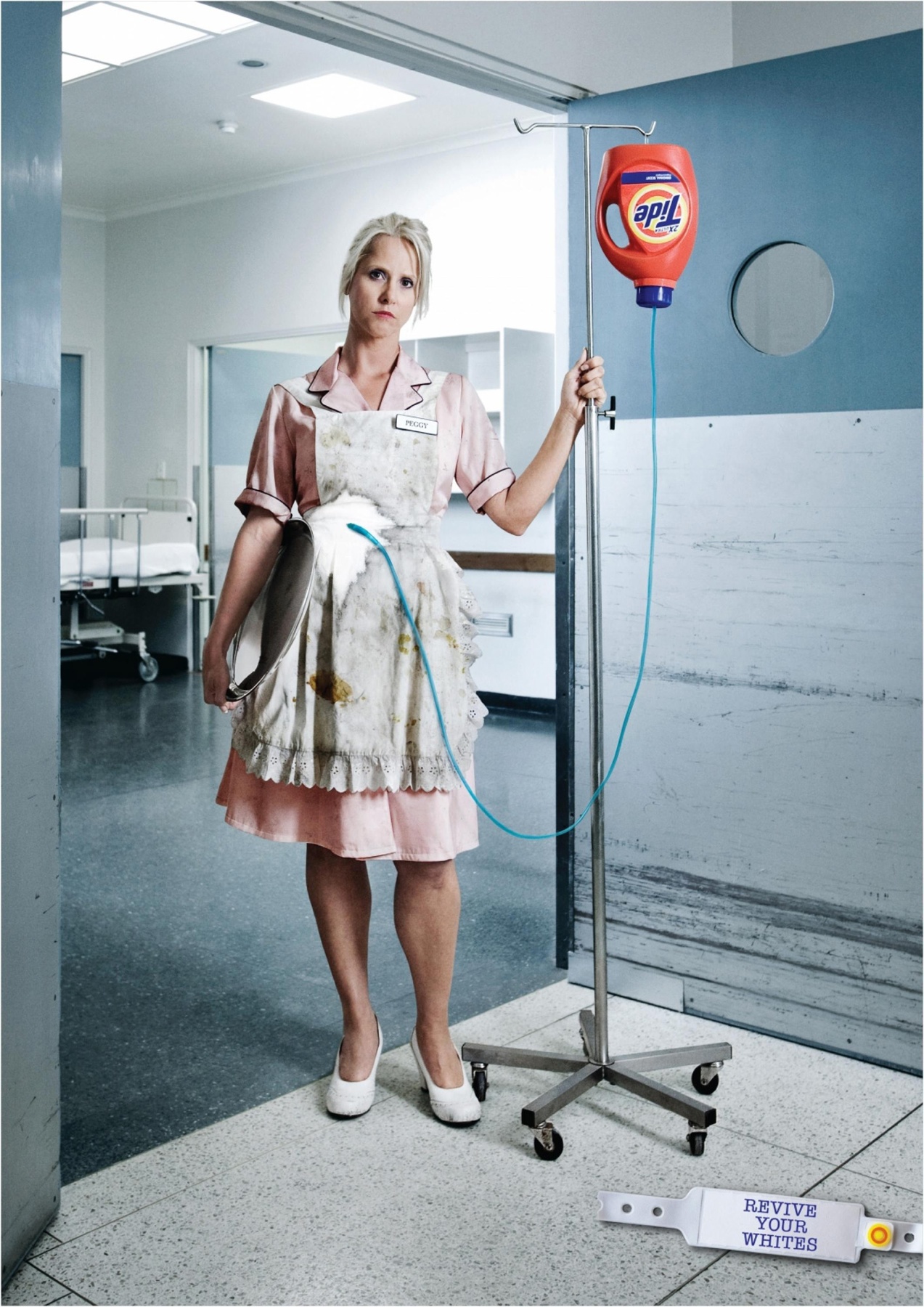
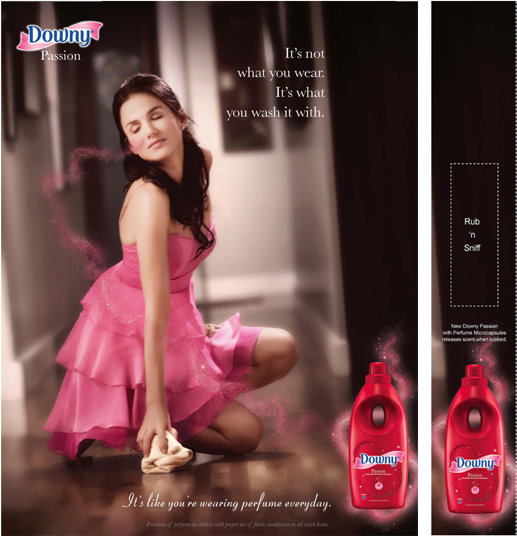
During my research on jingles, I found a much greater social commentary: sexism and gendering in advertising. I spend numerous hours watching laundry soap commercial after laundry soap commercial from the 1950s through present day. One common thread was revealed: women are the cleaners. Women do the laundry. Below are a few of the more sexist commercials I’d discovered, but needless to say, they all hit upon some aspect of the societal trope of housework being deemed for women only.

And just in case you might find that these commercials are relics of previous generations, gender stereotypes, and that somehow we’ve certainly moved on to a more progressive approach to marketing the household chore of doing laundry, think again. These commercials were made in the last ten years…

The Clorox commercial doubles down on the sexism leveraging the legacy of laundry of being women’s work as a “laundry through the ages” retrospective.

Ugh.

Sexism in advertising does not just apply to television commercials, but to print advertising as well…

And there is much scientific study on the topic of gendering and sexist stereotyping through advertising. A study of print advertisements conducted early in the 1970s by Courteny and Lockeretz showed very rarely showed women in working roles. About 33% of the full-time workers in the United States are women: however, only 12% of the workers shown in the ads were female. Moreover, if professional entertainers of both sexes are excluded, the proportion of women workers pictured drops to just seven percent. Almost half of the men (45%) were shown in working roles: in contrast, less than one-tenth of the women (9%) were shown in working roles. (Courteny and Lockeretz, 1971).

More recent study and commentary on the topic, researchers, Ferguson, Kreshel, and Tinkham revealed that a fifteen-year review of Ms. magazine print advertisement were in fact counter to their stated policy against “harmful” advertisements that project gender stereotypes or are offensive to women. Their study concluded that while the publication may have started out with strict policy in service to their target demographic within short order it became subservient to the advertisers. Their conclusion presented a commentary on the power of advertising, “to create and transmit cultural meaning, the presence of stereotypes which are inaccurate, offensive, and confining is particularly troubling. Such stereotypes provide a limited "vocabulary of interaction," encouraging people to think and speak of women primarily in terms of their relationship to men, family, or their sexuality, (Fergusen, Kreshel, and Tinkham, (Tuchman, 1990).

Portraying women as less than, as objects, and as stereotypes of gender tropes that have place in contemporary advertising — let alone all advertising — is troubling . Yet it remains.

Lisa Bennett, NOW Communications Director, reports on the sexist advertising used in the 2017 Super Bowl, specifically the selling of products using gender stereotypes, sexual exploitation, objectified women and gratuitous violence. She summarizes an Audi ad’s message ”not only nonsense, it’s dangerous. Sorry, Audi, but women’s bodies are not the proving ground for men’s machismo, their self-esteem. This ad perpetuates an age-old myth that needs to be put to rest. No, men are not entitled to “take” women as a prize or as solace. It is not “brave” to steal a kiss from an unsuspecting woman or girl. And it’s outrageous to produce a commercial that cheers on such an act. (Bennett, 2013).

MY FINAL PIECE

My final piece, a film, brings together the overlooked, ignored storefront locations of the cleaners in my neighborhood and a commentary on the gender stereotyping of advertising as juxtaposed against the soundtrack of laundry commercials spanning the last sixty years. Even the imagery in the cleaners’ windows used for promotion is gendered furthering the commentary: women are the cleaners.

“Cleaners”

REFERENCES

Bennet, L. 2013.“Super Bowl Ads Promote Sexist Attitudes, Offensive Behavior.” National Organization for Women, now.org/blog/super-bowl-ads-promote-sexist-attitudes-offensive-behavior/.
Courtney, A. and Lockeretz, S. 1971. ‘A Woman’s Place: An Analysis of the Roles Portrayed by Women in Magazine Advertisements’. Journal of Marketing Research 8(1), 92–5.
Ferguson, J., Kreshel, P., and Tinkham, S. 1990. ‘In the Pages of Ms.: Sex Role Portrayals of Women in Advertising’. Journal of Advertising 19(1), 40–51.

GDE710 W6 | Lecture Reflection & Research

NOTICING THE IGNORED

This week’s lecture explores the practice of observation and its impact on design. What can we see that we typically overlook? What is revealed or discovered when we look longer, dig deeper, and widen our perspective?

We are introduced to nearly twenty artists, sociologists, psychologists, and relative methodologies — ways of seeing, thinking, and observing. The following is my reflection of the four standout contributors noted in this week’s lecture: John Berger, The International Situationists, John Smith, and Alistair Hall.

WAYS OF SEEING

Beginning with John Berger, artist, researcher, writer, and television journalist and host, who produced the popular BBC program and book of the same title, “Ways of Seeing.” Berger invites the viewer to see and know the world differently, with art and all things. “The relation between what we see and what we know is never settled,” he wrote. He shows us how meaning is influenced by the context of its surroundings.

Berger presents Caravaggio’s Supper at Emmaus, while two very different pieces of music play yielding a different emotional impact on the viewer respectively.

Berger presents Caravaggio’s Supper at Emmaus, while two very different pieces of music play yielding a different emotional impact on the viewer respectively.

SITUATIONISTS & THE DÉRIVE

The Situationists International was an organization of social revolutionaries made up of avant-garde artists, intellectuals, and political theorists, prominent in Europe from its formation in 1957 to its dissolution in 1972.

The Dérive was an approach to seeing and experiencing the world differently and the refusal of original creation — locomotion without a goal.

Guy Debord’s Society of the Spectacle, sought to devalue everything, to negate art and realize art simultaneously through the exploration of evaluating the imagery that is served to society and the refusal of that capitalism-driven imagery to form individualistic or anti-populism.

Andy Warhol’s Campbell's Soup Cans can be seen as an example of Debord’s reflection on the spectacle via taking the mundane object and creating art and ultimately a capitalistic demand by way of society’s response and assessment of its value — this …

Andy Warhol’s Campbell's Soup Cans can be seen as an example of Debord’s reflection on the spectacle via taking the mundane object and creating art and ultimately a capitalistic demand by way of society’s response and assessment of its value — this piece in particular, $11.7 million.

Debord’s The Naked City map provides a “choose your own adventure approach” to navigating and exploring Paris in a whole new way.

Debord’s The Naked City map provides a “choose your own adventure approach” to navigating and exploring Paris in a whole new way.

JOHN SMITH & “GIRL CHEWING GUM”

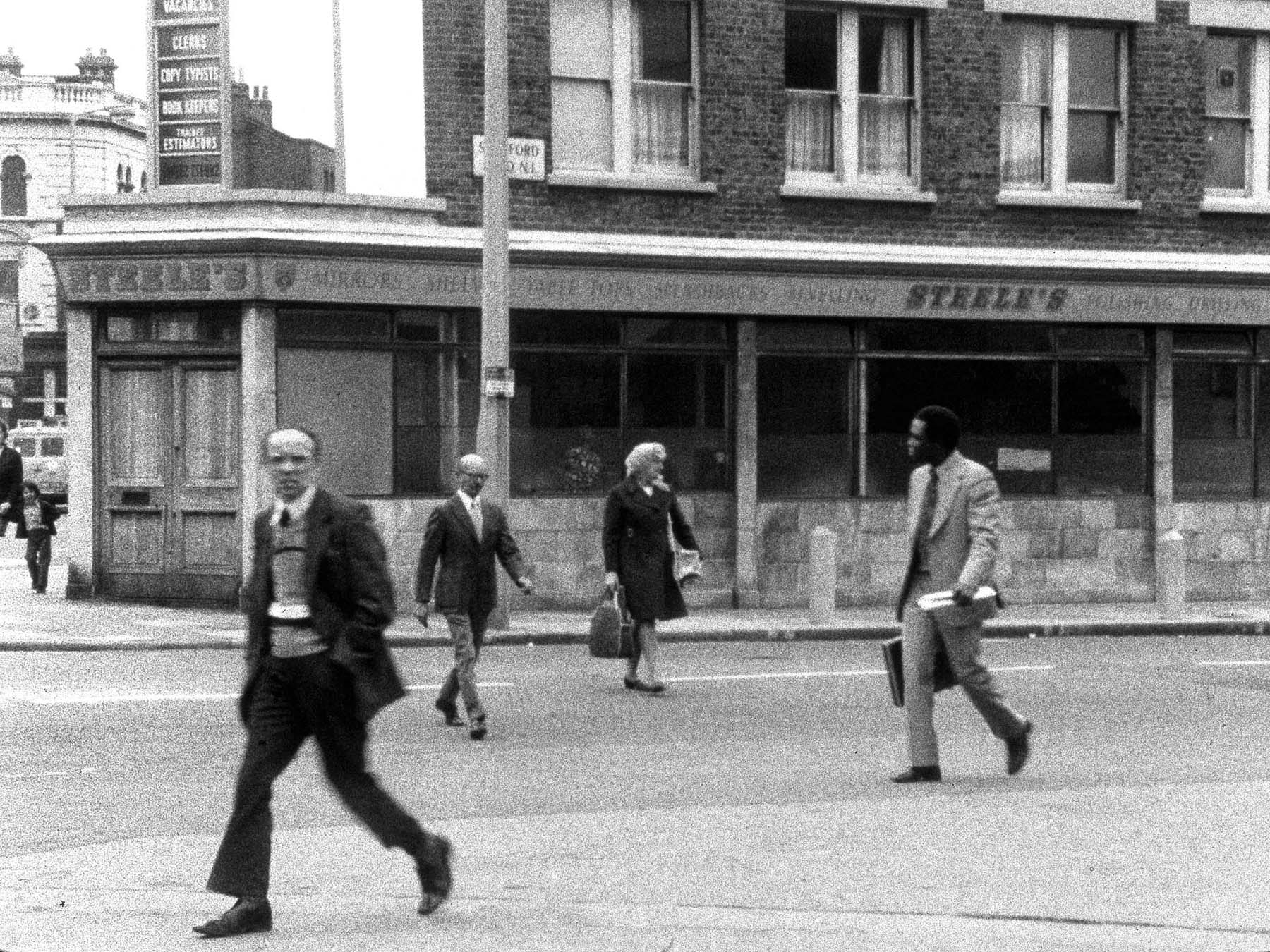
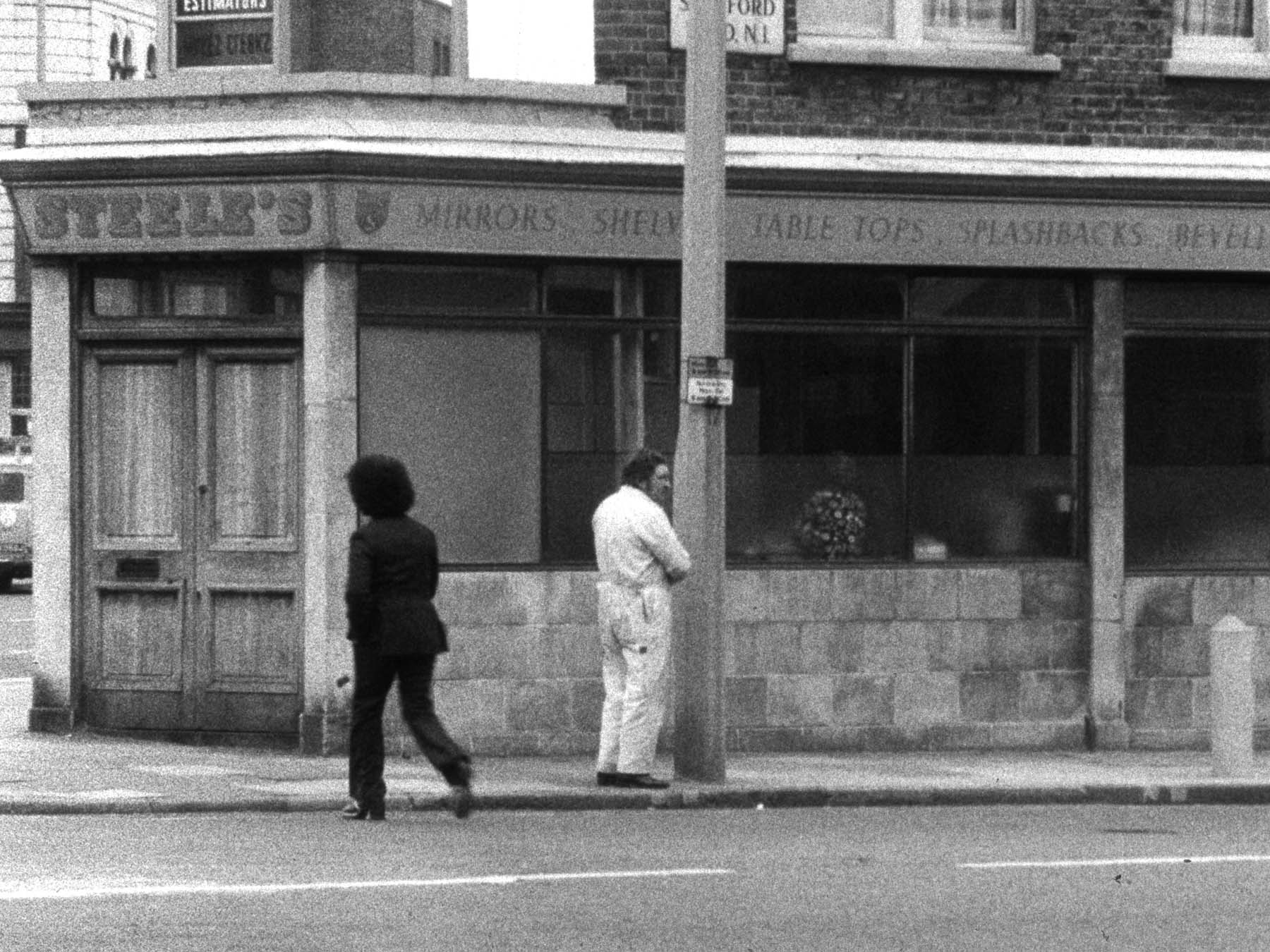
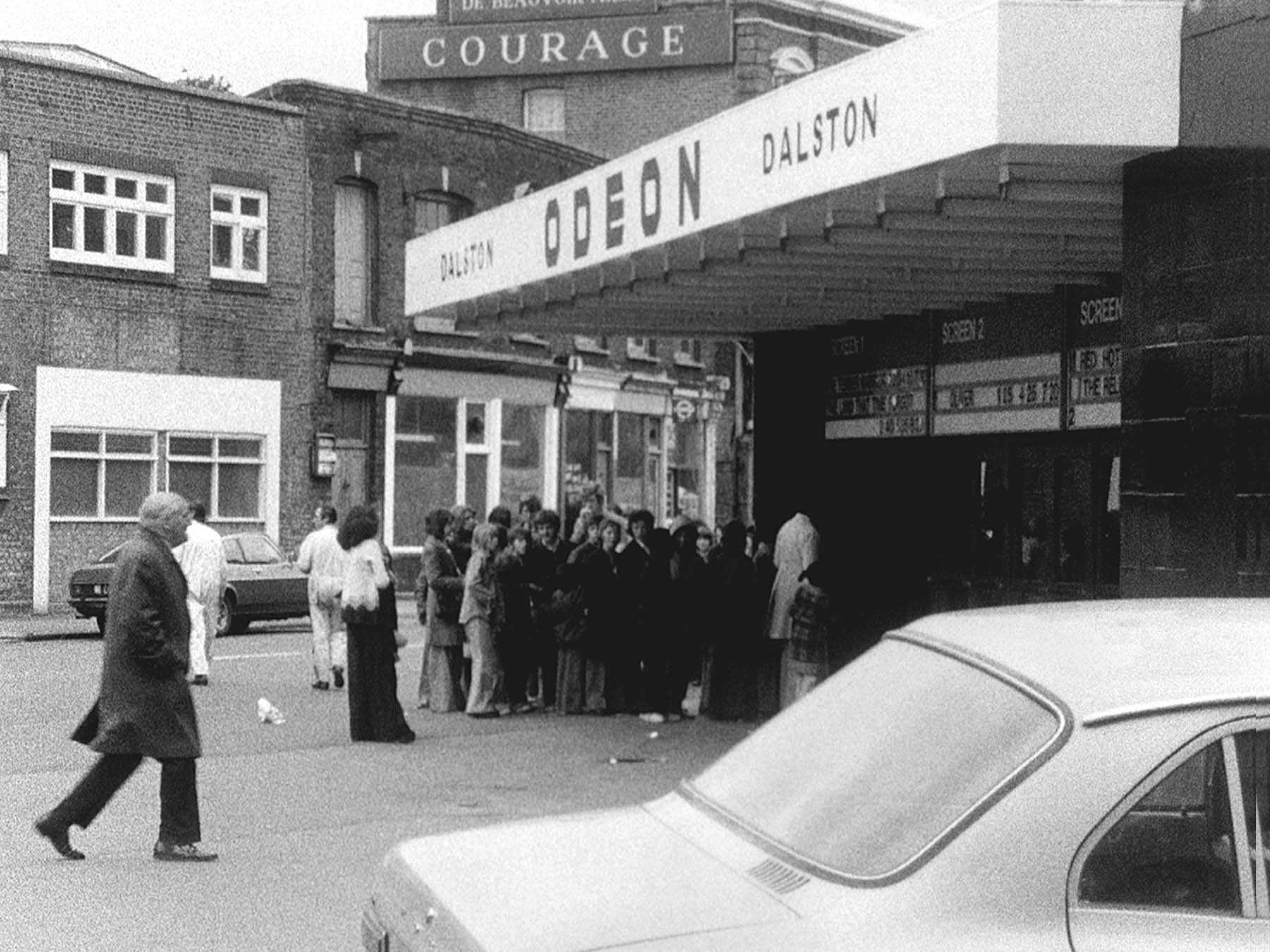
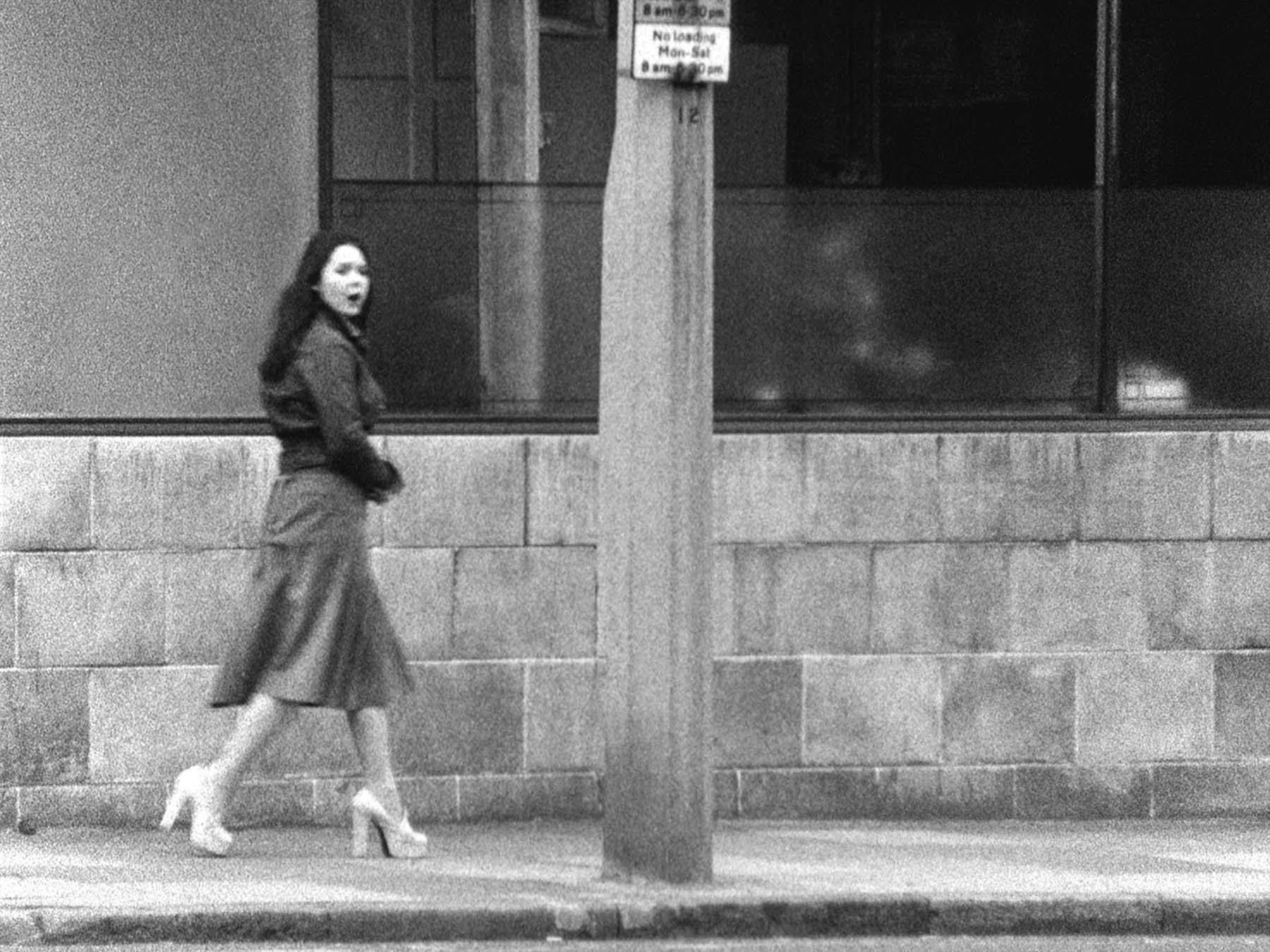
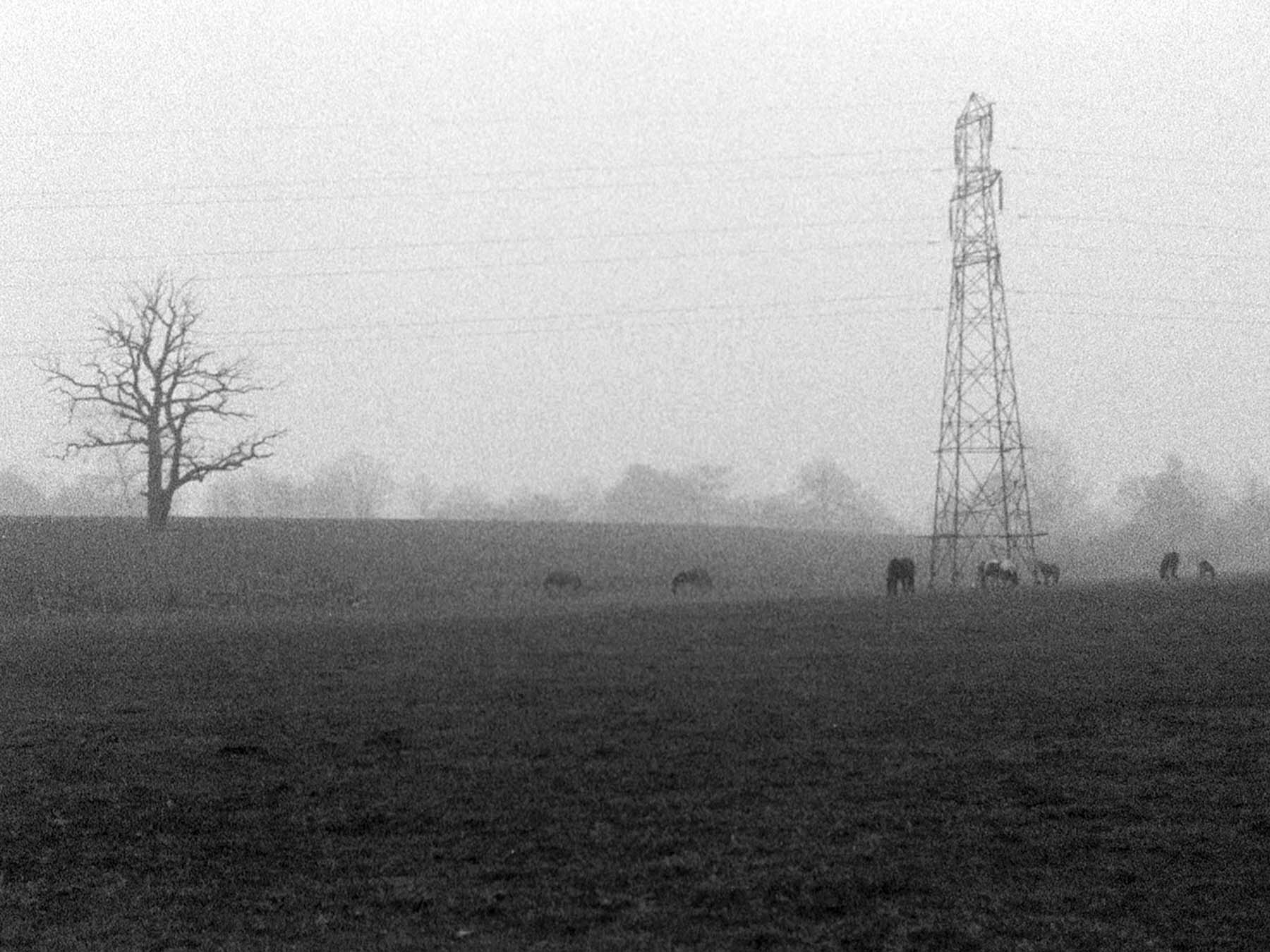
Structionalist filmmaker, John Smith’s piece “Girl Chewing Gum” depicts a simple London street yet narration that presents as if the documented passersby are actual cast members being directed through a crafted scene. Further, the director is seemingly present in location itself yet revealed to be miles away in a field, “by using a voice-over to subvert the reading of the image, marking the beginnings of my ongoing love/hate relationship with the power of the word,” (Smith, 2007).

KENYA HARA

Designer and professor, Kenya Hara, teaches his students to grow as creatives through the art of the Ex-formation Communication Method by Making Things Unknown. Examples of his students works include observation and documentation techniques as well finding new ways of seeing.

ED FELLA

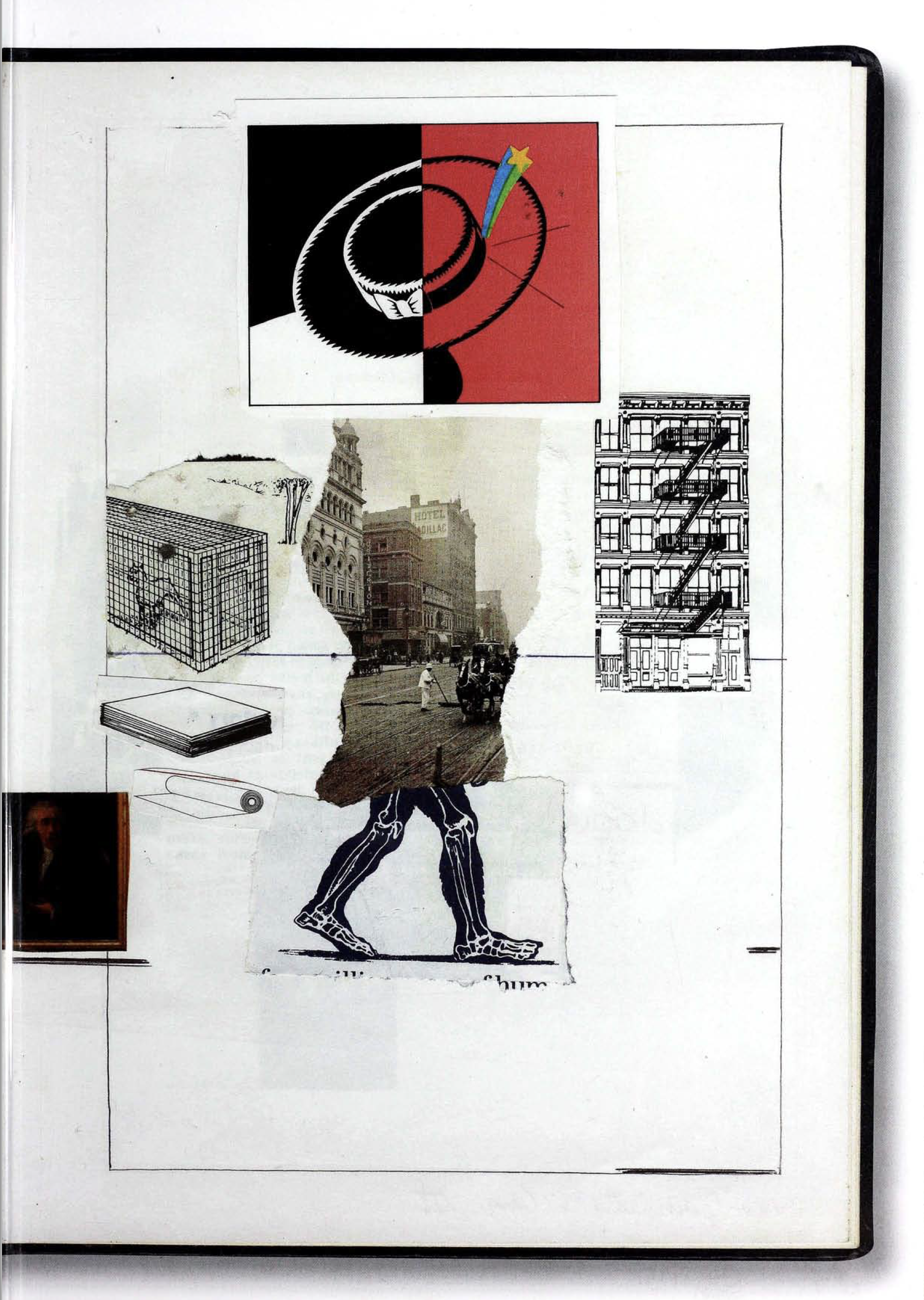
Commercial artist, lecturer, and author, Ed Fella, describes his approach to documentation via the use of sketchbooks as a release or detachment as well as a continuation of form and text studies. He finds this approach “rich in possibilities for reworking”and aids in fueling his creativity.

ALISTAIR HALL, LONDON NAMEPLATES

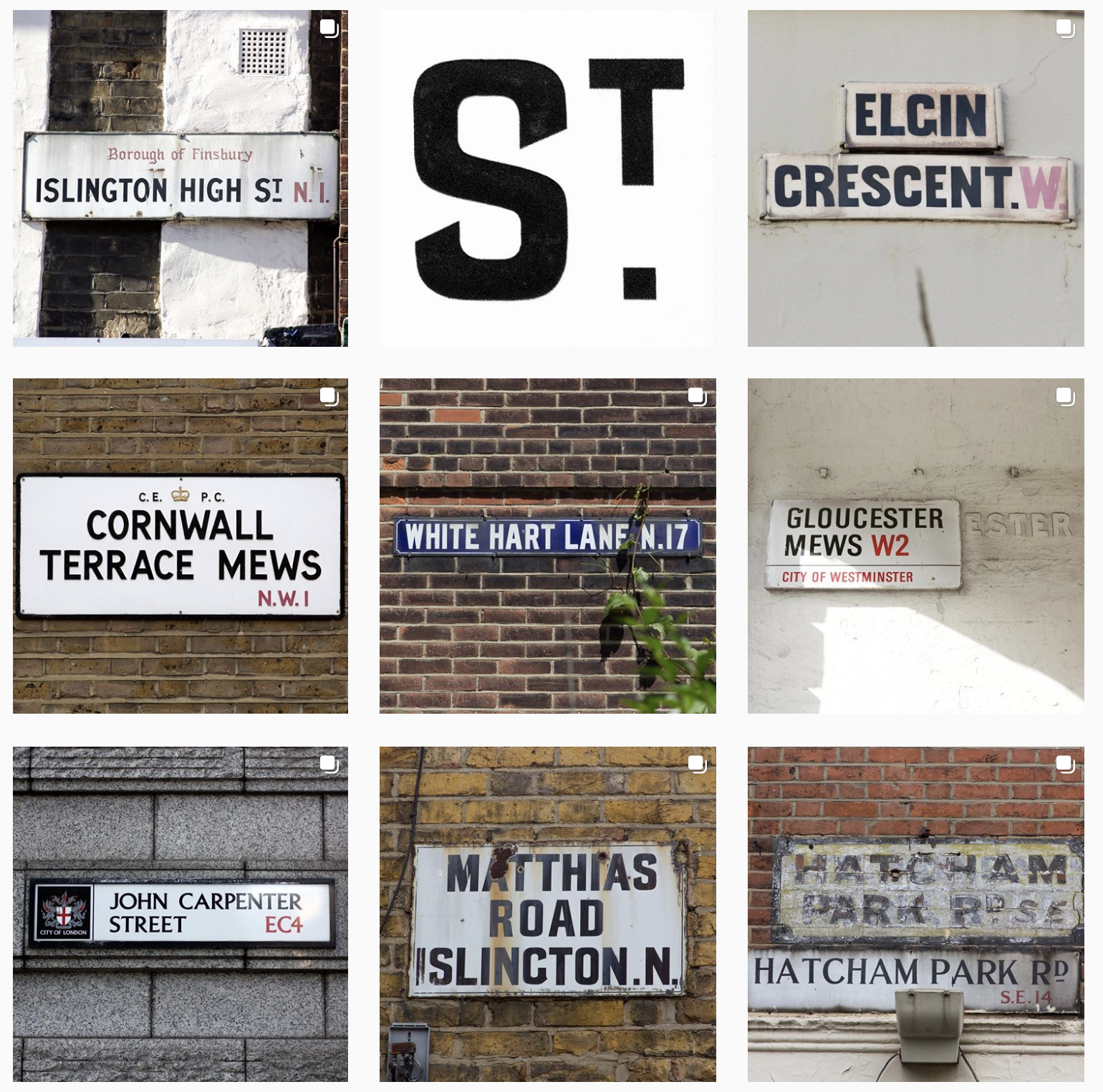
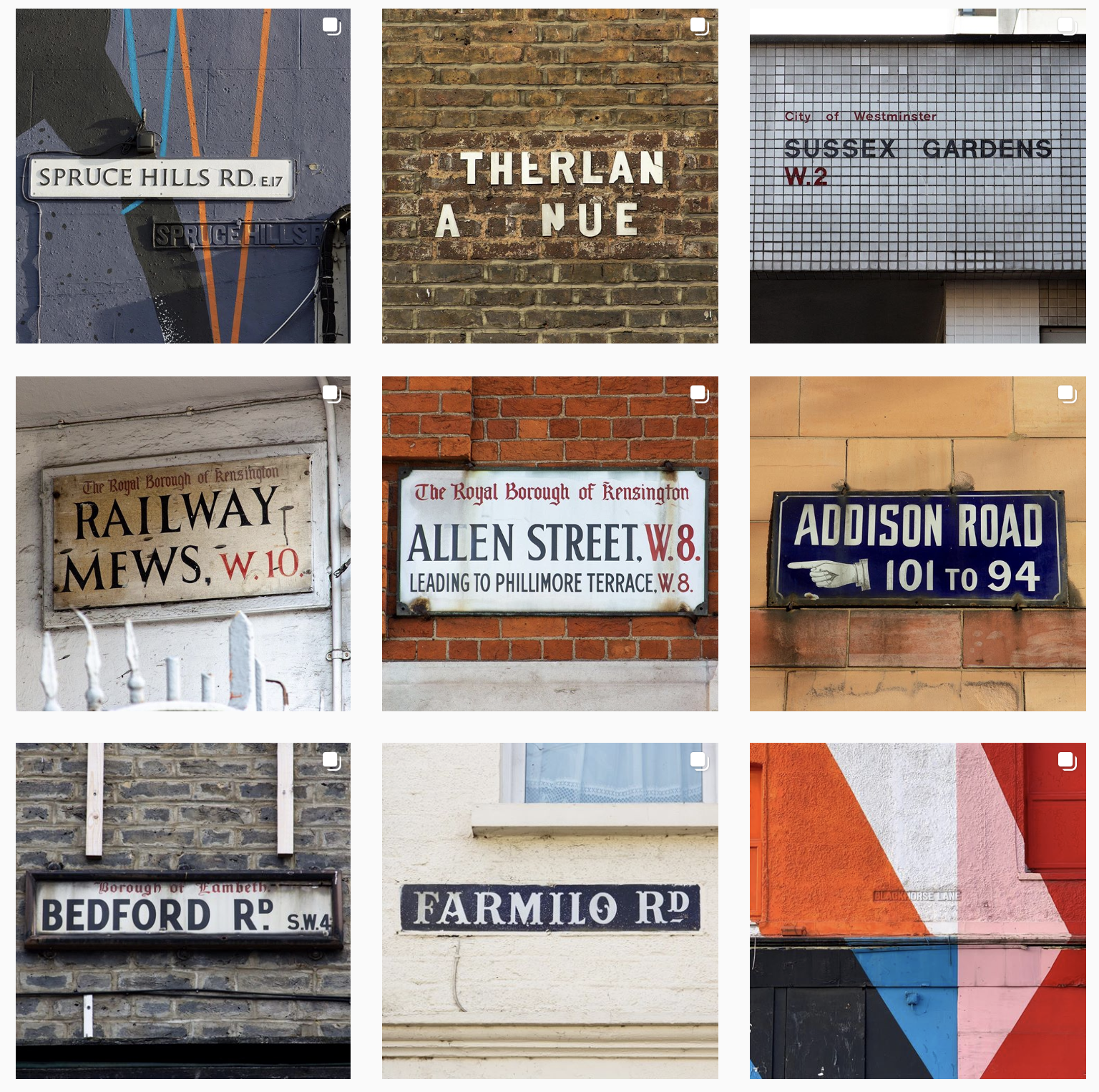
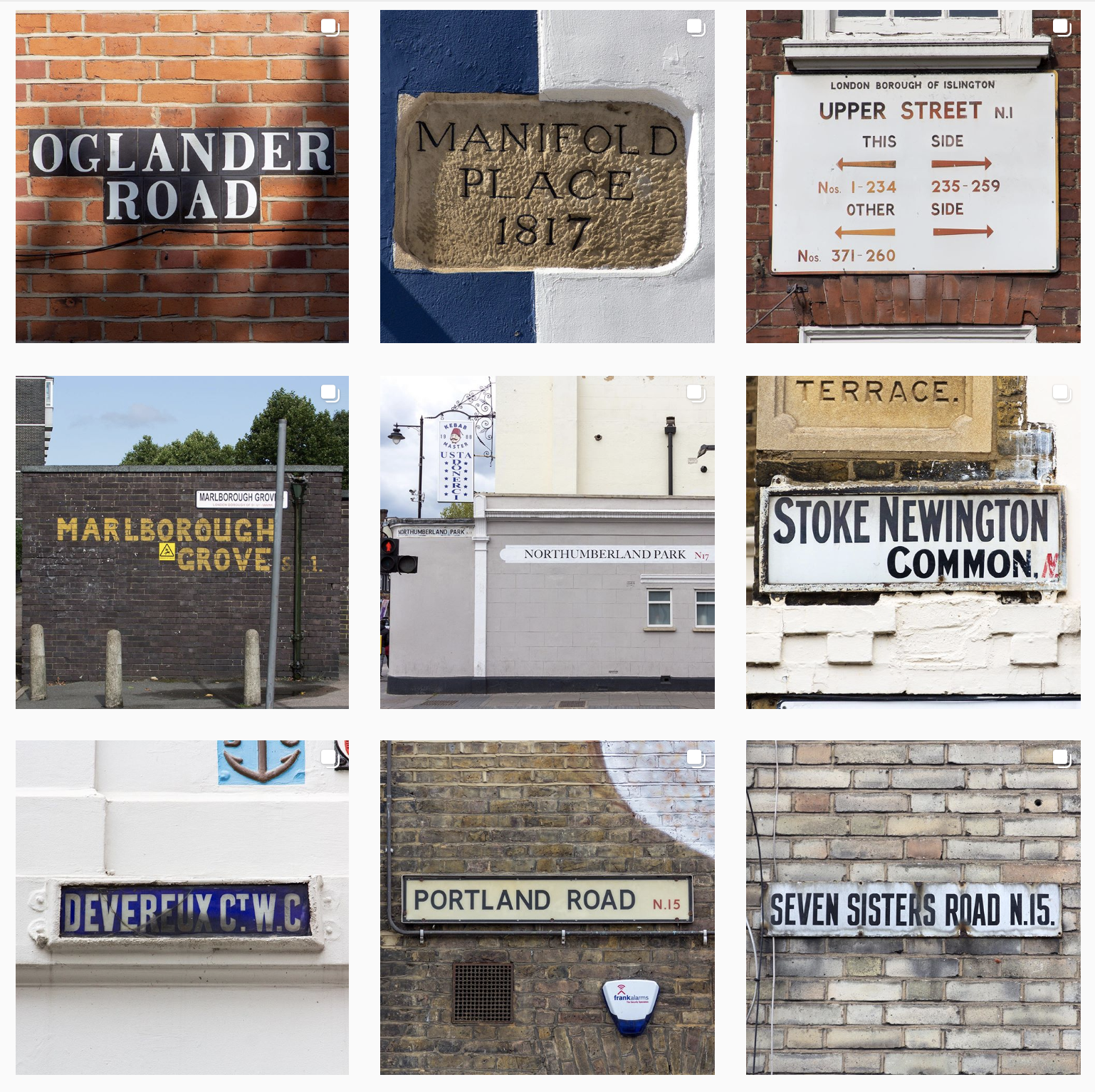
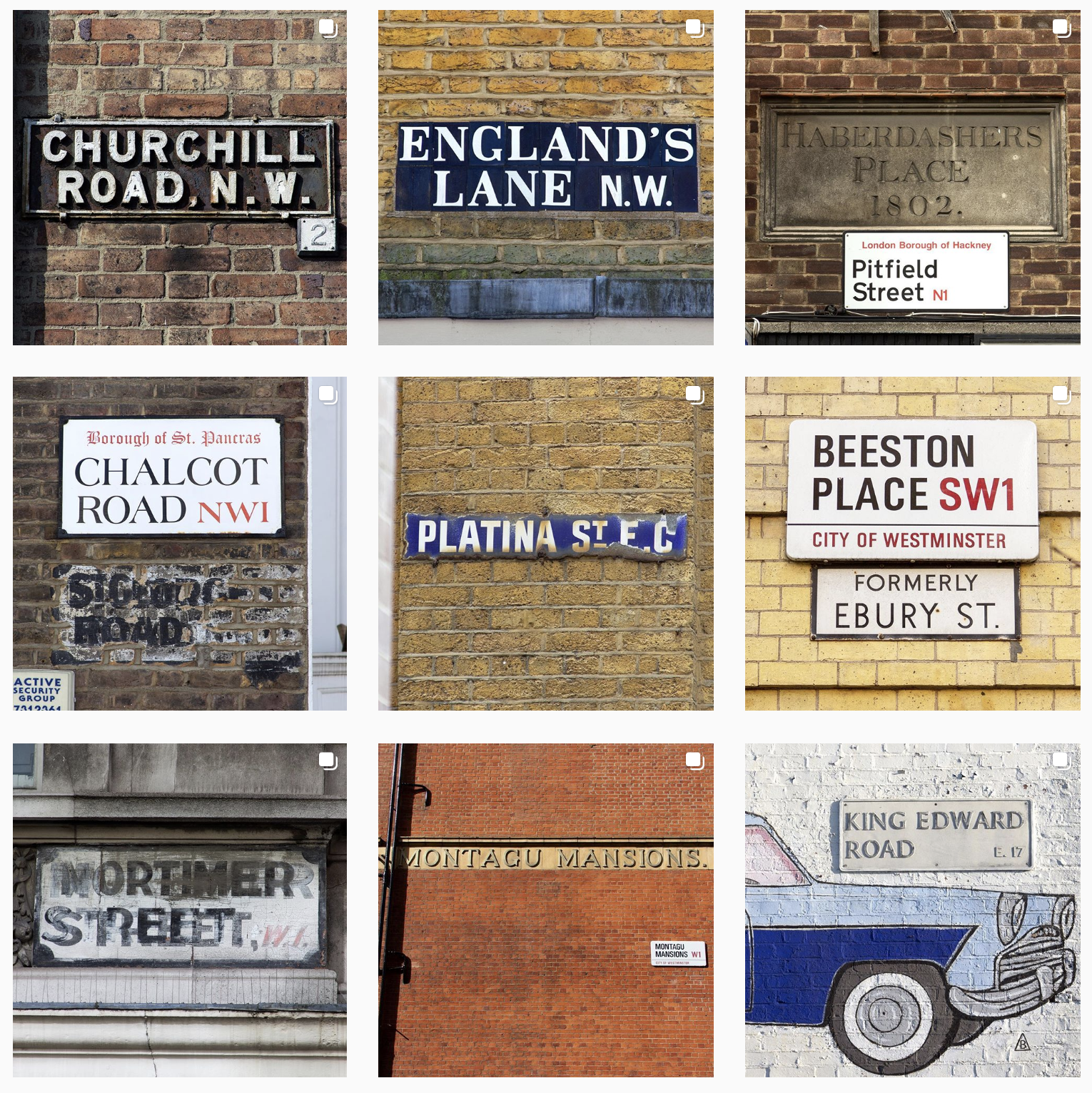
London designer, Alistair Hall, takes us on a typographic journey via a seemingly banal pathway of London street nameplates. His observation and reflection reveals a bountiful archive of type, craftsmanship, and historical references.

REFERENCES

Brereton, R. (2009) Sketchbooks; The Hidden Art of Designers, Illustrators and Creatives. Lawrence King: London.
Hara, K. (2015) Ex-Formation. Lars Muller: Zurich.
“London Street Nameplates.” (2019) We Made This, www.wemadethis.co.uk/work/london-street-nameplates/
Ways of Seeing, Episode 1, BBC, 28 Sept. 2008, www.bbc.co.uk/programmes/b00drsjf.