GDE720 W5 | Workshop Challenge

DISSECTING A WRITTEN GENRE

This week’s challenge had us generating a written and visual content that explores the relationship between content and form.

Among the six genre’s of writing offered, I chose “love letter”. One of my favorite writers of all time is Ernest Hemingway. I knew he had written numerous love letters. With Hemingway as a starting point, I set off to find the love letters of the other prolific writers: Elizabeth Barrett Browning, Oscar Wilde, John Keats, and Johnny Cash.

To emphatically profess emotion is a key element of any love letter. It seems a sense of madness or being besotted also tends to have a starring role. Writing is meandering and wild. Forms are broken and reassembled. The tone is passionate, desperate, and undying.

barrett.jpg

I cannot love
you less...?

That is a doubtful phrase. And

I cannot love you more…

…is doubtful too, for reasons I could give. More or less, I really love you, but it does not sound right, even so, does it? I know what it ought to be, and will put it into the 'seal' and the 'paper' with the ineffable other things.

Elizabeth Barrett Browning married her husband, Robert Browning by eloping much to the dismay of her father. They wrote many love letters to one another throughout their lives together. And collections of these letters have been published many times over. A love of the ages.

John Keats ends his bachelorhood by deeply slipping into a heart-struck madness for his paramour, Fanny Brawne.

keats.jpg

Oscar Wilde fell in love with a man named Lord Alfred Douglas, whom Wilde affectionately called "Bosie". To be in love with a man in the time of Oscar Wilde was not unheard of, but it was not publicized. His letters to Douglas were passionate, full of love and desire to remain with his sweet Bosie knowing full well it was never to be. The advent of the typewriter allowed Wilde to profess his love and admiration in two ways as shown below:

Hemingway, a prolific writer, was also a prolific lover. Married four times and having countless lovers both during his marriages and apart, Ernest could not keep his loving thoughts to himself. He often used his passion for his beloveds as a muse for his work. His use of pacing, type, and punctuation underscores the degree of his love.

The love between Johnny Cash and Rosanne Cash was like none other. A love so big and so deep it lifted them up, broke into pieces, and brought them together several times over. While their love was shared in song after song — lyrical love letters — it was also shared through written love letters.

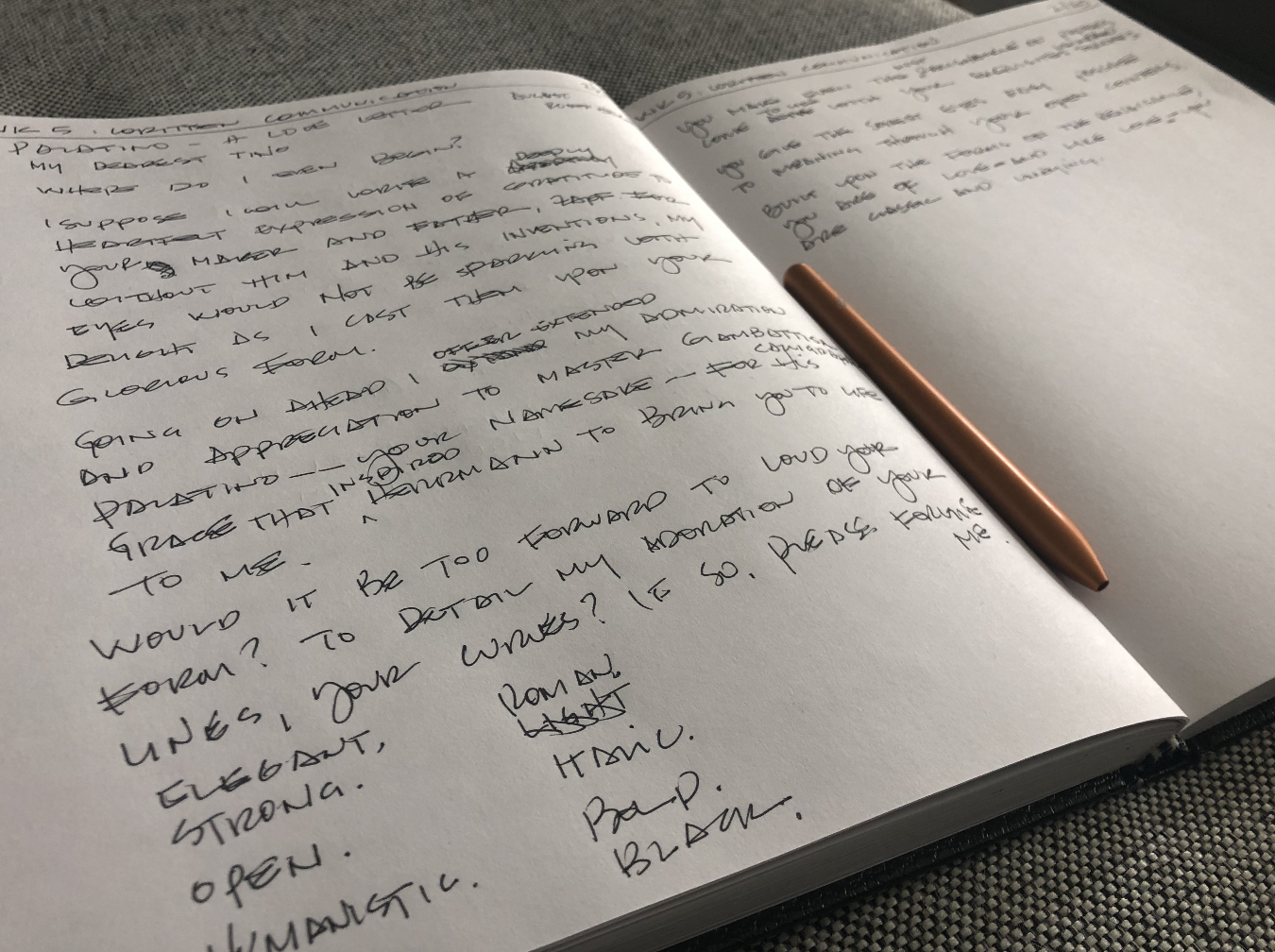
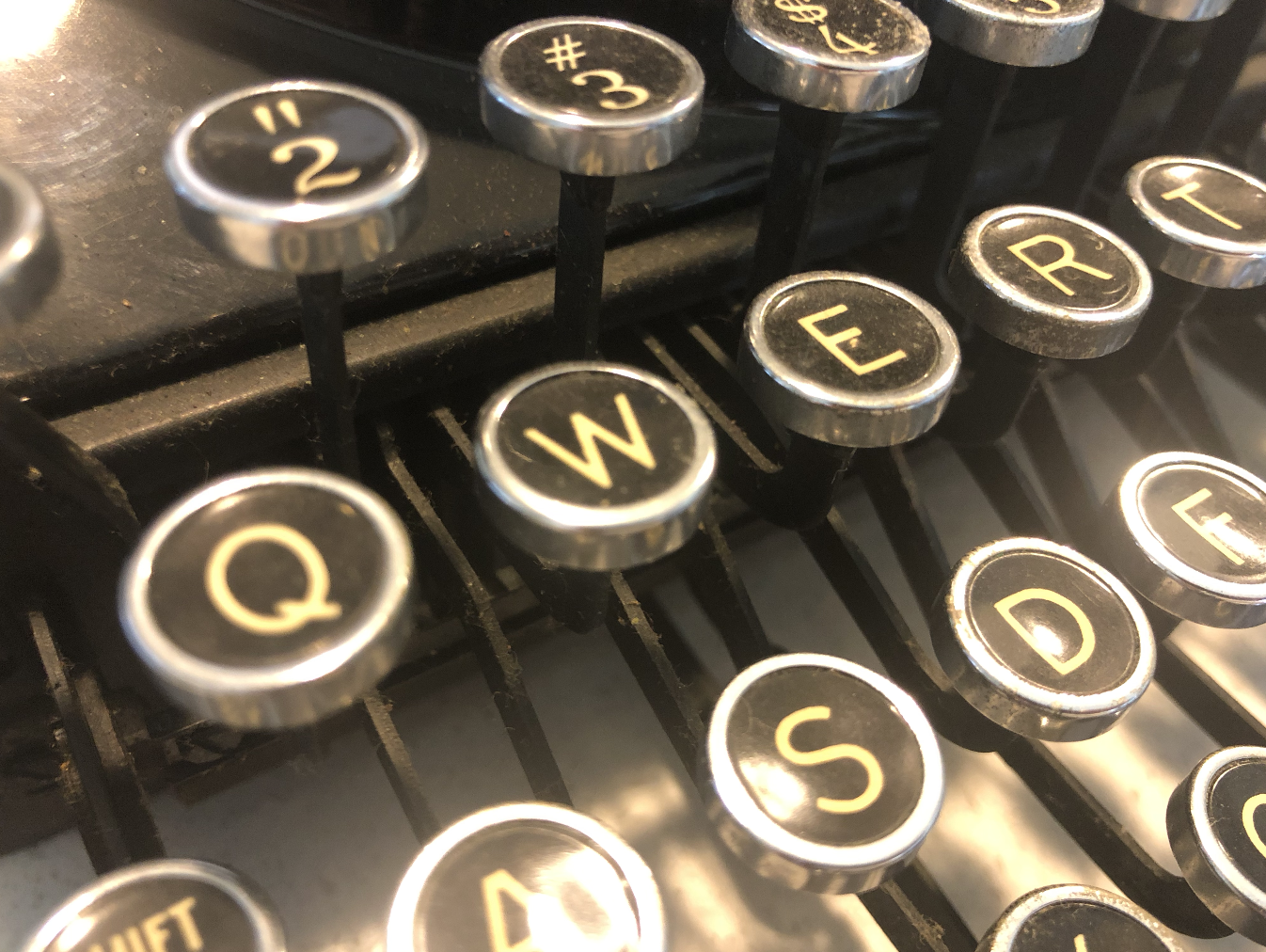
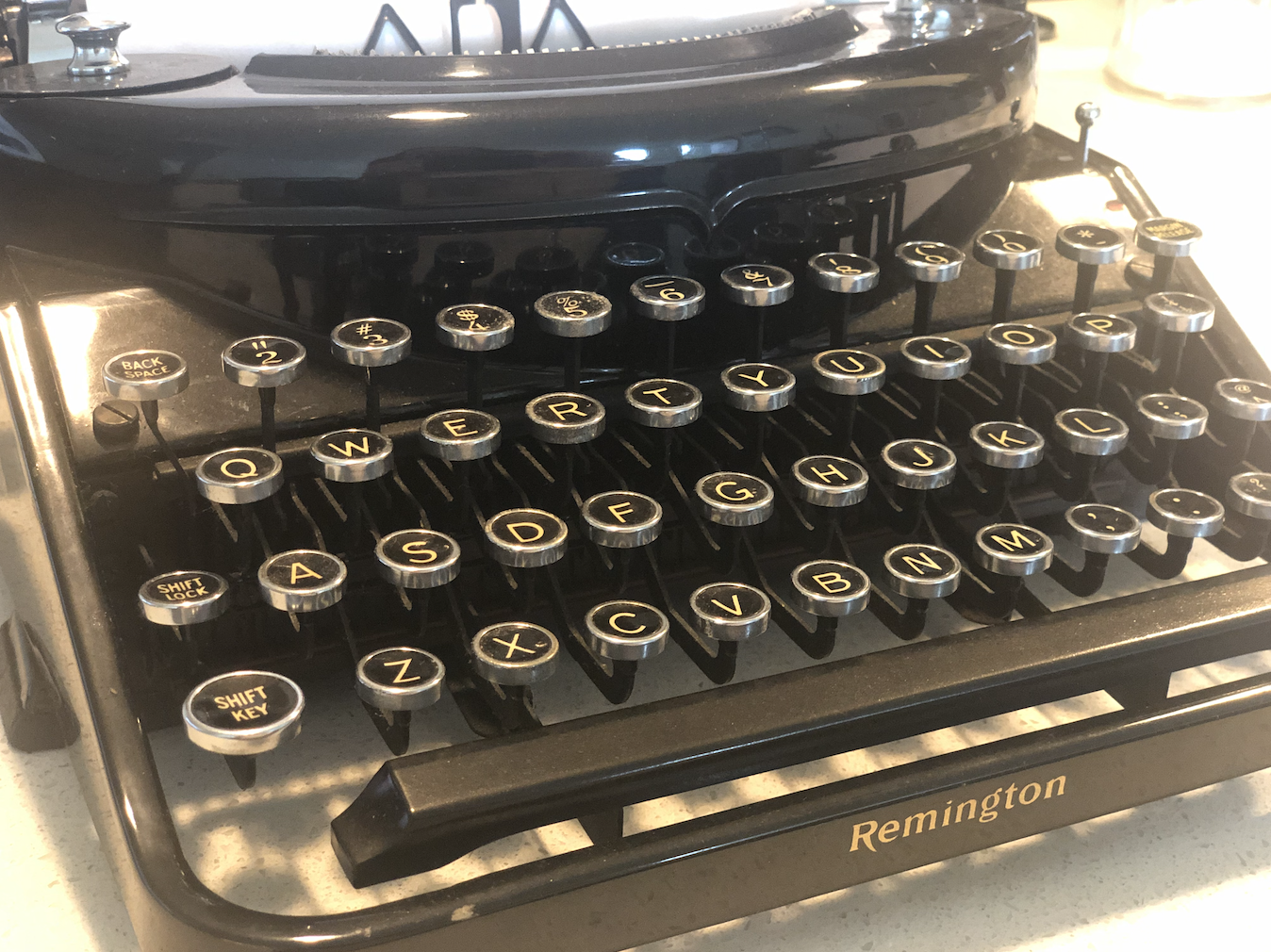
Working on this assignment reminded me of one of my own passions for type: the typewriter. I happen to own a 1937 Remington Noiseless portable. And it served as inspiration as I drafted my final piece. I chose to write a love letter to Palatino, the serif typeface created in 1948 by type designer Herrmann Zapf.

I chose both handwritten typography (my own) and typewriter courier elite type called Special Elite, which is the closest facsimile of my own typewriter. After digging it out, I realized the space bar cable has snapped, so my approach to actually type my own letter was thwarted. Luckily, there is a typewriter repairman not too far from my house and it will give me the opportunity to geek out with the repairman over typewriters. :)

I then moved the piece into Procreate to create a watercolor and alcohol ink wash around the letter forms to increase the emotion of the piece. Lastly, I placed it into a mockup of a deckle-edge piece of paper. My hope would be if this were to be a collection of love letters, it would be a part of a handcrafted book like the example shown below.

hand made book.jpg

My final piece can be found below:

Palatino, my love.

REFERENCE:

Biguenet, J. (2015, February 12). A Modern Guide to the Love Letter. Retrieved from https://www.theatlantic.com/entertainment/archive/2015/02/a-modern-guide-to-the-love-letter/385370/

Dorning, A. M. (2009, November). Letters Show Hemingway as 'Besotted Lover'. Retrieved from https://abcnews.go.com/Entertainment/newly-discovered-letters-show-hemingway-besotted-lover/story?id=8990222

Element Talks (2017) Adrian Shaughnessy – The graphic designer as writer, editor and publisher, [online video]. Available at Adrian Shaughnessy - The graphic designer as writer, editor and publisher. [Accessed 31 January 2019].

Falmouth University (2018). Visual Written Communication | Lecture. History and Futures GDE720 19/20 Part-Time Study Block S2 (Falmouth, UK: Falmouth University)

It’s Nice That (2015) Nicer Tuesdays: Craig Oldham on Books[online video]. Available at Nicer Tuesdays: Craig Oldham on Books  [Accessed 31 January 2019].

Jones, L. (2011, October 22). Bosie's love letters point to cover-up in Oscar Wilde trial. Retrieved from https://www.independent.co.uk/news/people/news/bosies-love-letters-point-to-cover-up-in-oscar-wilde-trial-2254136.html

Palatino® Font Family Typeface Story. (n.d.). Retrieved from https://www.fonts.com/font/linotype/palatino/story

Popova, M. (2019, October 28). John Keats's Exquisite Love Letter to Fanny Brawne. Retrieved from https://www.brainpickings.org/2016/02/19/john-keats-love-letter-fanny-brawne/

Smith, R. I. (2018, March 6). Elizabeth Barrett Browning's Immortal Literary Love Affair. Retrieved from https://www.theatlantic.com/notes/2016/03/elizabeth-barrett-browning-birthday/472377/

Smith, S. (2007, March). 'I Want to Kiss You Forever'. Retrieved from https://abcnews.go.com/WNT/story?id=2989920&page=1

TOC (2011) Anna Gerber and Britt Iverson, Visual Editions: Part Revolution, Part Reinvention, Part Making it Up Along the Way, [online video]. Available at TOC 2011: Anna Gerber & Britt Iverson, "Visual Editions: Part Revolution, Part Reinvention..." [Accessed 31 January 2019].

GDE720 W4 | Workshop Challenge

PROJECTING A NEW PERSPECTIVE

How can data visualization help communicate issues about science, culture, or the environment?

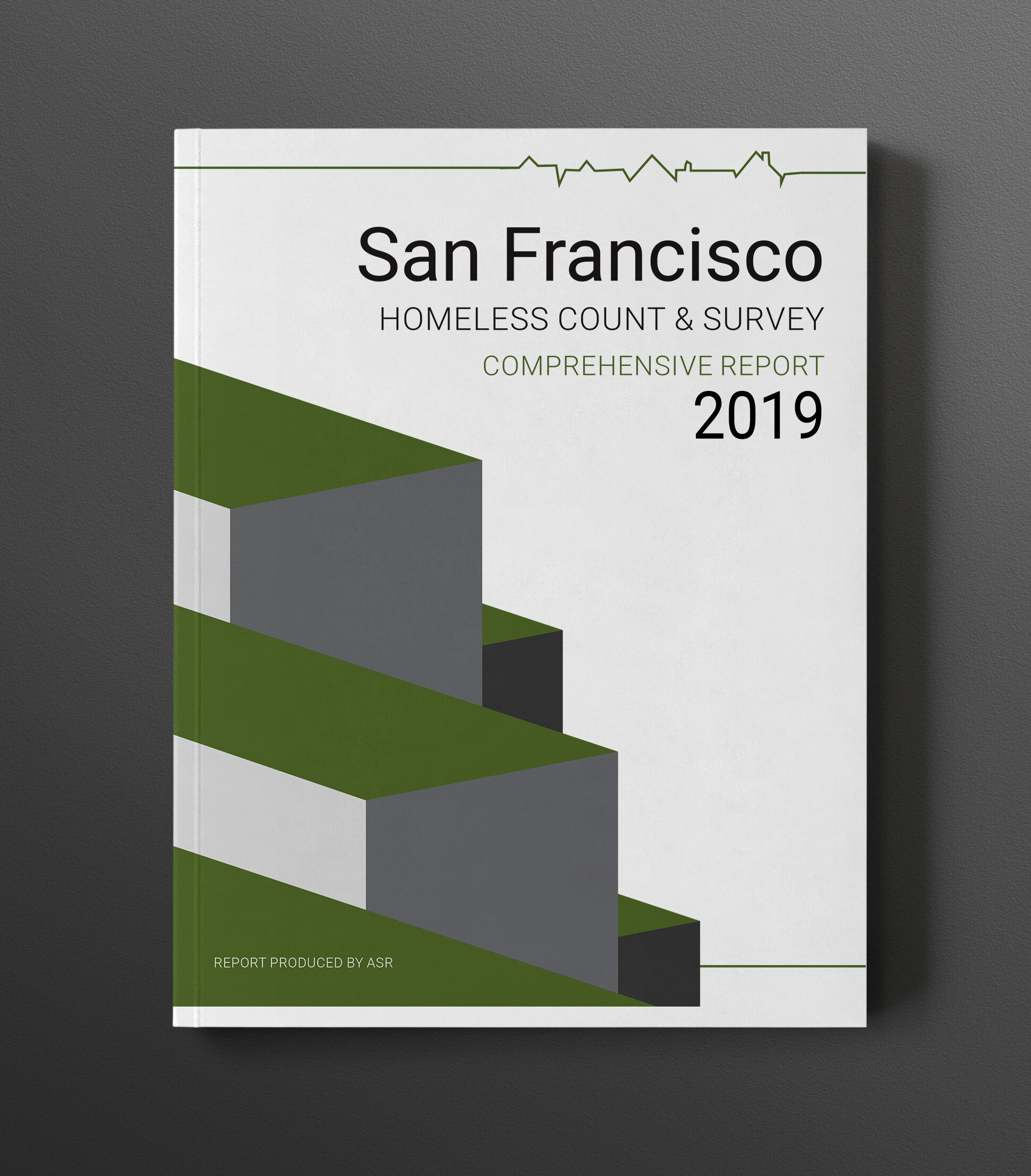
This week we learned a variety of ways to tell stories using data visualization. I chose to leverage the 2019 San Francisco Point In Time Homeless Count and Survey Report for my data source. It is an annual report and summary that documents and details the state of homelessness in the city of San Francisco at a single point in time. This information is sourced through hundreds of interviews taking place all across the city. Over 600 community volunteers, City and County employees, and local community-based organizations assisted with all aspects of the count, from the initial planning meetings to the night of the count. 

It is then compiled into an 70+-page report.

The homelessness in San Francisco is often national news. Each of the city’s mayors has attempted to resolve this issue unsuccessfully, and not for the lack of trying. Each year over 300 million dollars are spent on the homeless crisis in San Francisco, yet the numbers of homeless continue to grow.

 The 2019 San Francisco Point In Time Homeless Count and Survey Report provides nearly eighty pages of data, which was more than enough for me to draw out some insights.

Looking at the last three years, it appears that the demographics of homelessness are shifting, yet the stigma or stereotypes are not. How many think of the homeless as addicted to drugs, criminals, or mentally unstable? I know I have.

When you read this report you can see that many of those that are without regular, self-made or supported ongoing shelter are actually just like you and me. They work, they pay bills, they have kids that go to school. They just don’t have a place to live.

Looking at five data points in particular, you can see how the stigma is off-base. The key insights I gathered are as follows (1-5, left-to-right):

  1. 70% of reported homeless are natives of San Francisco

  2. 30% are homeless due to a loss in employment

  3. 66% were living in their own home or with family or friends prior to becoming homeless

  4. Most remain homeless because they cannot afford the sky-high cost of living in San Francisco

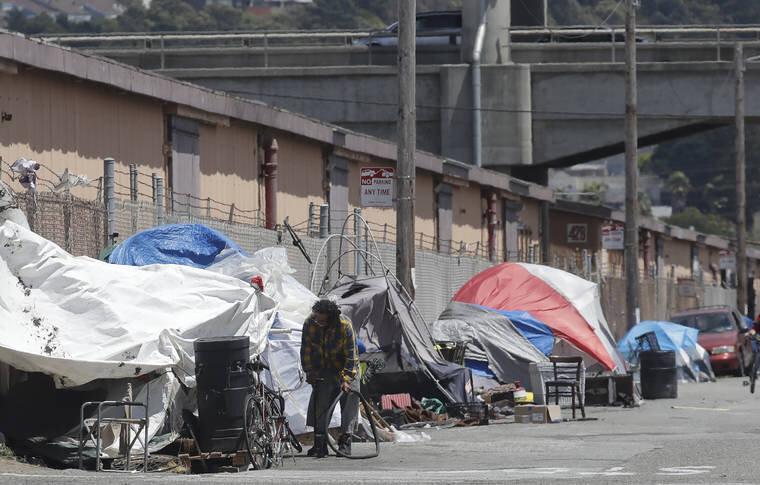
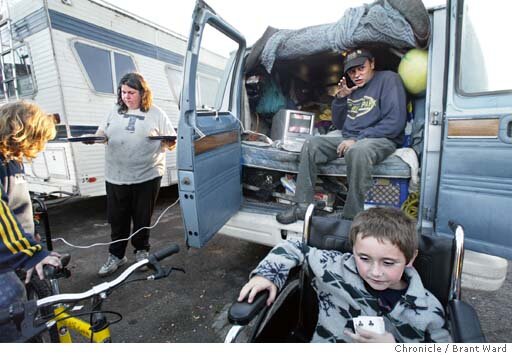
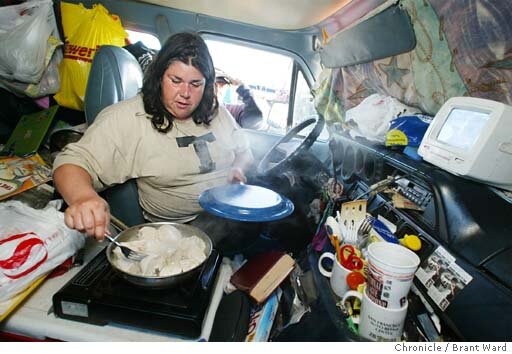
  5. From 2017 to 2019, there has been a dramatic shift in where people are finding shelter. Fewer are living outdoors and nearly three times as many homeless are living in their cars as they were in 2017 compared to 2019

What does all of this mean? To me, I read this as we are leaving a large portion of our city’s own behind. There is now a tale of two San Franciscos: The “Haves” and the “Have Nots”.

I chose to illustrate my data visualization largely by hand and adding in texture and watercolor to connect the viewer to the very human issue that homelessness is. I also chose to leave the illustration of the city of San Francisco in black and white while coloring the data points in a subdued palette. This was to illustrate that these are living, breathing human beings that are left out. My visualizations were largely inspired by David McCandless via two of his books on data visualization: The Visual Miscellaneum, and Knowledge is Beautiful. Below is my final piece:

A Tale of Two Cities: 2019 San Francisco Point in Time Homelessness Report

REFERENCE:

2019 San Francisco Point In Time Homeless Count and Survey Report. (2020). Retrieved from http://hsh.sfgov.org/research-reports/san-francisco-homeless-point-in-time-count-reports/

DiSalvo, Carl (2012), ‘Chapter 2: Revealing Hegemony: Agonistic Information Design’ in Adversarial Design,(Cambridge, Mass: MIT Press).

Falmouth University (2018). Projecting a New Perspective | Lecture. History and Futures GDE720 19/20 Part-Time Study Block S2 (Falmouth, UK: Falmouth University)

Forensic Architecture research agency at Goldsmiths, University of London (2018), What is Forensic Architecture?  17 July. (Accessed: 7th December 2018)

It’s Nice That (2018), Nicer Tuesdays: Offshore Studio  12 June, (Accessed: 7th December 2018)

McCandless, D. (2014). Knowledge is beautiful. New York, NY: Harper Design, an imprint of HarperCollinsPublishers.

McCandless, D. (2012). The visual miscellaneum: a colorful guide to the worlds most consequential trivia. New York: Harper Design.