GDE710 W10 | Lecture Reflection & Research

Type and Press

We start this week’s lecture off with a brief, yet effective walk through the history of typography. The eras of how type is executed is defined by the machines or platforms by which it is created. 

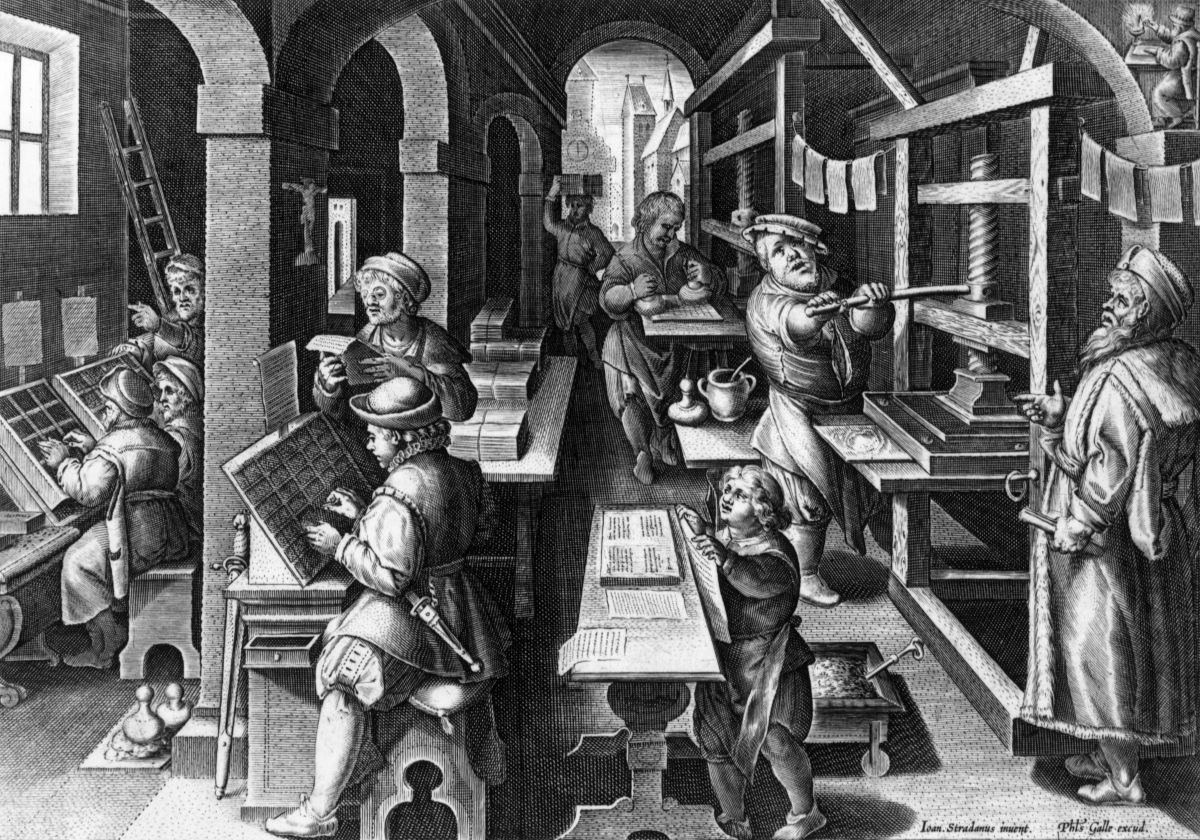
GUTENBERG PRESS

We begin in the 1400s with Johans Gutenberg, the inventor of the notion of moveable type and the Gutenberg press, the first machine to “mass produce” printed materials. Moveable type press created a standardization and a more effective way to share information. 

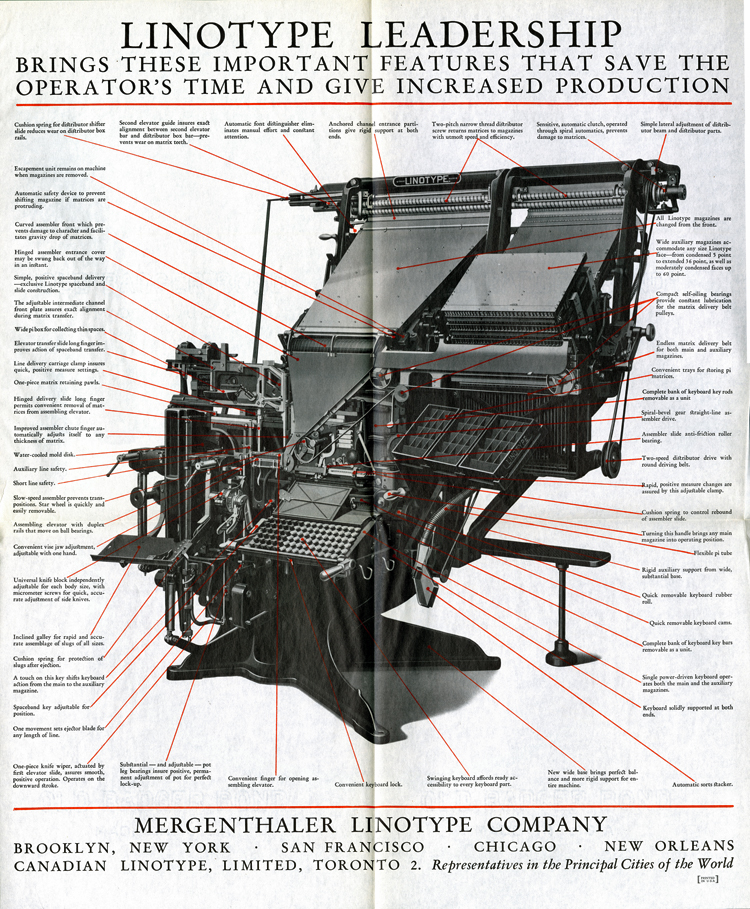
LINOTYPE MACHINE

Fast forward to the late 1800s, where Ottmar Mergenthaler’s linotype machine revolutionized typesetting and with it especially newspaper publishing, making it possible for a relatively small number of operators to set type for many pages on a daily basis. Before the linotype machine, daily newspapers were limited to
eight pages.

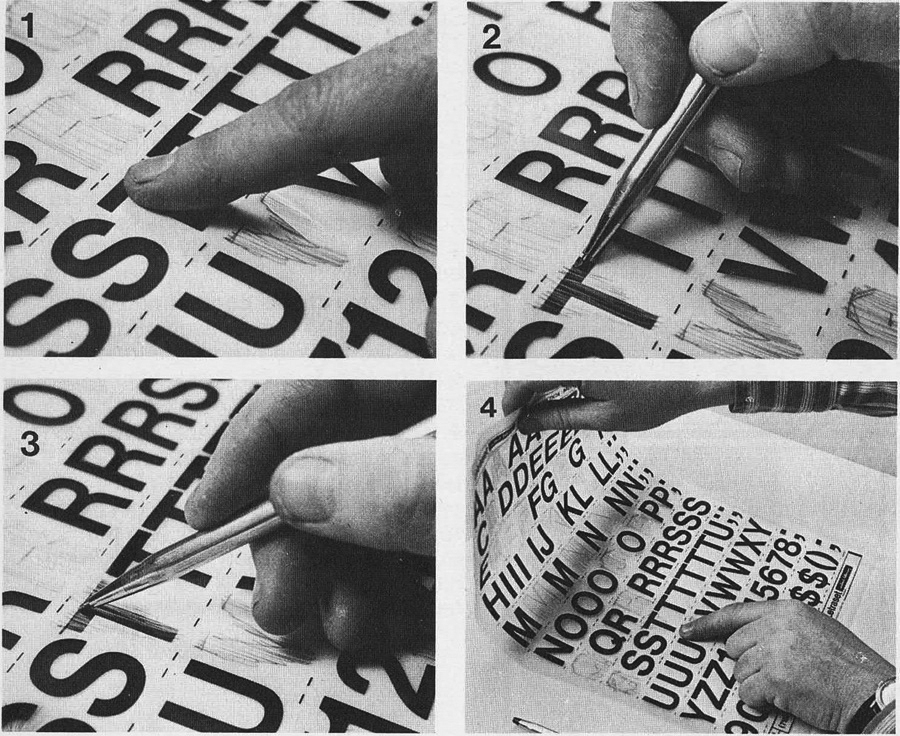
DRY TRANSFER

In the early 1960s — an age far before computer-aided design, Letraset revolutionised typesetting. This allowed for designers create to  headlines in mere minutes. The designer would select the desired letter from a typographic transfer sheet and rub it into the layout. This made typography far more economical and put the control of type design in the hands of the designer.

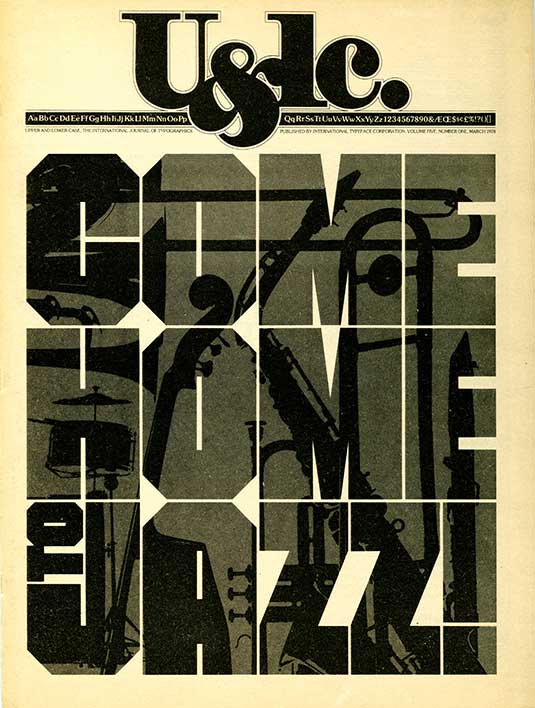
PHOTOTYPESETTING

The 1970s brings with it the availability and use of phototypesetting machines which project characters onto film for offset printing. This method allowed for the scaling of typography providing greater flexibility.

LCD SCREENS: THE COMPUTER AGE

By the 1980s most previously mentioned methods of typography have been made redundant with the advent of the personal computer and computer design software such as QuarkXpress and Adobe Pagemaker. This trend will continue well into present day and likely for some time to come in the future.
Type and Page

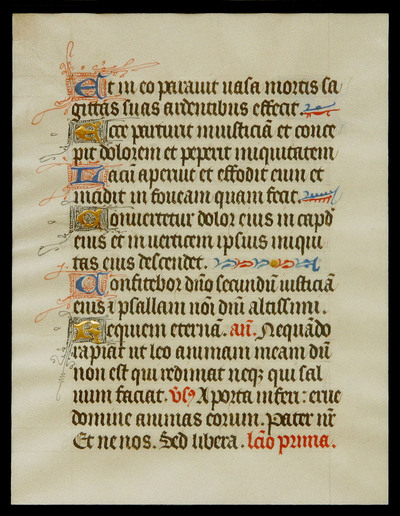
We can in similar fashion review the historical trajectory of typography design through the ages. 

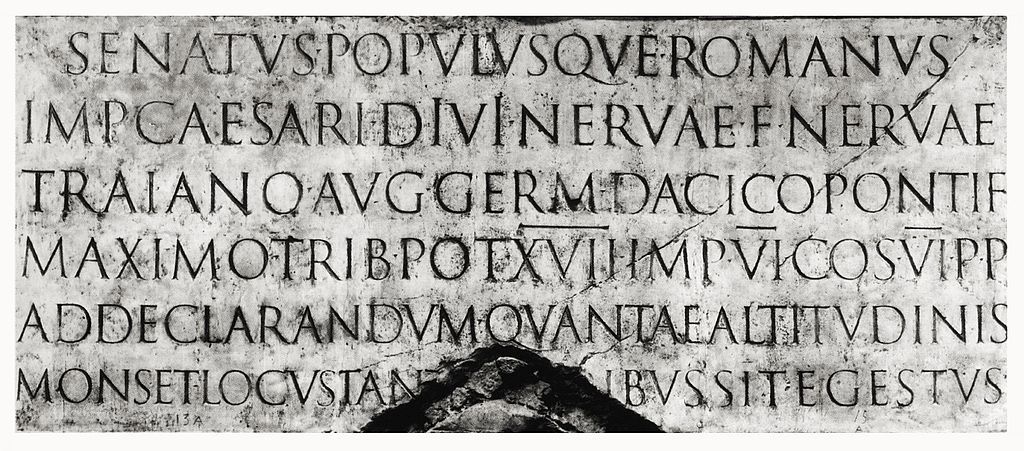
In 43 BC, Trajan is scribed with carving tools revealing an early system of type. 

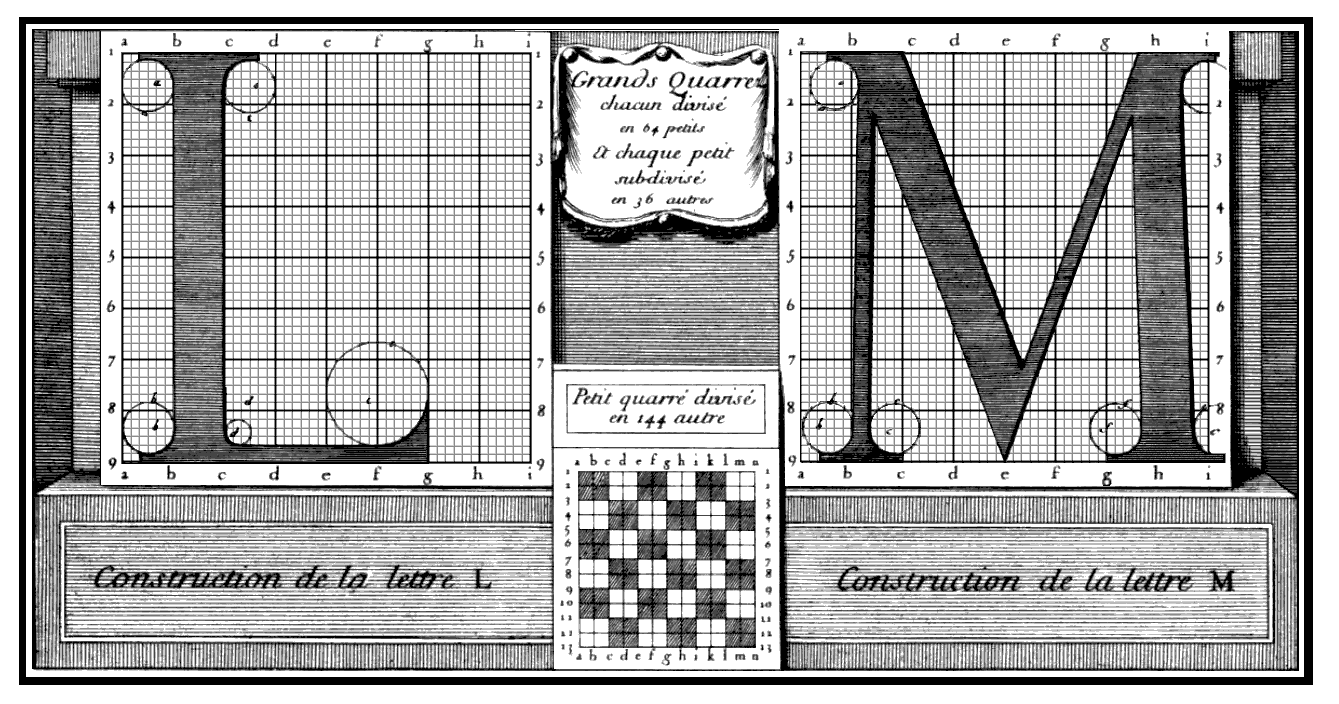
In the early 1600s, Roman Du Roi type is brought about through the kingdom of Louis XIV. 

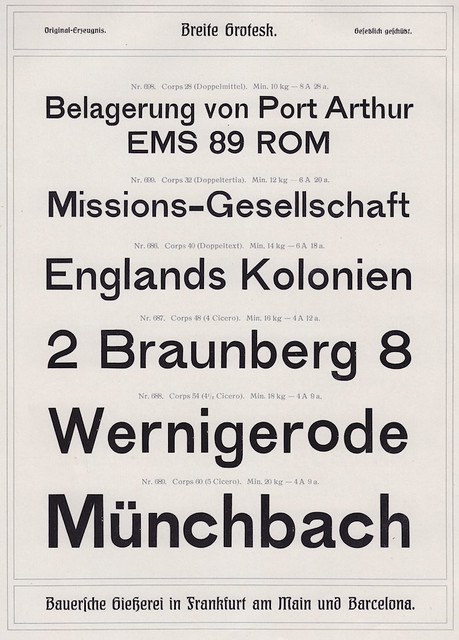
Breite Grotesk arrives in the late 1800s and is a pre-Helvetica san serif. This was quite radical for the era.

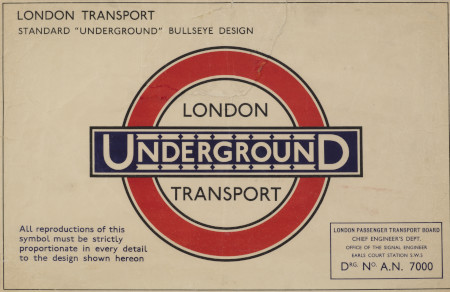
Johnson and New Johnson arrive in the 1930s and is used exclusively for the London Underground wayfinding information system. 

Dadaism is a design movement that arrived during the first World War. It came with it the free use of type to make meaning, illustration, and render sound. 

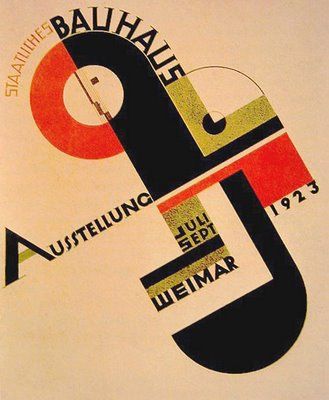
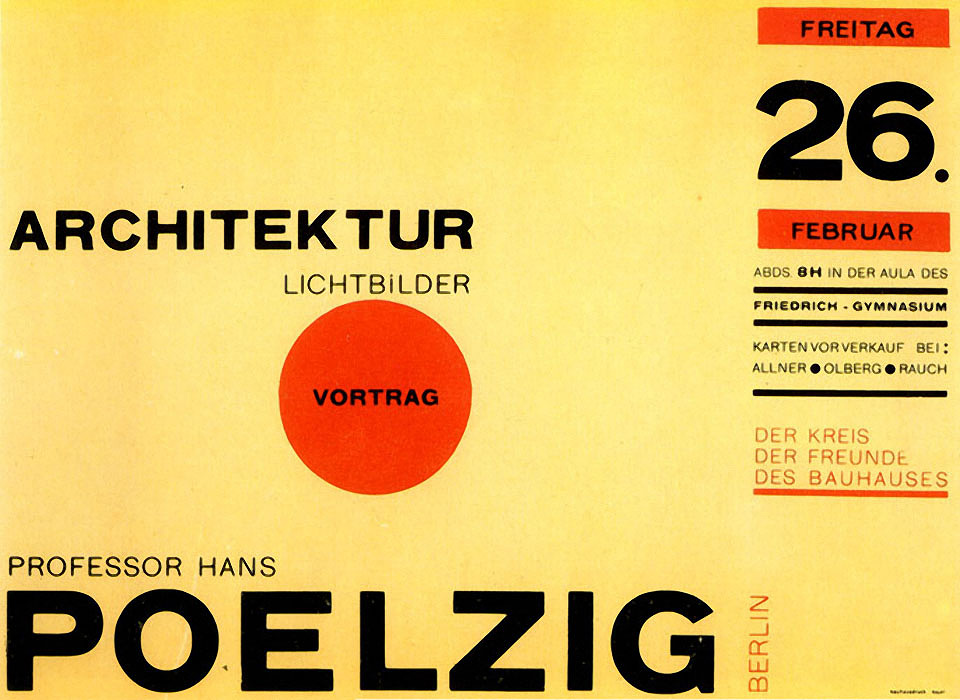
In the early 1900s, the Bauhaus movement brings with it a universal typeface from Herbert Bayer.

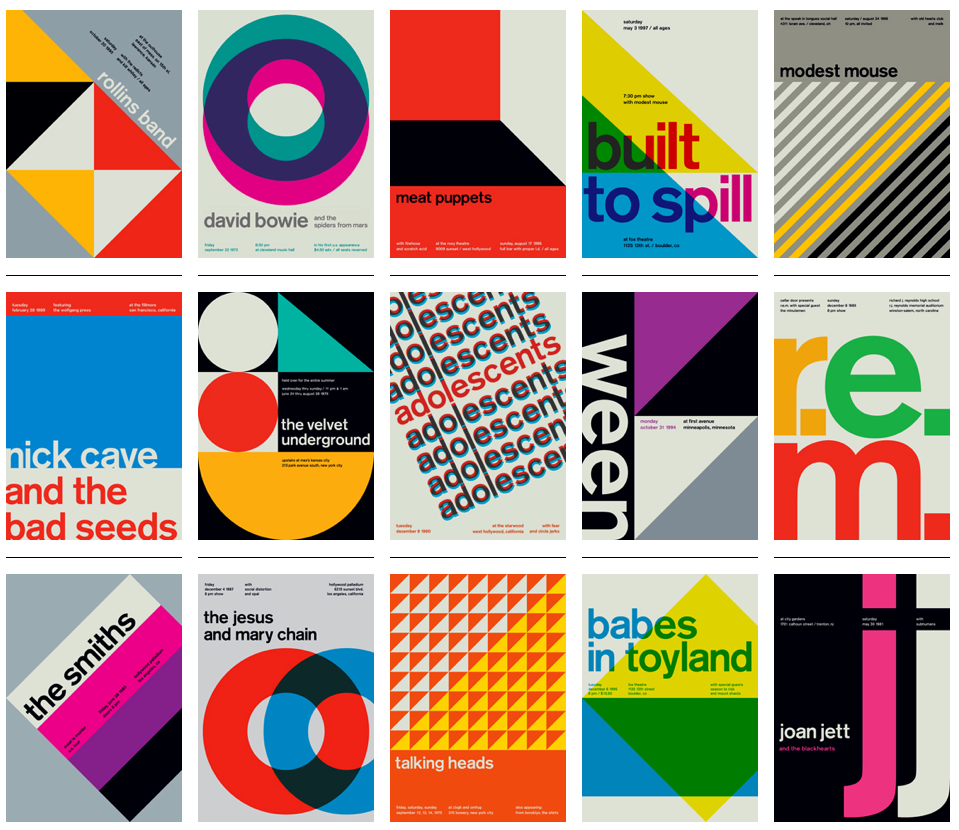
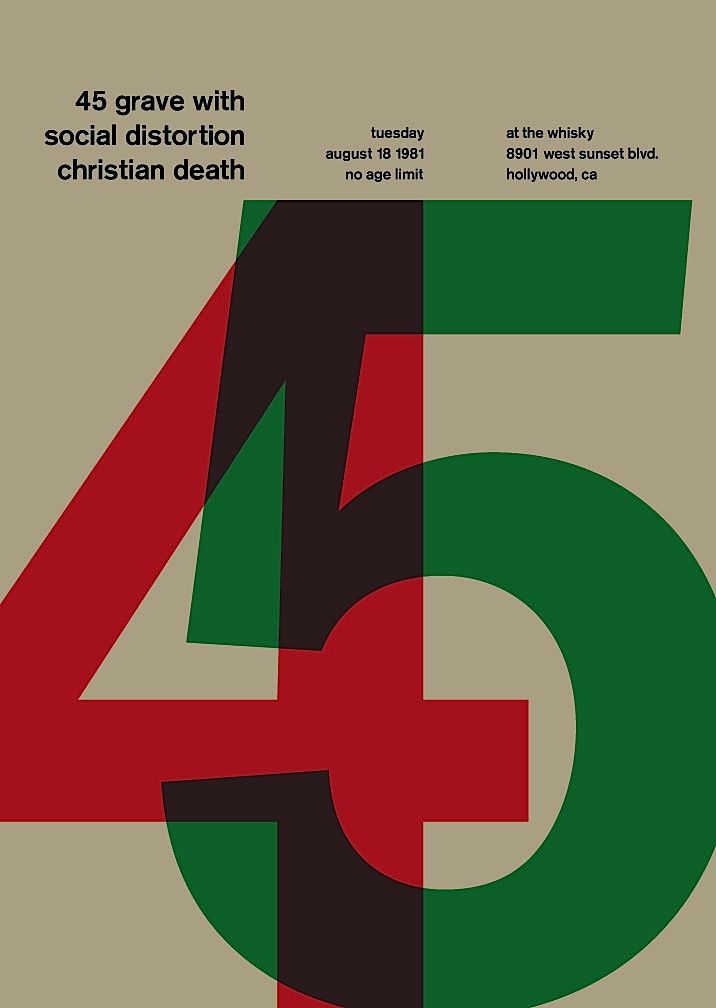
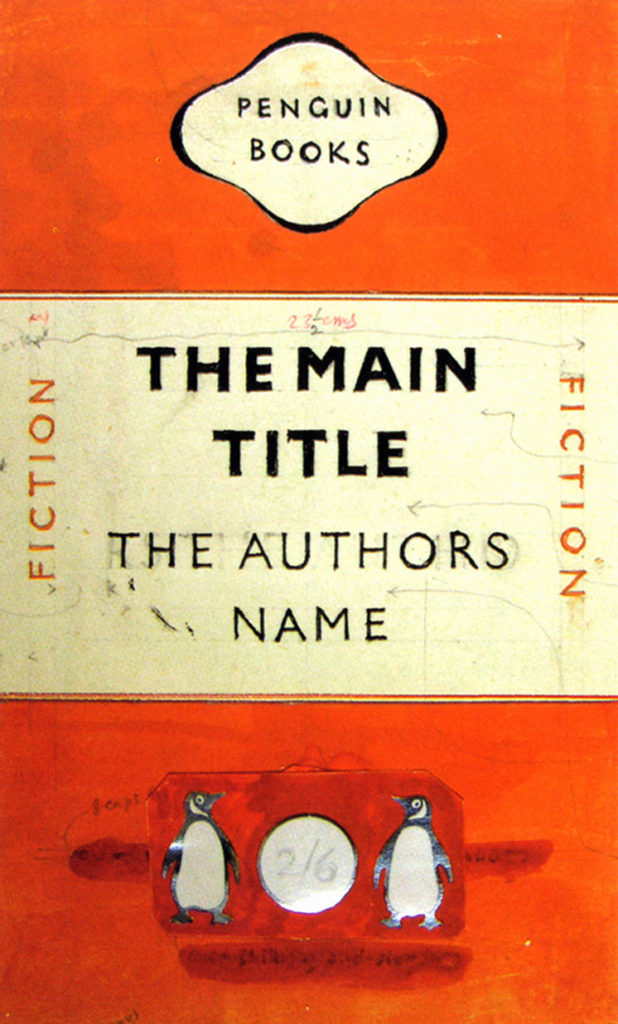
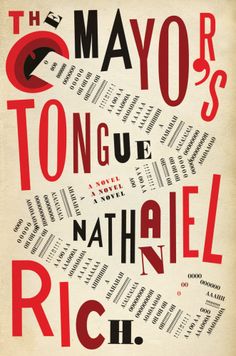
Jan Tischold creates a typographic hierarchy through his work with Penguin Books tarting in 1935. Swiss type appears in appears in the late 1800s and has profound influence well into the 50s and 60s ann beyond. It included a sysTematic approach to type with an extreme reliance on a grid system and system above all over meaning relative to design. 

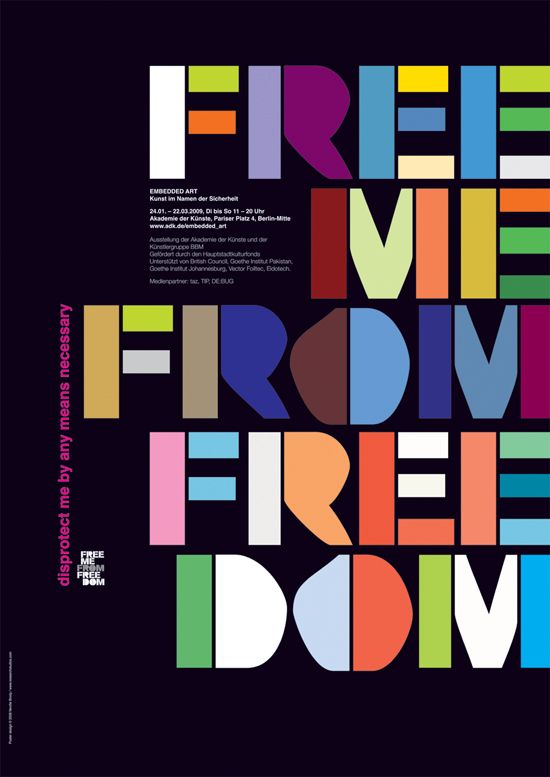
Vim Karl, a Swedish typographer creates New Alphabet, a futuristic type with extreme precision. 

In the 1970s, Wolfgang Weingard, a Swiss designer leverages scale when working with type and design. Then Neville Brody introduces the world to a post-modern and all rules are broken, all bets are off!. 

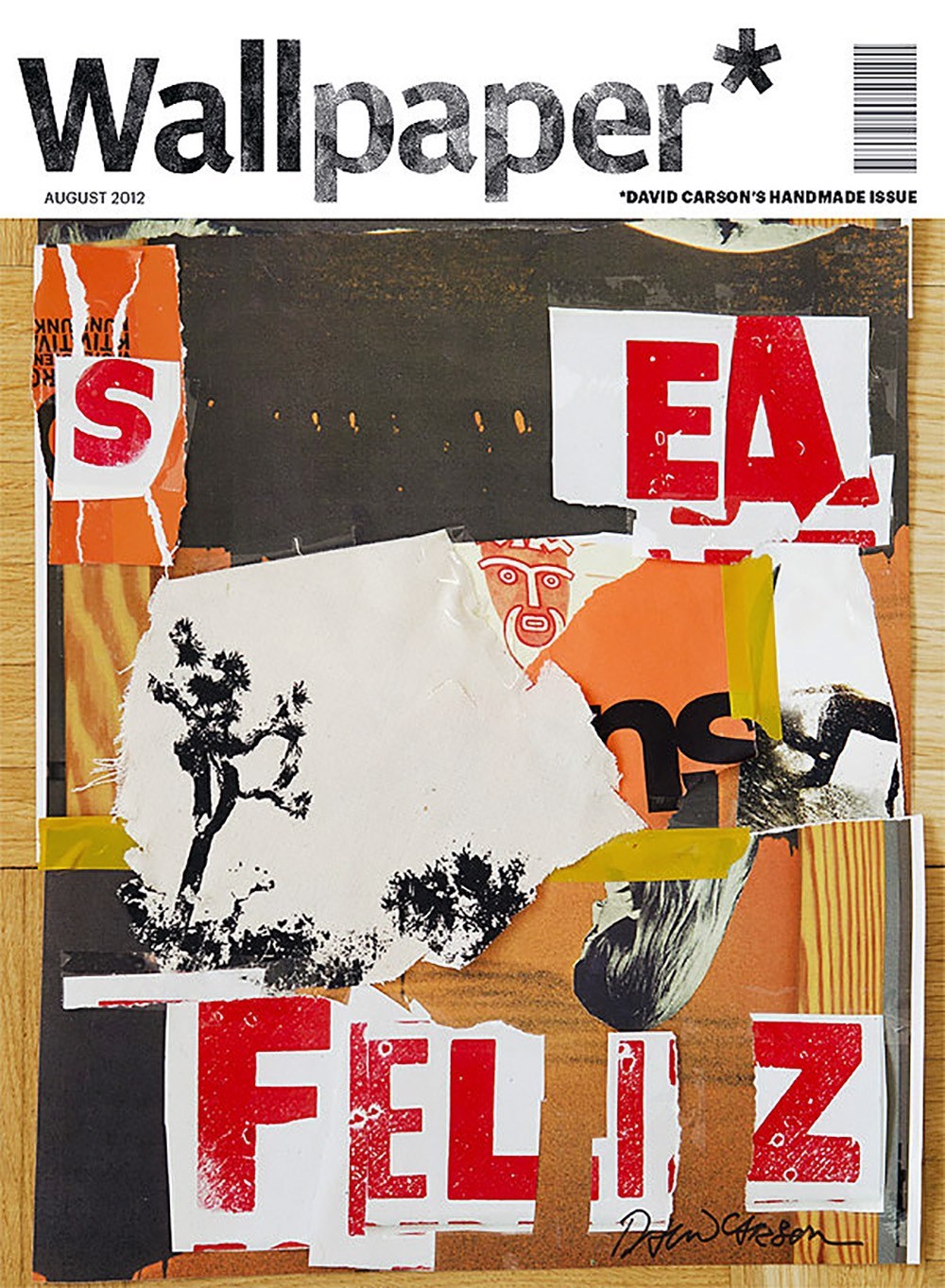
By the 1980s, David Carlson takes the design world by storm with his grunge approach to using Dry Transfer. 

By 1990s and into the early 2000s computer aided design creates greater access to typography and design. And with the 2010s through to present day, the entry is wide for type design. 

Spanning generations and intersecting cultures, technological advancements have ever served as milestones of significance in the history of type. 
REFERENCES

Baines, P. and Haslam, A., (2005) Type & Typography (Links to an external site.). London: Laurence King.
Barrett-Forrest, Ben. “The History of Typography - Animated Short.” YouTube, YouTube, 28 Apr. 2013, www.youtube.com/watch?v=wOgIkxAfJsk.
Kubel, H. and Williams, S., (2015) Type: New Perspectives in Typography (Links to an external site.). London: Laurence King.
Staff, Creative Bloq. “6 Graphic Design Icons Who Used Technology in Original Ways.” Creative Bloq, Creative Bloq, 27 Mar. 2014, www.creativebloq.com/graphic-design/icons-who-used-technology-31411147.
GDE710 W10 | Workshop Challenge

TYPOGRAPHIC TASK

AMERICA MUST CHANGE

APPROACH

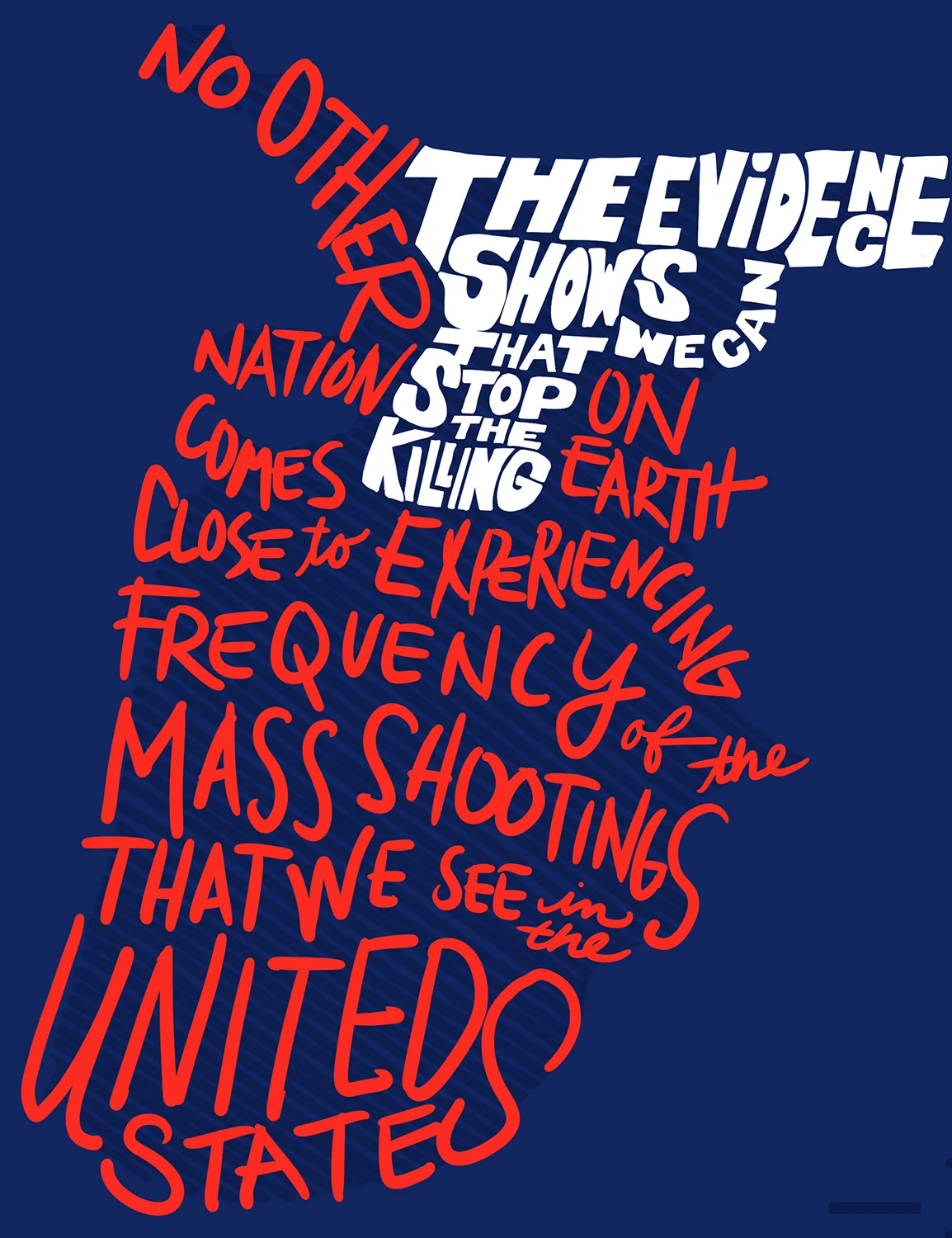
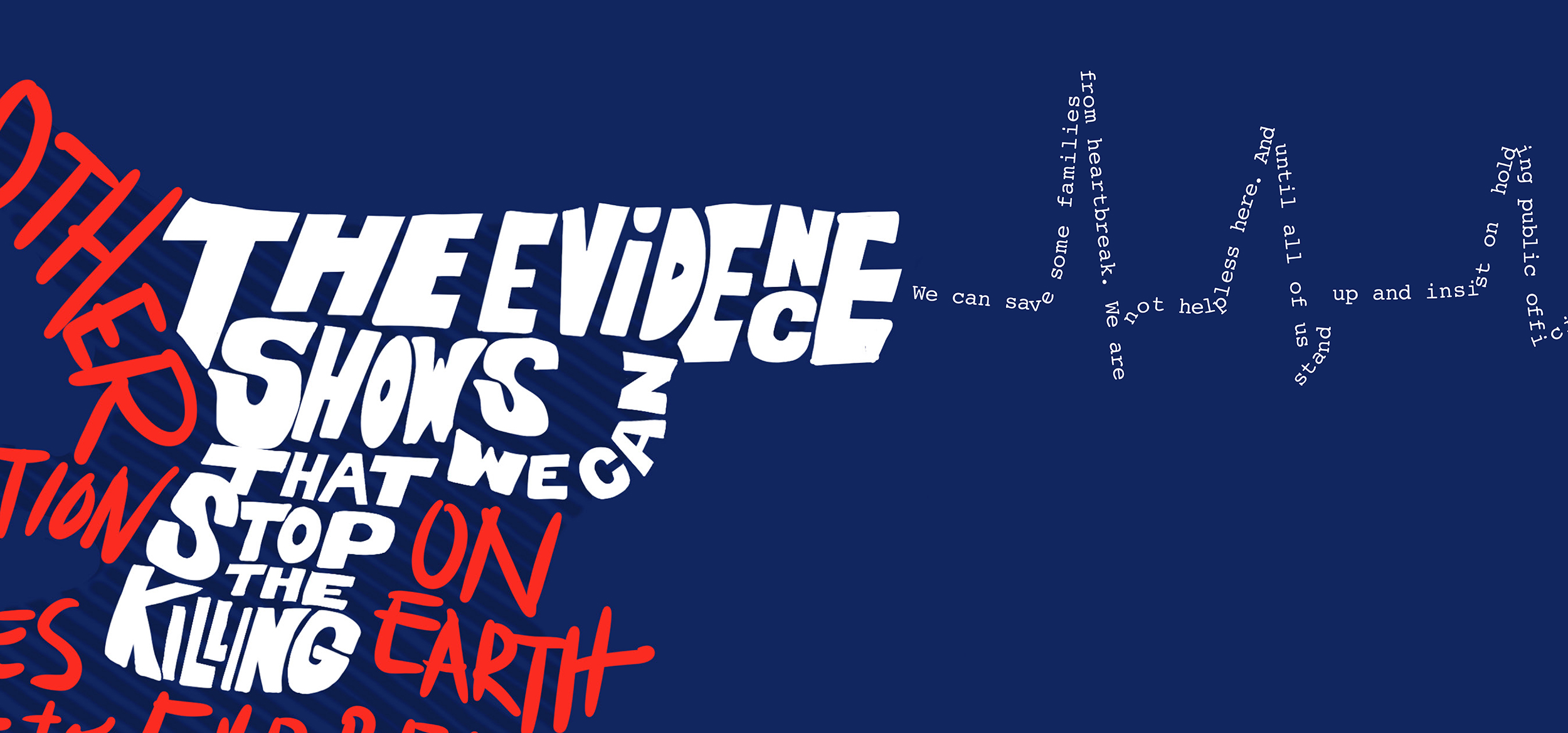
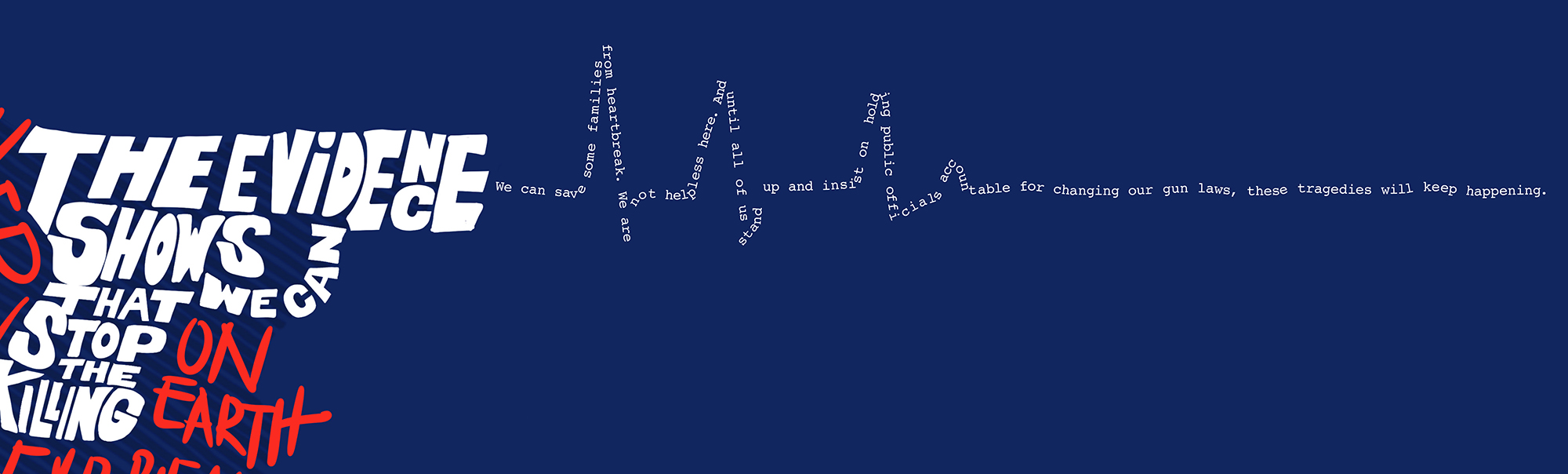
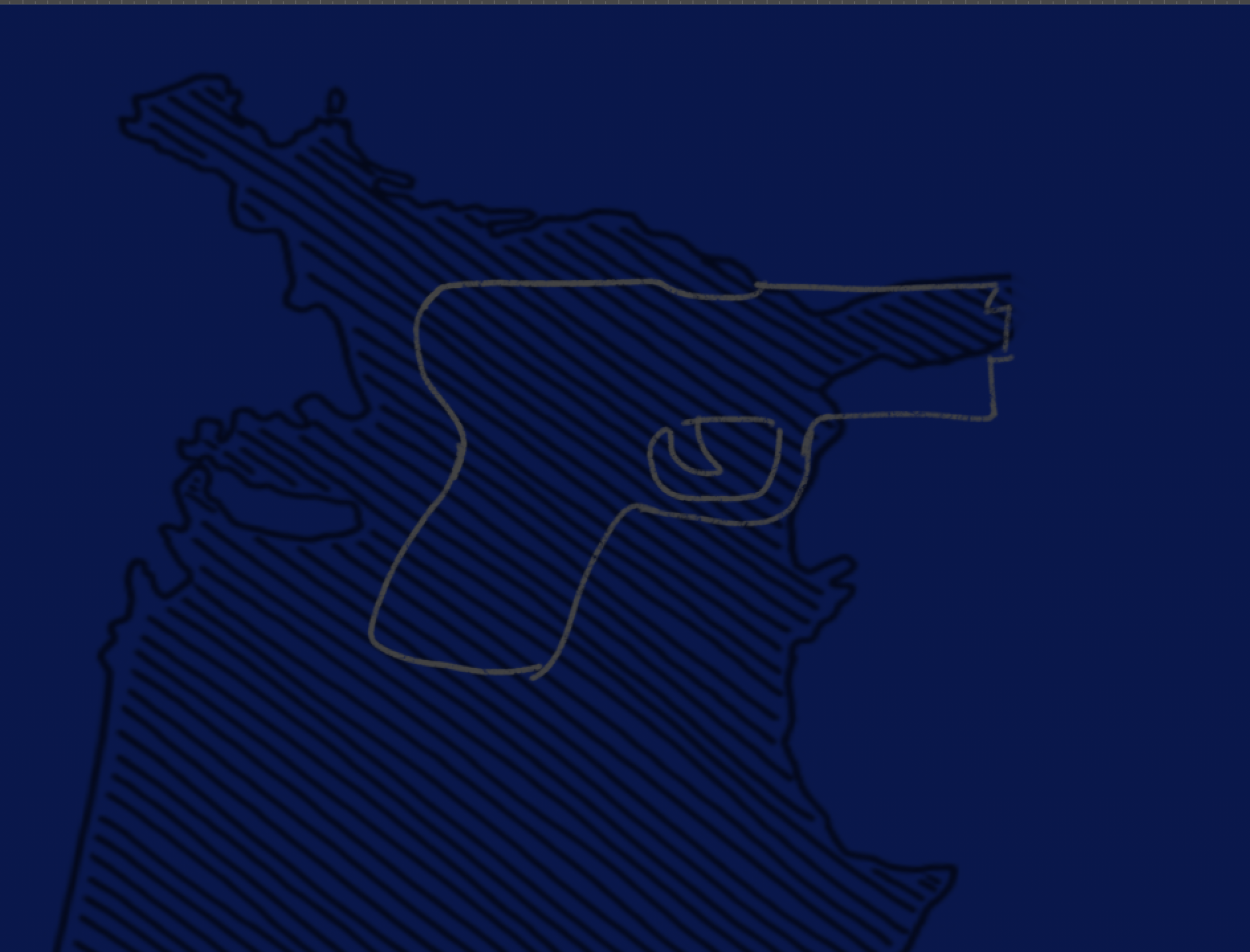
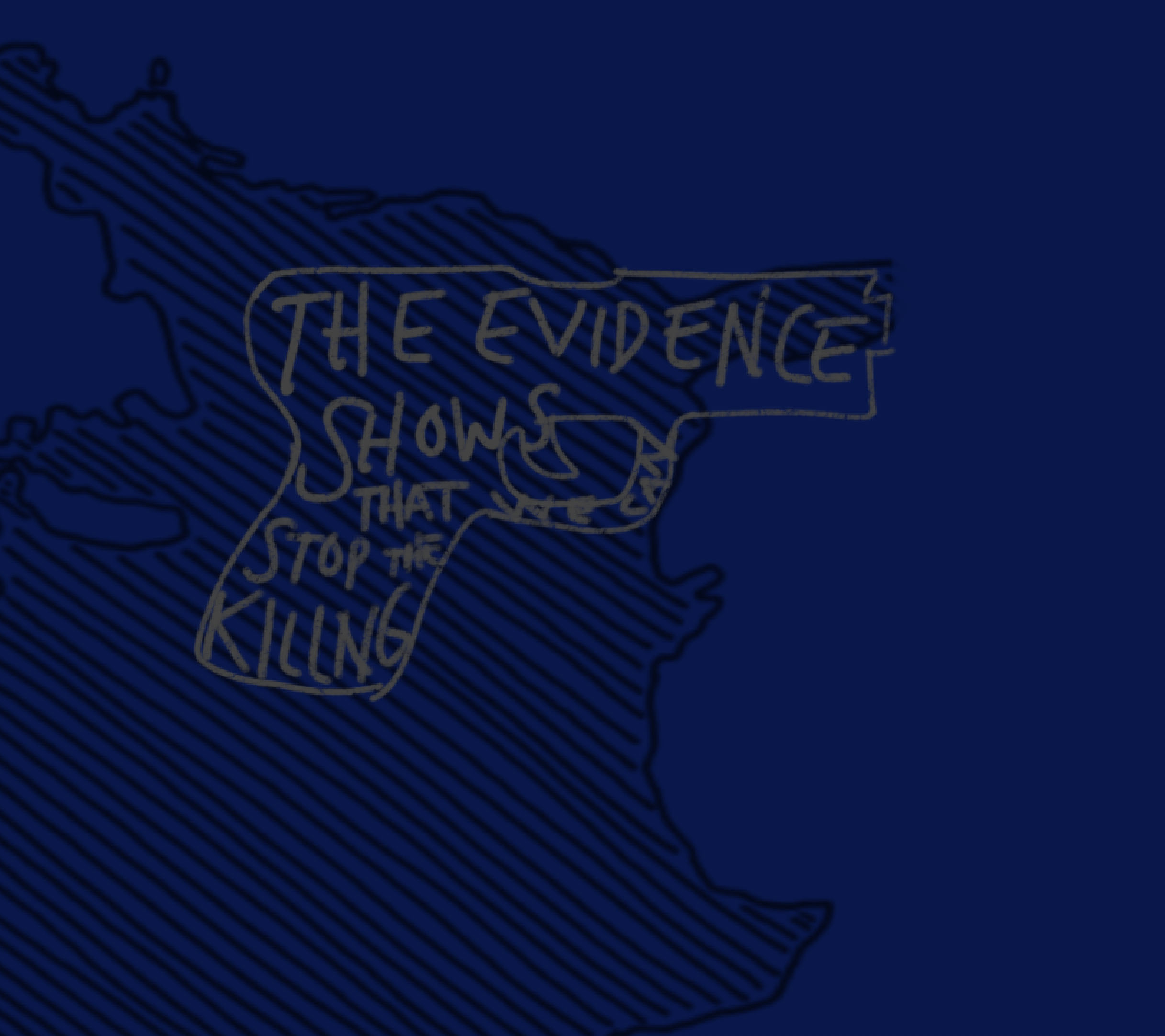
For this week’s challenge, I wanted to create a piece in response to the mass shootings that have been happening in the United States and to our country’s inability to inact powerful gun legislation. The final illustration is on the following page.

I created a scene using the powerful words that former US President Obama shared after the mass shootings in Gilroy, CA, El Paso, TX, and Dayton, OH. 

Using Obama’s words to form the shape of the U.S. I chose to place the shape of the country on its end, as a nation I believe we are in the upside down. I formed a gun and started to rough in the typography with a powerful portion of the statement and placed it in the southern portion of the states, where a majority of Second Amendment fanatics reside. 

I chose hand made lettering for the entire portion that makes up the United States as this is a social and human problem.

Lastly, I illustrated the data point that last year alone over 59% o f the American population was negatively impacted by gun violence by omitting 59% of the letters in the Second Amendment. Who is this amendment serving? Not the majority.

REFERENCES

Kim, C. (2019, August 05). Obama denounces gun violence and white nationalism after recent mass shootings. Retrieved from https://www.vox.com/2019/8/5/20755303/barack-obama-mass-shootings-dayton-el-paso-gun-violence-white-nationalism

Mass Shootings in America, 2009 to 2017. (n.d.). Retrieved from https://everytownresearch.org/reports/mass-shootings-analysis/

GDE710 W9 | Workshop Challenge

MESSAGE vs. MEDIUM

This week’s workshop challenge asks, “How can a message be enhanced through the medium in which it is implemented?”

We are challenged to communicate an emotion you perceive your city or location is about, then take the word and use an appropriate material, form or medium – 2D, digital, 3D or immersive.

My city is San Francisco, and the word I chose is contradiction. While I am a recent import to the city, and am having quite a grand love affair, I am privileged. Not everyone is as fortunate to hold this lovely city in the highest regard.

Since the first tech boom of the 1990s, San Francisco has been on a course of contradiction. San Francisco has always been a city of pioneers, progressives, freaks and geeks, artists and academics. All together in a community stew of vibrant discourse, advancement, social exploration and evolution at the edge. With the tech booms — past and present — a shift has happened where the city has become less vibrant, dynamic, and diverse. The economics and extreme wealth associated with this new San Francisco is changing it from a city for all to a city for the one percent. The middle class is disappearing and the homeless population grows at a rapid rate.

APPROACH

I chose to illustrate this tension of contradictory emotions about San Francisco through something tactile: a linocut carving and subsequent print. I’ve never done linocut before and opted to again challenge myself to do something experimental and take some risks.

My inspiration was Käthe Kollwitz, prolific artist who utilized lithography and wood cuts has her medium to express herself and her observations and storytelling of the human experience. Her work is haunting to me. She reveals the struggle of the human condition and class through deep cuts that are minimal, but at the same time so very expressive.

The People

The People

I started a sketch, then built my illustration that would serve as my linocut carving.

I start with the contradiction: a posh businessman is angered by stepping in it. “It” being a homeless man.

I start with the contradiction: a posh businessman is angered by stepping in it. “It” being a homeless man.

I add the city as a backdrop and the type “DON’T TREAD ON ME!”. The number of homeless living on the streets in San Francisco has lead to an outrage of “the haves” in response to the amount of human feces belonging to “the have nots” on sidewalks. T…

I add the city as a backdrop and the type “DON’T TREAD ON ME!”. The number of homeless living on the streets in San Francisco has lead to an outrage of “the haves” in response to the amount of human feces belonging to “the have nots” on sidewalks. The outrage is clearly misplaced.

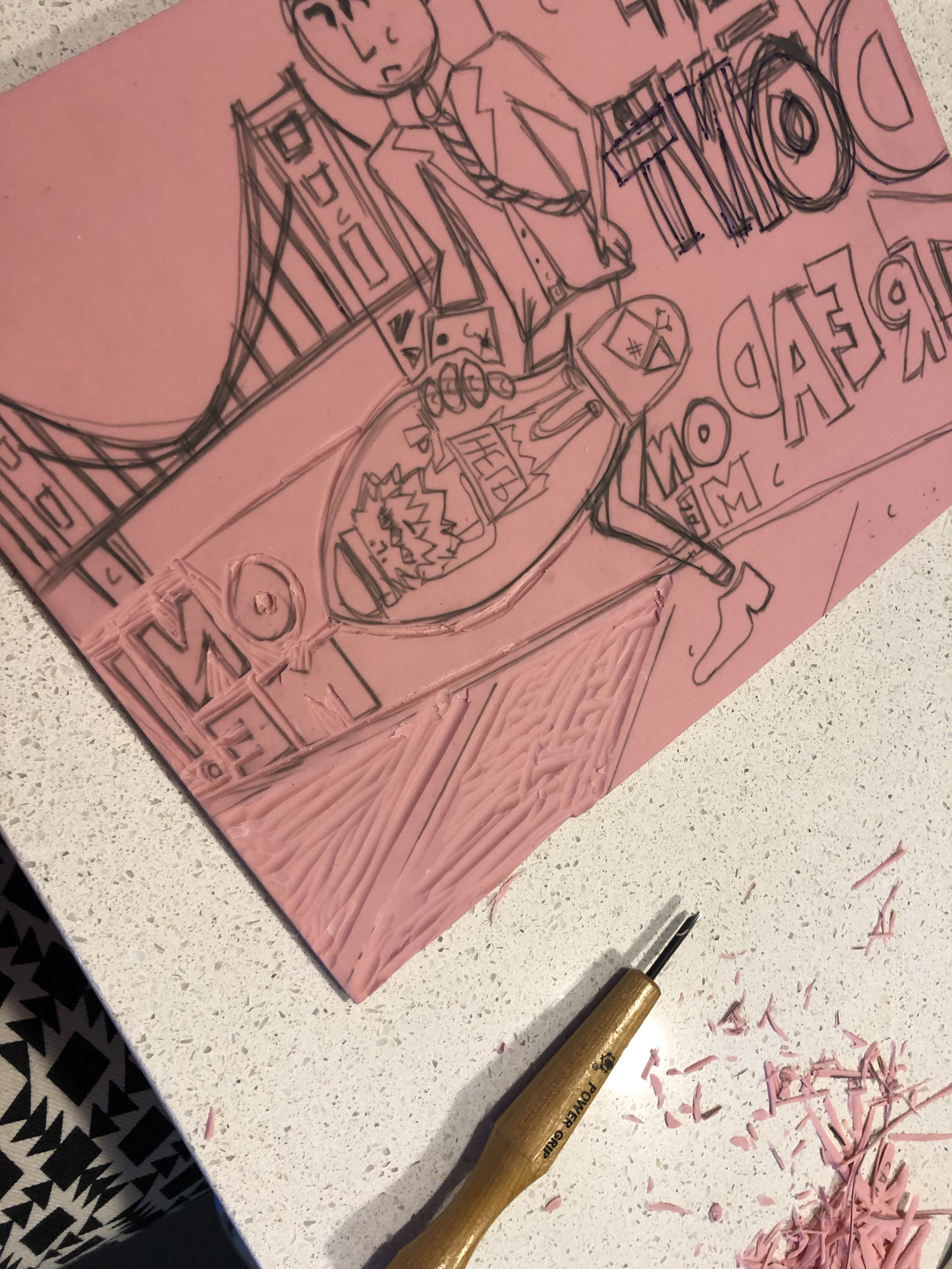
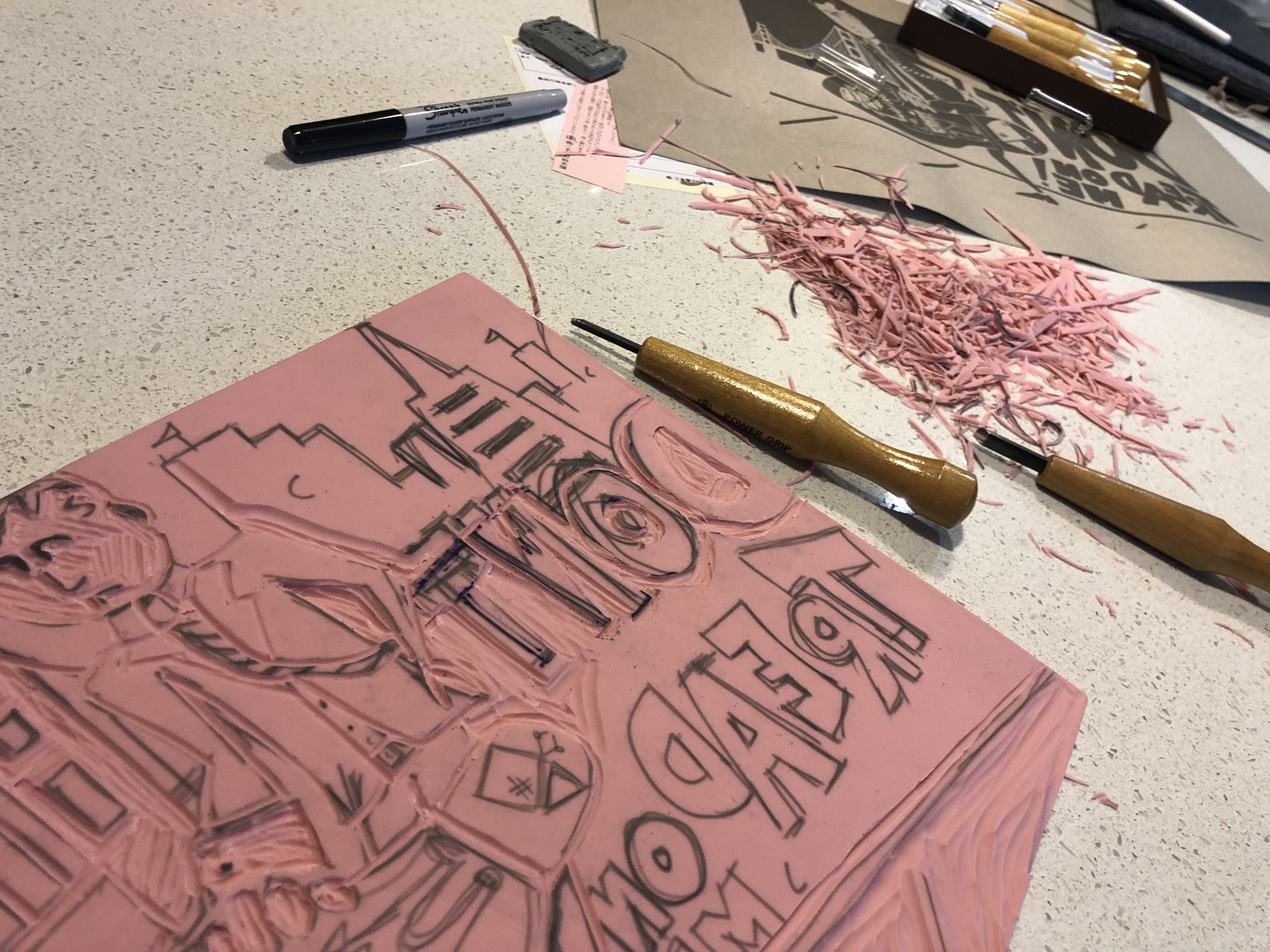
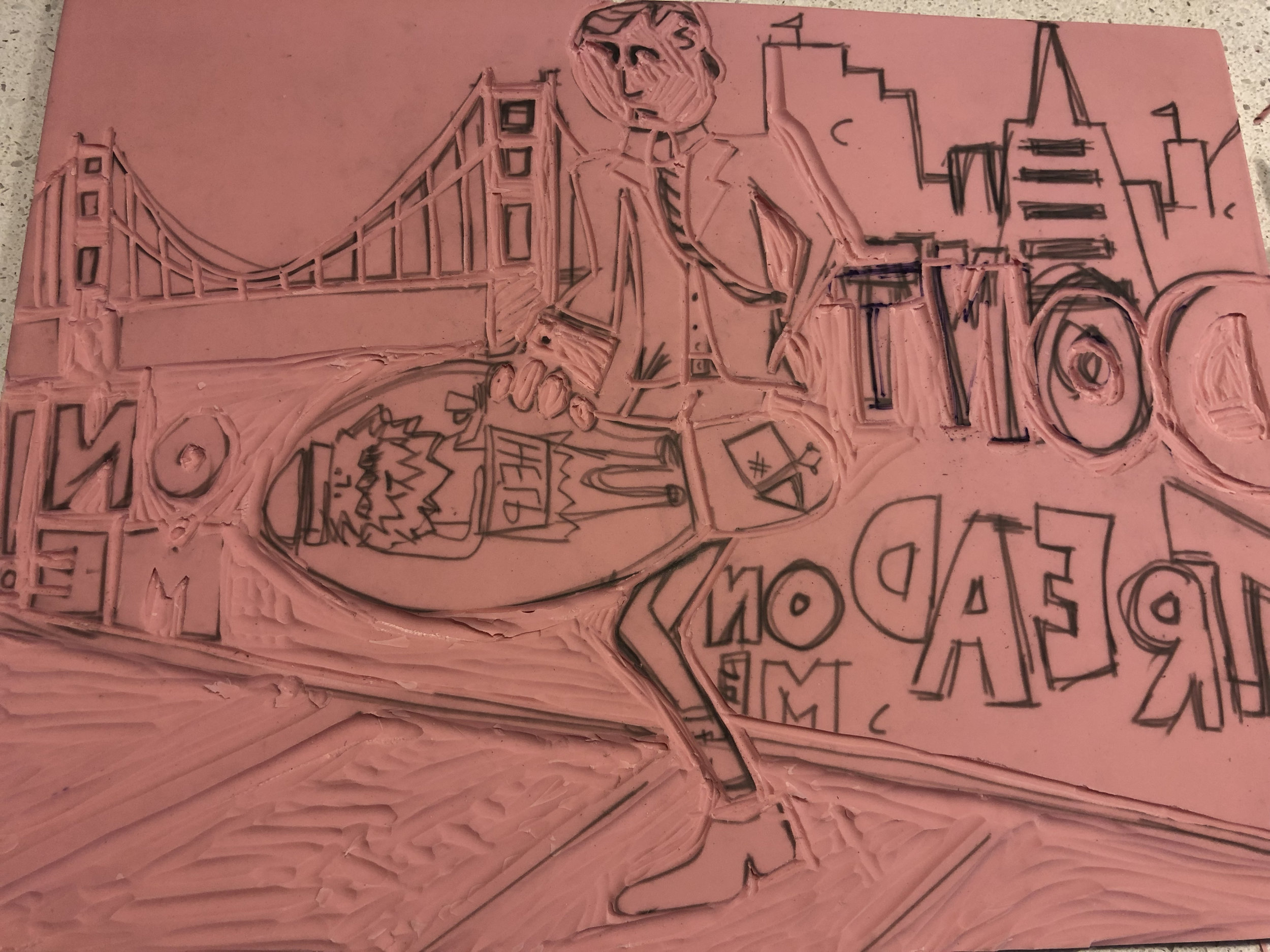
Next up: let’s get cutting! Progress shots…

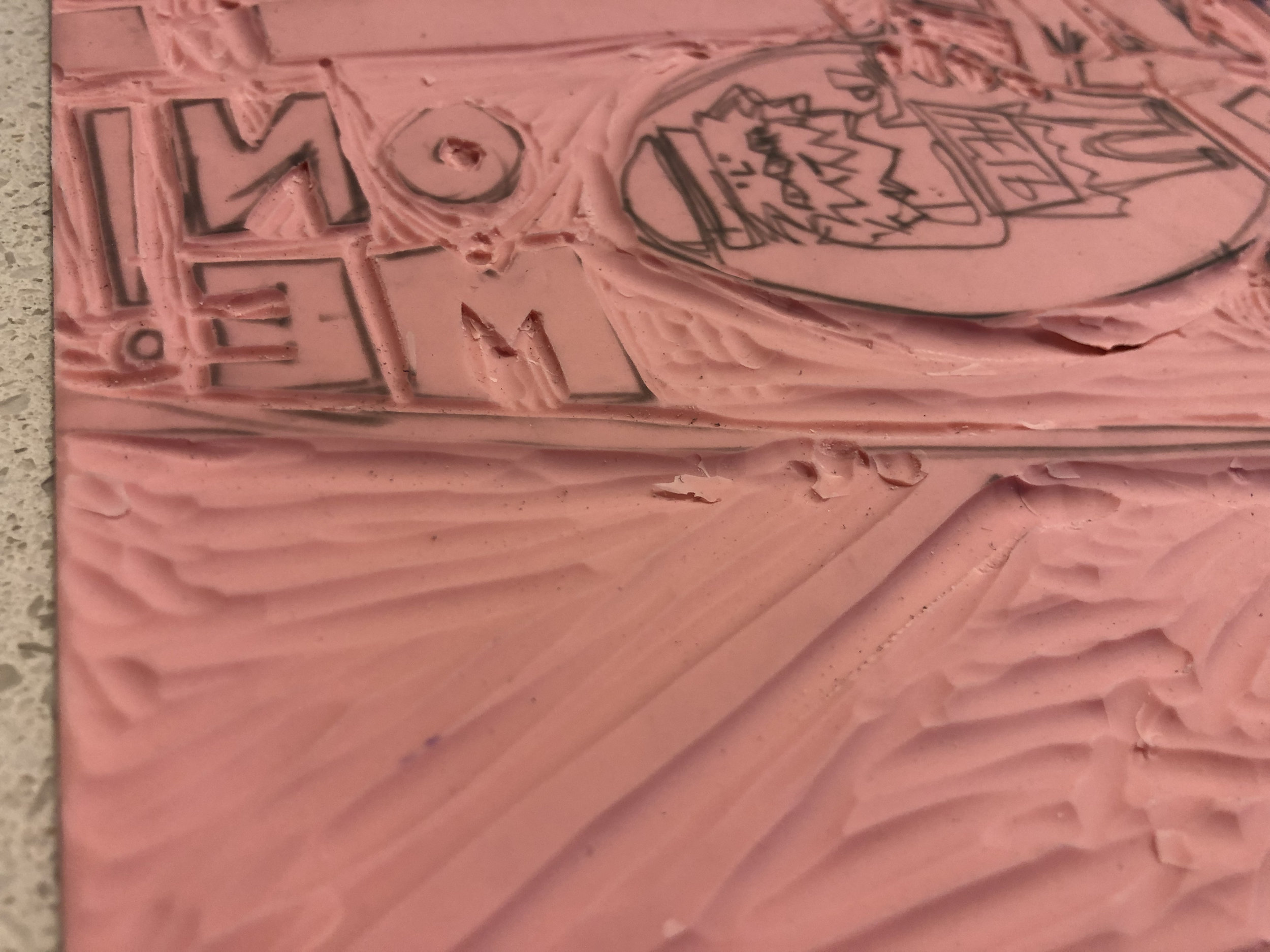
I had to make some adjustments based on how the vinyl material responded to my inexperienced hand as well as the amount of detail in the original drawing.

And now for some ink…

FINAL PIECE

This image shows the final piece, the ink transferred to a lovely Strathmore printmaking sheet. I like how the entire piece can serve as a metaphor for the contradiction that is San Francisco: while some are in the one percent, some cannot even carve out a living and are left to the streets. The inking and carving proves permanence that this situation as it is will remain until truly and empathetically addressed. The transfer of ink to paper via a pressing and peeling tracks to the pressure of the city to acknowledge this shift as well as the literal scraping of human shit off of one’s fancy shoe.

It turned out a lot rougher than I’d imagined, but like how that furthers the imperfection of my commentary on San Francisco.

IMG_3980.jpg

REFERENCES:

Heshmat Ph.D., Shahram. “What Does It Mean to Have Mixed Feelings?” Psychology Today, Sussex Publishers, www.psychologytoday.com/us/blog/science-choice/201603/what-does-it-mean-have-mixed-feelings.

“Käthe Kollwitz: MoMA.” The Museum of Modern Art, www.moma.org/artists/3201.

GDE710 W8 | Workshop Challenge

MIND THE GAP

This week’s Workshop Challenge asks us to investigate and identify our skills as graphic designers as well as any gaps.

MY SKILLS

as a graphic designer, and in my work as a creative director:

  • adobe creative suite

  • advocacy

  • active listening

  • articulating ideas

  • belief

  • brainstorming

  • bullshit detector

  • concepting

  • creativity

  • curiosity

  • design foundations

  • editorial design

  • emotional intelligence

  • empathy

  • endurance

  • flexible

  • giving critical feedback

  • good instincts

  • hope

  • intuition

  • marketing

  • motivating others

  • observing

  • project management

  • print production

  • receiving critical feedback

  • self awareness

  • typography

MY GAPS

Note: items in bold italics are gaps that are areas of most need, or most significant gaps:

  • alternative perspectives

  • animation

  • art & design history

  • boldness

  • confidence

  • desire

  • effective storytelling

  • experimentation

  • exploration

  • inspiration

  • letterpress

  • linocut

  • making

  • mentorship

  • networking

  • patience

  • persuasive

  • photography

  • proactive outreach

  • procrastination

  • saying “no.”

  • side projects

  • social design

  • videography

  • willing to take risks

  • workload management

APPROACH

In reviewing my list, it occurred to me that my skills tracked well to the body’s anatomy. Further, my highschool fascination with the medical illustrations in Grey’s Anatomy compelled me to make an infographic poster using an illustration style that I’d never attempted before to portray my skills and their respective gaps. No better time than the present to tackle those gaps (exploration, experimentation, etc.)

This started with a quick doodle paired with the list to map each skill to a different area of the body (head, heart, back, hands, etc.)

anatomy concepting.jpg

Then a rough sketch of my self-portrait.

Anatomy of a Graphic Designer 1.jpg

FINAL PIECE

Inspired by the poster designs of James Victore, I decided to make a poster for my final piece. I chose a color palette that was electric, a illustration style that was fluid and more abstract. For my skills, I chose to use white as the color to signify the most concrete or solidified of my skills. Using two hues of blue from the illustration to indicate my gaps: the darker the blue, the wider the gap.

The Anatomy of Graphic Designer, Kris Miller

Anatomy of a Graphic Designer MOCKUP.jpg
Screen Shot 2019-07-24 at 8.46.38 PM.png
Screen Shot 2019-07-24 at 8.47.31 PM.png
Screen Shot 2019-07-24 at 8.47.44 PM.png

REFERENCES

Victore, James. (2010) Victore, or, Who Died and Made You Boss? Abrams.